
The Musk Calculus: Risk, Reward, and the Razor's Edge Between Genius and Overreach
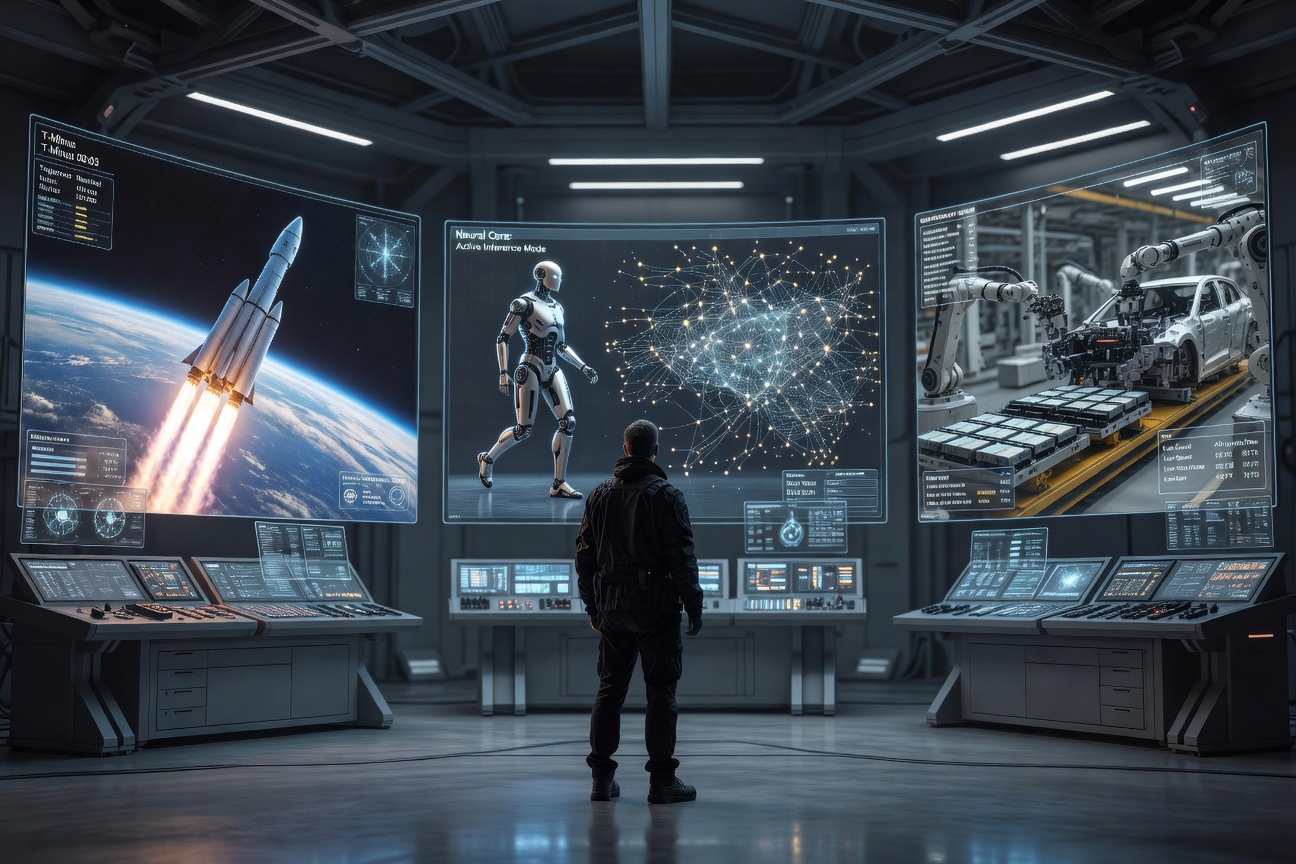
There is a particular kind of organizational physics that applies when a single individual simultaneously chairs or controls companies with a combined implied valuation north of $1.5 trillion, commands the world's most powerful private rocket fleet, operates the most widely discussed AI lab not headquartered in San Francisco, and owns the digital town square that amplifies his every proclamation within seconds. The physics in question is not the celebratory kind. It is the physics of stress, of load-bearing structures at maximum capacity, of what happens when the variables that have always favored a man suddenly stop cooperating all at once.
That is precisely where Elon Musk finds himself in mid-2025: not at a triumph or a nadir, but at a genuine inflection point where the trajectories of his six major ventures are diverging rather than reinforcing each other, where regulatory pressure is intensifying on multiple fronts simultaneously, and where competitors who once dismissed his ambitions as theater are now building serious countermeasures. Understanding what comes next requires moving past both the hagiography and the contempt that typically dominate coverage of Musk, and instead applying a cold, methodical lens to each dimension of the enterprise.
The Tesla Equation: Margin Compression Meets the Autonomy Gamble
Tesla remains the financial spine of the Musk ecosystem. It generates real revenue, has genuine manufacturing scale, and carries a valuation premium that only makes sense if investors believe the autonomy story. That story is now being tested with unusual rigor. The robotaxi launch in Austin, Texas, which Musk confirmed was proceeding with a small fleet of Model Y vehicles operating without human safety drivers in a geofenced zone, represents arguably the highest-stakes product test in the company's history.
The technical architecture underlying this deployment is worth examining carefully. Tesla's Full Self-Driving system relies exclusively on camera-based perception processed through custom neural network chips, explicitly rejecting the LIDAR sensors that competitors like Waymo deploy. Waymo has accumulated over 22 million fully autonomous miles and reports an intervention rate that Tesla's internal metrics have not publicly matched on a like-for-like basis. The competitive gap is real, but so is Tesla's potential advantage: scale. If Tesla's vision-only approach generalizes to new environments faster than sensor-fusion systems, the cost and deployment speed advantages become enormous. If it doesn't, the Austin rollout could face exactly the kind of high-visibility incident that triggers regulatory shutdowns.
Meanwhile, Tesla's core vehicle business is navigating genuine margin headwinds. Repeated price cuts to stimulate demand have compressed automotive gross margins from a peak above 29 percent in early 2022 to ranges closer to 12 to 14 percent in recent quarters. The promise of the more affordable Model Q, anticipated later in 2025, is meant to expand the addressable market dramatically, but manufacturing it profitably at the target price point represents a non-trivial engineering and supply chain challenge. BYD, now the undisputed volume leader in electric vehicles globally, is competing aggressively in every market outside North America with products that match or exceed Tesla on range while undercutting substantially on price.
SpaceX: The Crown Jewel Carrying Unprecedented Weight
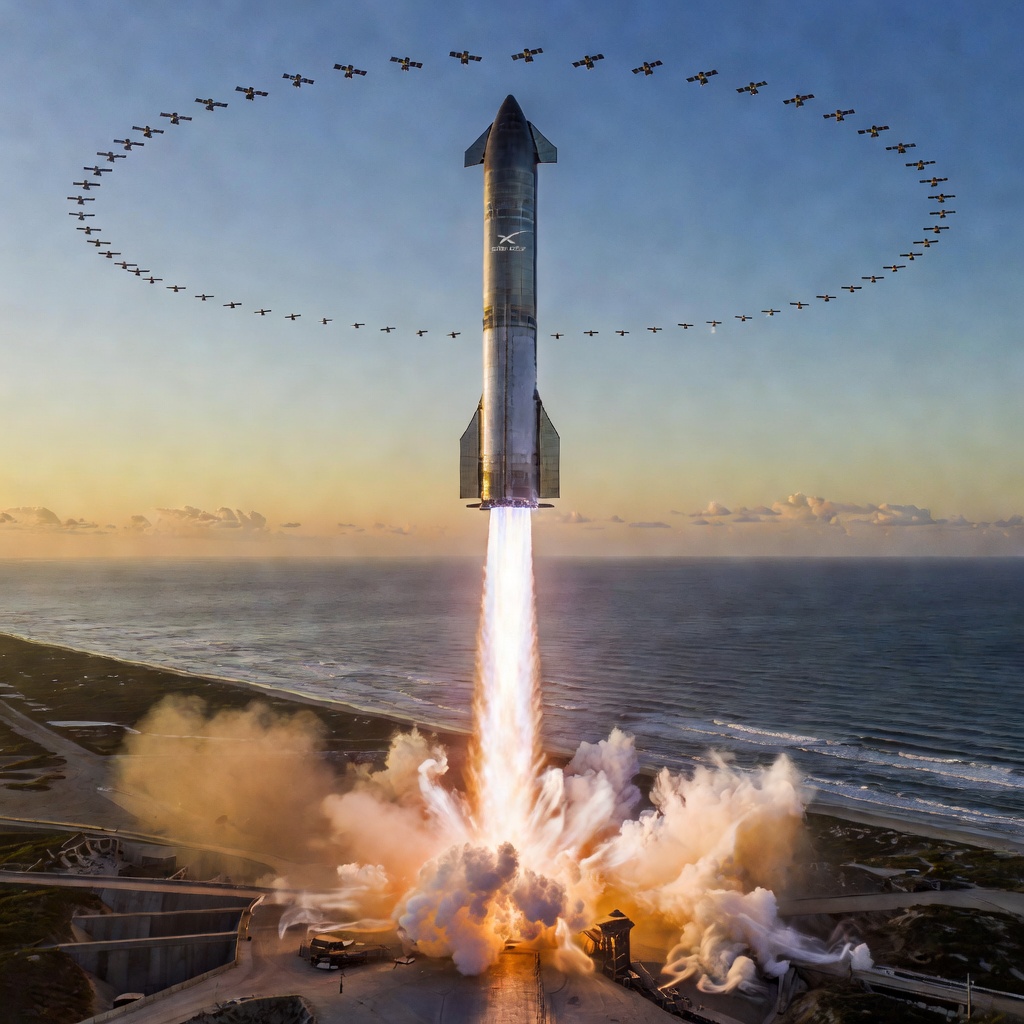
If Tesla is the financial spine, SpaceX is the technological crown jewel, and its recent trajectory is simultaneously the most impressive and the most scrutinized chapter in the Musk story. Starship's integrated flight test program has demonstrated extraordinary iterative progress. The vehicle has achieved controlled splashdown of the Super Heavy booster, successfully tested the mechazilla catch system at Boca Chica, and demonstrated stage separation and upper-stage reentry in configurations that were purely theoretical two years ago. The engineering velocity is genuinely without modern precedent in the launch industry.
But velocity and operational readiness are different things. NASA's Artemis program has selected Starship as the Human Landing System for lunar missions, creating a dependency that cuts both ways. If Starship achieves full operational certification on schedule, NASA gets transformative capability at a fraction of what the Space Launch System costs. If the timeline slips further, the agency faces a critical gap in its lunar program with no credible alternative. Current realistic assessments from aerospace analysts place the earliest crewed lunar mission enabled by Starship somewhere between 2027 and 2029, not the earlier timelines Musk has historically projected.
The regulatory dimension adds another layer of complexity. The FAA's launch licensing process for Starship at Boca Chica has been a persistent friction point, with environmental review requirements and safety analyses adding months between test flights. Musk has been publicly vocal in his frustration, at one point suggesting the regulatory framework is incompatible with the pace of innovation required for American space leadership. The tension is real and substantive: the FAA's mandate is inherently conservative, and Starship is inherently experimental. The resolution of that tension will materially affect timelines for both Starship and the broader Starlink constellation expansion.
xAI and the Grok Gambit: Competing in the Most Expensive Race in History
xAI, Musk's artificial intelligence company, has moved with startling speed since its founding. Grok 3, the latest model iteration, has posted benchmark results that place it competitively against GPT-4o and Google's Gemini Ultra on several standard evaluations, though benchmark performance and real-world utility have a complicated relationship that the AI research community debates vigorously. The company's Memphis supercomputer cluster, dubbed Colossus, reportedly operates over 100,000 Nvidia H100 GPUs, with expansion plans that would push that figure significantly higher.
The strategic logic is clear: Musk believes that whoever controls frontier AI controls the defining technology of the century, and he has expressed deep concern that AI developed without his involvement will be trained on values he considers ideologically skewed. But the business logic is harder to square. Training and operating frontier AI models at scale is extraordinarily capital-intensive. OpenAI, Google DeepMind, and Anthropic collectively have access to tens of billions in capital and, critically, years of head start on alignment research, data curation, and enterprise customer relationships. xAI's integration with X gives it a unique real-time data advantage for certain applications, but enterprise adoption requires trust, support infrastructure, and compliance capabilities that take time to build regardless of model quality.
The regulatory risk in AI is also accelerating. The European Union's AI Act is now in partial effect, with requirements for high-risk AI systems that will force xAI to make compliance investments if it wants to serve European customers. In the United States, executive orders and emerging Congressional legislation are creating a patchwork of requirements around transparency, safety testing, and liability that could impose significant operational overhead on any company deploying frontier models at scale.
Neuralink, X, and the Optimus Variable
Neuralink achieved something remarkable in 2024: a human patient received an implant and demonstrated the ability to control a computer cursor using neural signals alone. The medical potential is genuine and the engineering achievement is substantial. But Neuralink is also navigating an FDA regulatory pathway that will require multi-year clinical trial data before broader deployment is conceivable. The timeline to commercial neurotechnology products is measured in decades, not years, making it strategically important but financially remote.
X, the platform formerly known as Twitter, remains perhaps the most contested asset in the portfolio. Advertiser revenue has not recovered to pre-acquisition levels despite Musk's repeated assurances, and the platform has shed users in key demographics even as engagement among Musk's base has intensified. The platform's role as a direct communication channel for Musk is strategically invaluable in ways that don't show up on an income statement. But servicing the acquisition debt while funding operational improvements and competing with TikTok, YouTube, and emerging platforms for creator attention is a sustained drain on resources and management attention.
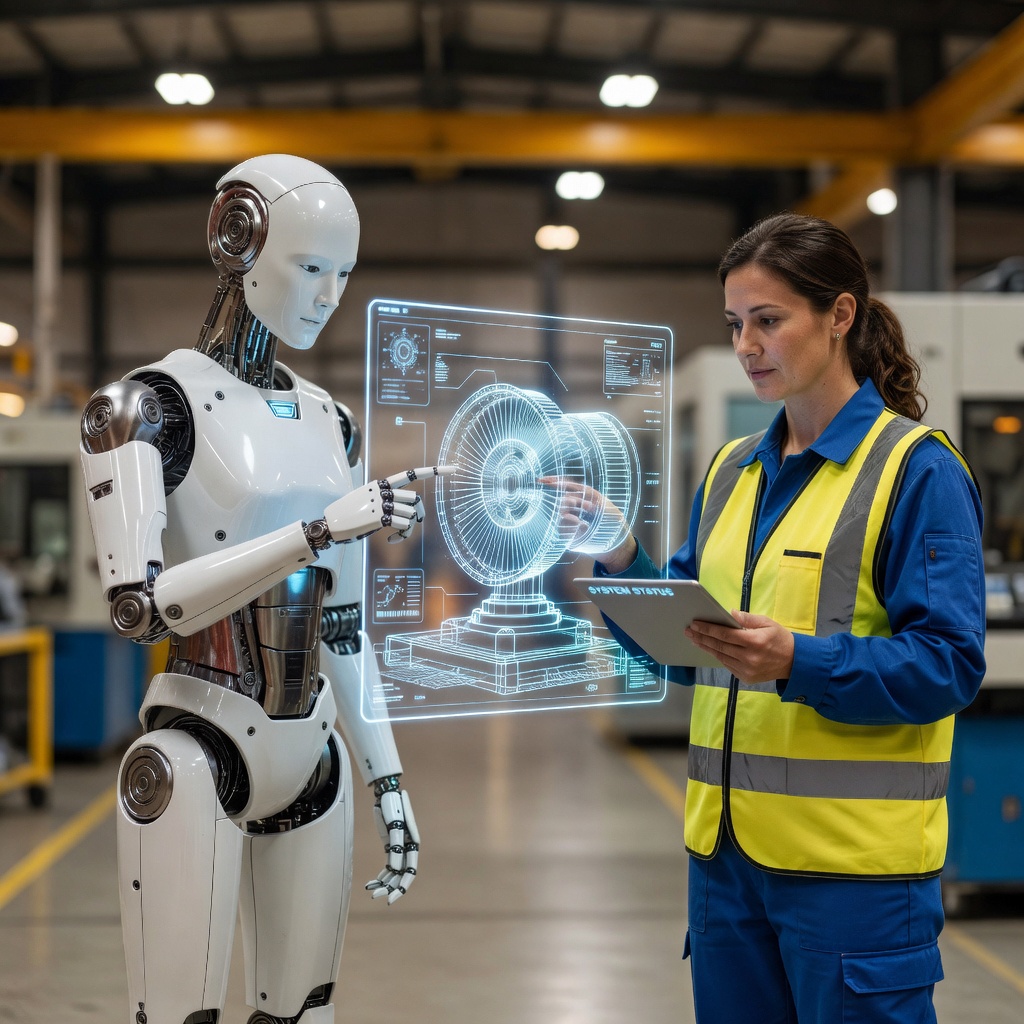
Tesla's Optimus humanoid robot program deserves particular scrutiny because Musk has projected it as potentially the company's most valuable product by unit economics. The engineering challenge is immense: bipedal robots that can perform useful work in unstructured environments represent one of the hardest problems in robotics. Boston Dynamics has spent decades on dynamic locomotion and still deploys in narrow use cases. Figure AI and Agility Robotics are racing toward the same goal with serious funding. Tesla's advantage is its AI training infrastructure and its existing manufacturing supply chain. Whether those advantages translate to a deployable, cost-effective product by 2026 is a question that warrants skepticism calibrated to the difficulty of the underlying engineering.
The Overextension Thesis and Why It Might Be Wrong
The case that Musk is dangerously overextended is straightforward: six major companies, government advisory roles, an active political profile, and a public communication output that would exhaust most people as a full-time job. Attention is finite. Organizational coherence requires sustained leadership focus. The historical record of simultaneous empire-building across unrelated technical domains is not encouraging.
But the counterargument is subtler and worth taking seriously. Musk's companies are not as unrelated as they appear. Tesla's AI work feeds xAI. Starlink provides connectivity infrastructure that could integrate with Tesla vehicles and X. Optimus uses the same neural training pipelines as FSD. Neuralink's long-term vision of brain-computer interfaces intersects with every other digital product in the portfolio. The apparent sprawl may be a genuine systems bet: a conviction that the technologies reinforce each other at inflection points that haven't arrived yet.
What 2025 will reveal, with unusual clarity, is whether the reinforcement thesis holds under pressure or whether the compounding commitments create compounding failures. The Austin robotaxi pilot, the next Starship integrated test, the Grok 4 release rumored for later this year, and Tesla's production ramp of the affordable model will each serve as independent stress tests. Pass enough of them, and the narrative of the decade shifts. Fail a critical one at the wrong moment, and the cascade runs in the other direction. That is not a prediction. That is precisely what makes this the most consequential moment in the Musk story so far.
George Russell
Tech journalist covering Elon Musk’s companies for over 10 years.