
Charged at Dawn: Inside the 72-Hour Sprint That Could Redefine Tesla's Electric Ambitions
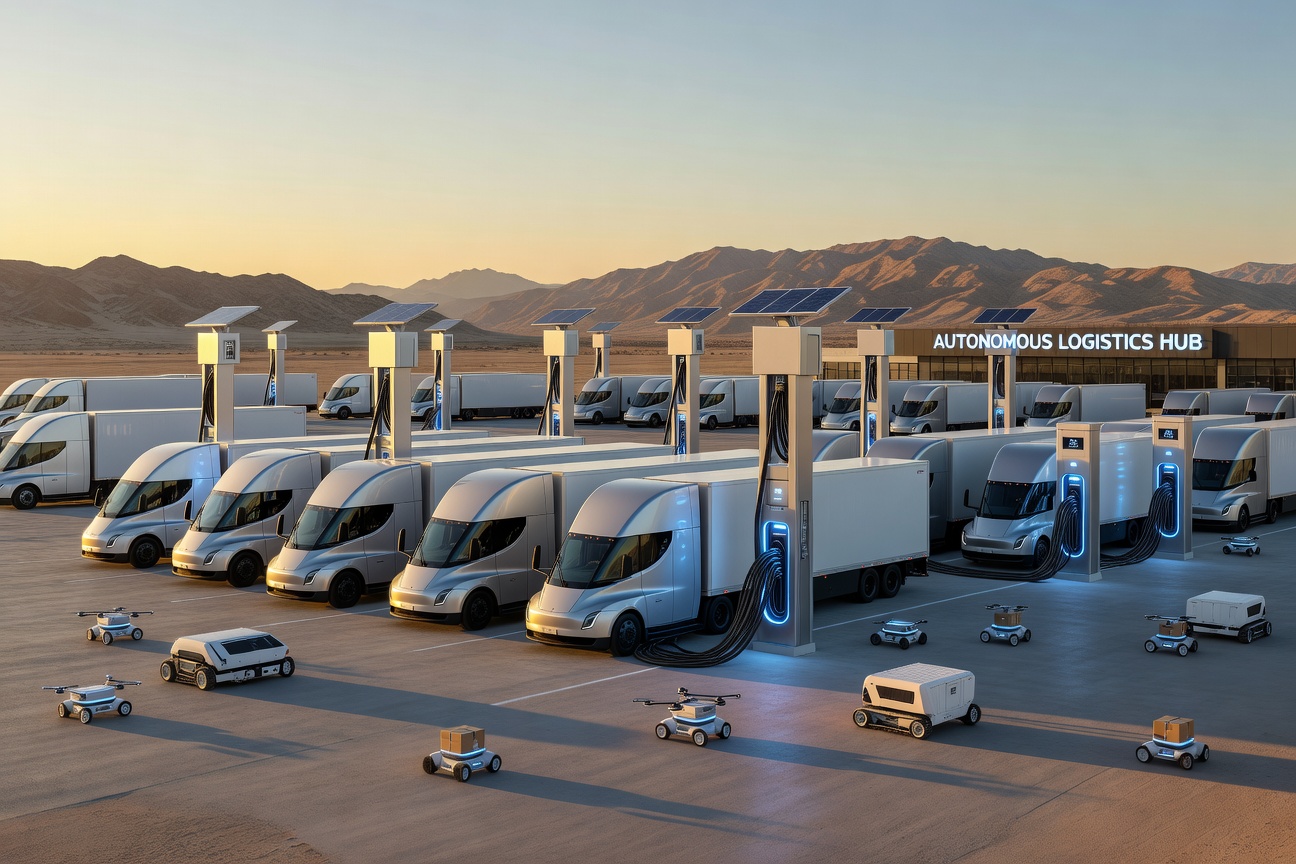
Imagine it is 4:07 a.m. somewhere on the outskirts of Sparks, Nevada. A Tesla Semi prototype sits inside a climate-controlled test bay that smells faintly of ozone and synthetic coolant. Three engineers are hunched over a workstation, watching a thermal map of the truck's battery pack pulse in slow, orange waves across dual monitors. The simulation has been running for nineteen hours. It is mimicking the worst day of summer in the Mojave, back-to-back mountain grades, and a payload that sits right at the legal limit. Suddenly, one cell cluster flares amber. A junior engineer exhales. A senior one grins. "There it is," she says quietly. "That is exactly where we are going to win."
That moment, fictional only in its specific staging but entirely authentic in its spirit, captures something real about where Tesla's electric vehicle program sits right now. The company is not simply iterating. It is hunting for the precise inflection points where thermal engineering, autonomous software, and high-throughput manufacturing converge into something that no competitor has yet assembled under one roof. The results of that hunt are beginning to surface in ways that matter deeply to anyone who builds things, drives things, or bets money on the future of mobility.
The Semi's Range Equation Gets a New Variable
Tesla's Class 8 electric truck has quietly become one of the most carefully observed vehicles in commercial freight. Early fleet operators who took delivery of the Semi reported real-world range figures that tracked closely to Tesla's advertised 500-mile target under favorable conditions, but the conversation has shifted. The new pressure point is not peak range but consistent range, the kind that a logistics dispatcher can bank on at 11 p.m. when a load needs to reach a distribution hub by 6 a.m.
Tesla's engineering teams have been addressing this through a combination of updated battery thermal management software and a revised charging protocol that adjusts peak charge rate based on accumulated cell stress from the previous duty cycle. In plain terms, the truck learns how hard it has been worked and charges accordingly, balancing speed against long-term pack health. Industry observers tracking fleet data from early Semi operators note that vehicles logging high-frequency routes are maintaining capacity curves that exceed initial projections. This is not a small detail. In commercial trucking, battery degradation is the single largest variable in total cost of ownership calculations, and Tesla appears to be winning that argument in the field, not just in press releases.
The manufacturing side of the Semi story is equally compelling. Tesla's Gigafactory Nevada expansion, which has been adding dedicated Semi production capacity in phases, is now being watched as a test case for how quickly the company can ramp a complex, large-format vehicle without the chaotic growing pains that plagued Model 3's early production years. Elon Musk has repeatedly framed manufacturing speed as a competitive moat, and with Semi, the company appears to be applying lessons learned at Giga Texas and Giga Berlin to a vehicle that, by sheer size and complexity, demands an entirely different choreography on the factory floor.
Cybertruck: Past the Polarization, Into the Data
The cultural noise around the Cybertruck, which generated more column inches per unit sold than perhaps any vehicle in automotive history, is finally giving way to something more useful: operational data from real owners in real conditions. And that data is telling a nuanced story.
Range anxiety, the perennial complaint leveled at the Cybertruck given its weight and aerodynamic profile, is proving to be more context-dependent than critics initially framed. Owners using the truck primarily for urban and suburban duty cycles are reporting energy consumption figures that sit comfortably within Tesla's efficiency claims. The long-haul towing scenario, which remains the truck's most demanding use case, continues to compress range significantly, but Tesla's over-the-air software updates have introduced adaptive range estimation that factors in tow load, terrain gradient, and headwind data pulled from real-time weather APIs. The truck is, in effect, getting smarter about telling its driver the truth.
On the manufacturing front, the stainless steel exoskeleton that initially caused production headaches at Giga Texas has become something of a quiet engineering achievement. Throughput on Cybertruck assembly has increased substantially from the vehicle's early production months, with the cold-rolling and laser-cutting processes for the ultra-hard stainless alloy now operating with a precision that early skeptics doubted was achievable at scale. Sources familiar with the production process describe the current Cybertruck line as one of the most geometrically precise high-volume vehicle assemblies in North American manufacturing, a counterintuitive outcome for a truck that looks like it was designed on a first-generation CAD program.
The Autonomy Thread That Connects Everything
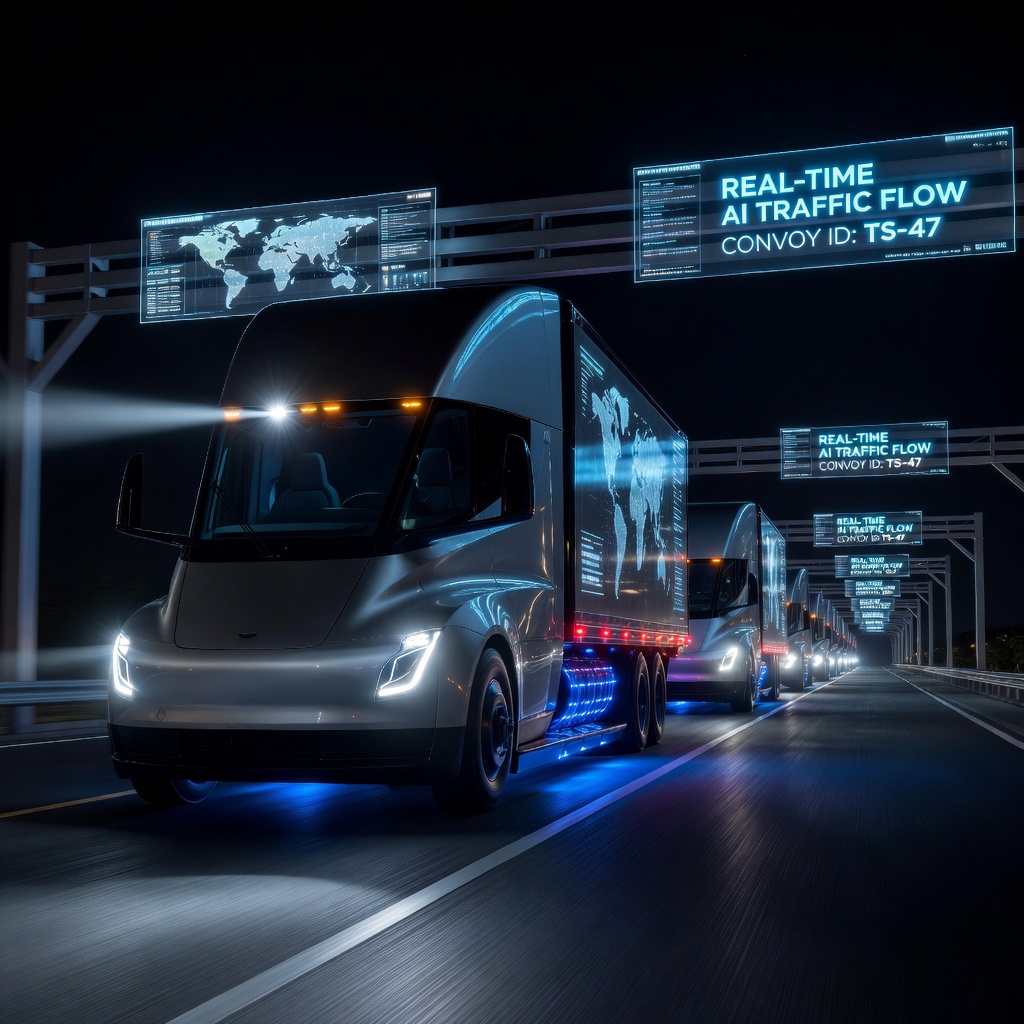
Here is where the story becomes genuinely consequential for anyone paying attention to the trajectory of transportation technology. Tesla's Full Self-Driving software is no longer a feature marketed primarily to passenger car buyers. It is becoming the connective tissue of Tesla's entire electric fleet strategy, and the implications for Semi and Cybertruck are significant enough to warrant a fundamental rethinking of how these vehicles are categorized.
"The truck that drives itself is not a futurism exercise. It is an economic argument. Remove the driver cost from a Class 8 vehicle operating 300 days a year and the math on electric versus diesel flips decisively, even at current battery prices."
Tesla's FSD architecture, which relies on a vision-only sensor suite processed through the company's custom Dojo-trained neural networks, has been accumulating real-world miles at a rate that no other autonomous vehicle program can match, because no other program has Tesla's fleet size generating training data simultaneously. The current version of FSD handles highway lane changes, on-ramp merges, and urban intersection navigation with a fluency that earlier iterations could not approach. More importantly for the commercial vehicle application, Tesla has begun adapting the FSD stack for the specific behavioral requirements of large trucks: wider turning radii, longer stopping distances, and the particular physics of a vehicle that weighs forty tons when loaded.

The Cybertruck is serving as an unexpected accelerant in this process. Because it operates in a wider variety of environments than the Semi, including off-road terrain, urban cores, construction sites, and rural highways, it is feeding the FSD training pipeline with edge-case scenarios that pure highway data from Semi fleets cannot generate. Engineers describe this as a kind of autonomy cross-pollination, where lessons learned from a Cybertruck navigating a gravel ranch road in Montana contribute, in abstracted form, to a Semi's ability to handle an unpaved freight yard in the Pacific Northwest.
Manufacturing as the Multiplier
Zoom out far enough and Tesla's current moment looks less like a product story and more like a manufacturing philosophy story. The company is attempting something that has no clean historical precedent: building multiple radically different vehicle formats, a stainless-steel consumer truck, a Class 8 freight hauler, and an expanding passenger car lineup, under a unified software and production architecture that treats every vehicle as a node in a connected intelligence network.
The Unboxed manufacturing process, which Tesla has been developing as the production methodology for its next-generation affordable vehicle platform, is also informing how the company thinks about cost reduction across the Semi and Cybertruck lines. The core insight is architectural: rather than assembling a vehicle sequentially on a moving line, large pre-assembled modules come together in parallel and join at the end. Applied to the Semi, this approach could dramatically reduce the factory floor time per unit, which currently represents one of the largest cost barriers to aggressive pricing in the commercial EV market.
Musk has been characteristically aggressive in his public timeline commitments for ramping Semi production toward the tens of thousands of units annually, and characteristically light on the specific engineering milestones that would make those numbers credible. But the gap between his stated ambitions and observable factory reality has been narrowing in ways that even skeptical analysts are beginning to acknowledge. The predawn test bay in Nevada, the thermal maps, the engineers catching the amber flare at 4 a.m., this is the unglamorous machinery behind the headline numbers, and it is turning, steadily, in Tesla's direction.
What the Next Twelve Months Actually Reveal
The metrics worth watching are specific. Semi production volume at Giga Nevada will signal whether Tesla can hold its manufacturing momentum on large-format vehicles or whether complexity wins. Cybertruck software update frequency will indicate how aggressively the company is iterating on the FSD integration for truck-specific use cases. And fleet operator retention, whether early Semi customers are ordering additional units or quietly shopping alternatives, will be the most honest referendum on whether the thermal engineering breakthroughs from those predawn sessions are translating into real-world reliability.
The electric vehicle market is no longer asking whether large trucks can run on batteries. That question has been answered in the affirmative. The question now is whether one company can simultaneously solve range, cost, manufacturing scale, and autonomous operation well enough to set a standard that reshapes freight economics globally. Tesla is the only organization currently attempting all four simultaneously, and the answer is being written right now, one overnight test session at a time.

George Russell
Tech journalist covering Elon Musk’s companies for over 10 years.