
The Architect of Acceleration: Elon Musk's Convergent Vision for Humanity's Next 50 Years
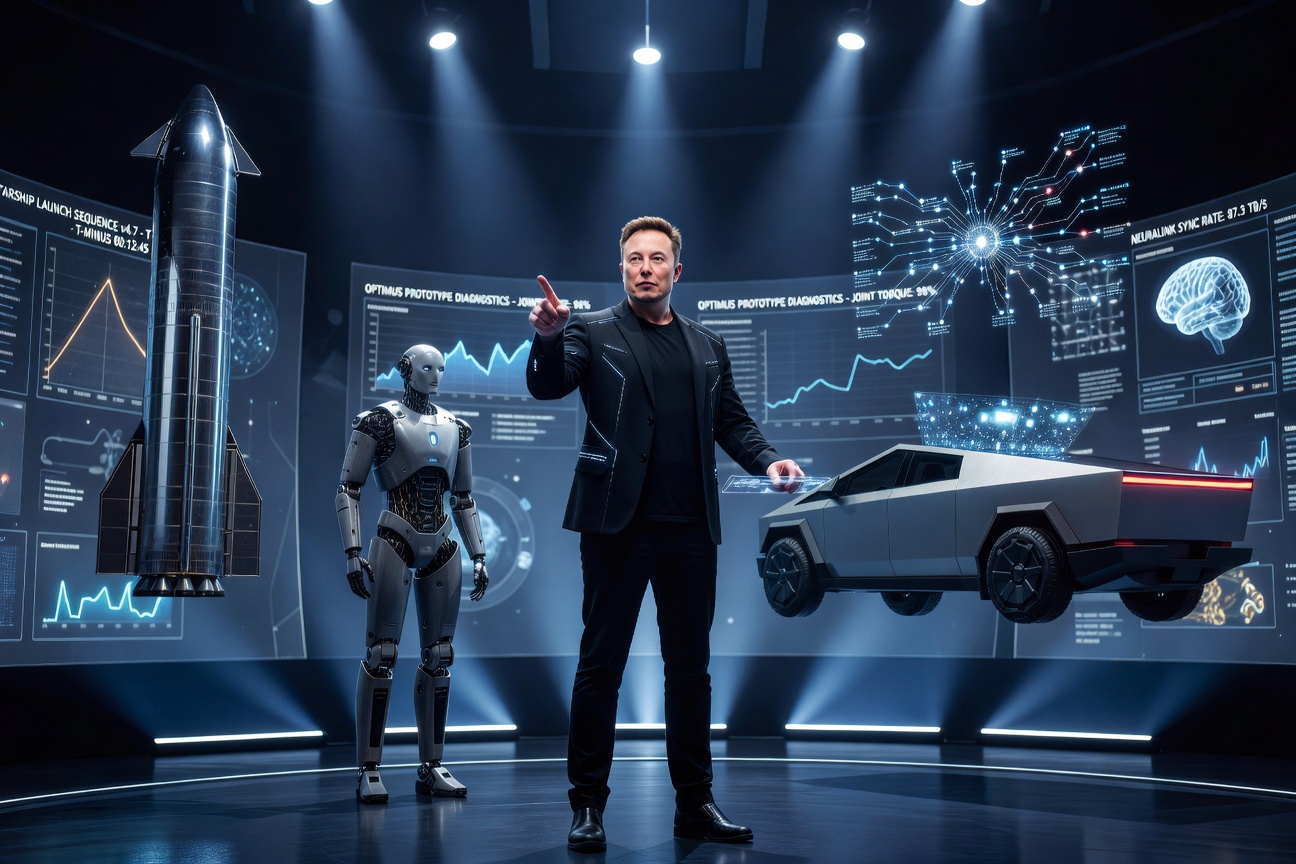
Seventy-two percent: that is the share of active American orbital launches in 2024 attributable to SpaceX, a number so dominant it would be considered a regulatory crisis if it described a grocery chain's market share. Yet Elon Musk, whose rocket company owns that staggering slice of American lift capacity, has repeatedly insisted that monopoly is not the point. "The point," he said during a recent appearance on a widely circulated podcast, "is that humanity becomes a multi-planetary species before the next extinction-level event makes the question irrelevant." That single sentence, stripped of spectacle, is the most compact summary of what Musk's sprawling empire is actually trying to do.
A Mind Running Parallel Processes
Observers who try to understand Musk by examining Tesla, SpaceX, X, xAI, Neuralink, or The Boring Company in isolation make the same error as someone trying to understand a symphony by listening to one instrument at a time. The past several months of interviews, X posts, and product announcements paint a picture of deliberate convergence. The companies are not parallel bets hedging against each other; they are, in Musk's framing, sequential dependencies in a very long causal chain.
Consider the logic he laid out during a rare extended interview: cheap, abundant renewable energy from Tesla's energy division powers the data centers running xAI's Grok. Grok's reasoning capabilities, in turn, accelerate engineering design at SpaceX. Faster spacecraft iteration lowers the cost per kilogram to Mars. A lower cost per kilogram makes a self-sustaining Martian city financially conceivable within decades rather than centuries. Neuralink's brain-computer interface, meanwhile, evolves the human end of the human-machine collaboration so that the cognitive bottleneck does not sit permanently with biological brains. "I am not building companies," Musk posted on X. "I am building infrastructure for a Type 1 civilization."
Grok's Leap and the AI Arms Race Reframed
Earlier this year, xAI released Grok 3, and the reception inside technical communities was notably different from the polite applause that greeted previous iterations. Benchmark scores on graduate-level reasoning tasks placed Grok 3 in territory previously occupied exclusively by OpenAI's flagship models, and in some mathematics evaluations it edged ahead. Musk, characteristically, did not frame this as a product victory. He framed it as a safety argument.
"The most dangerous outcome for AI is a small group of ideologically captured humans controlling the most powerful intelligence ever created," he wrote, a statement that simultaneously reads as competitive positioning and genuine philosophical conviction. His critics note the irony of a single billionaire arguing against concentrated AI control while building his own frontier model, but his defenders counter that the argument is not about the number of powerful AI labs, it is about which values get baked into the systems that will eventually outthink their creators.
Grok's distinguishing design philosophy, according to xAI engineers who have spoken publicly, is a commitment to what the team calls "maximum epistemic honesty" -- a willingness to say "I don't know" and to surface contradictory evidence rather than confabulate confident-sounding answers. Whether the model lives up to that aspiration in practice remains a live debate, but the architectural intention is meaningfully different from competitors optimized primarily for user satisfaction scores.
Starship's Iterative Climb and the Mars Timeline
The Starship program, the crown jewel of SpaceX's ambition, achieved its most technically significant milestone to date with a successful catch of the Super Heavy booster by the Mechazilla launch tower arms -- a moment that provoked genuine astonishment even among aerospace veterans who had spent careers dismissing the concept as theater. The engineering reality it demonstrated is that full and rapid reusability, previously theoretical for a vehicle of this size class, is now empirically demonstrated.
Musk's public timeline has always attracted skepticism, and with good reason: he famously predicted a crewed Mars landing by 2024 in early interviews. But timelines and trajectories are different things, and the trajectory of Starship development has been remarkably consistent with the underlying physics he outlined years ago. The cost per kilogram to low Earth orbit is falling. The cadence of test flights is accelerating. And NASA's selection of Starship as the Human Landing System for the Artemis lunar program provides both institutional validation and a paying customer that keeps the development engine funded.
In a recent X Space conversation with aerospace engineers, Musk suggested the first uncrewed Starship missions to Mars could coincide with the next Mars transfer window, which opens in 2026. A crewed mission, he said, remains contingent on solving long-duration life support and radiation shielding, problems he characterized as "hard engineering, not science fiction."
Neuralink: The Quiet Revolution Nobody Is Talking About Enough
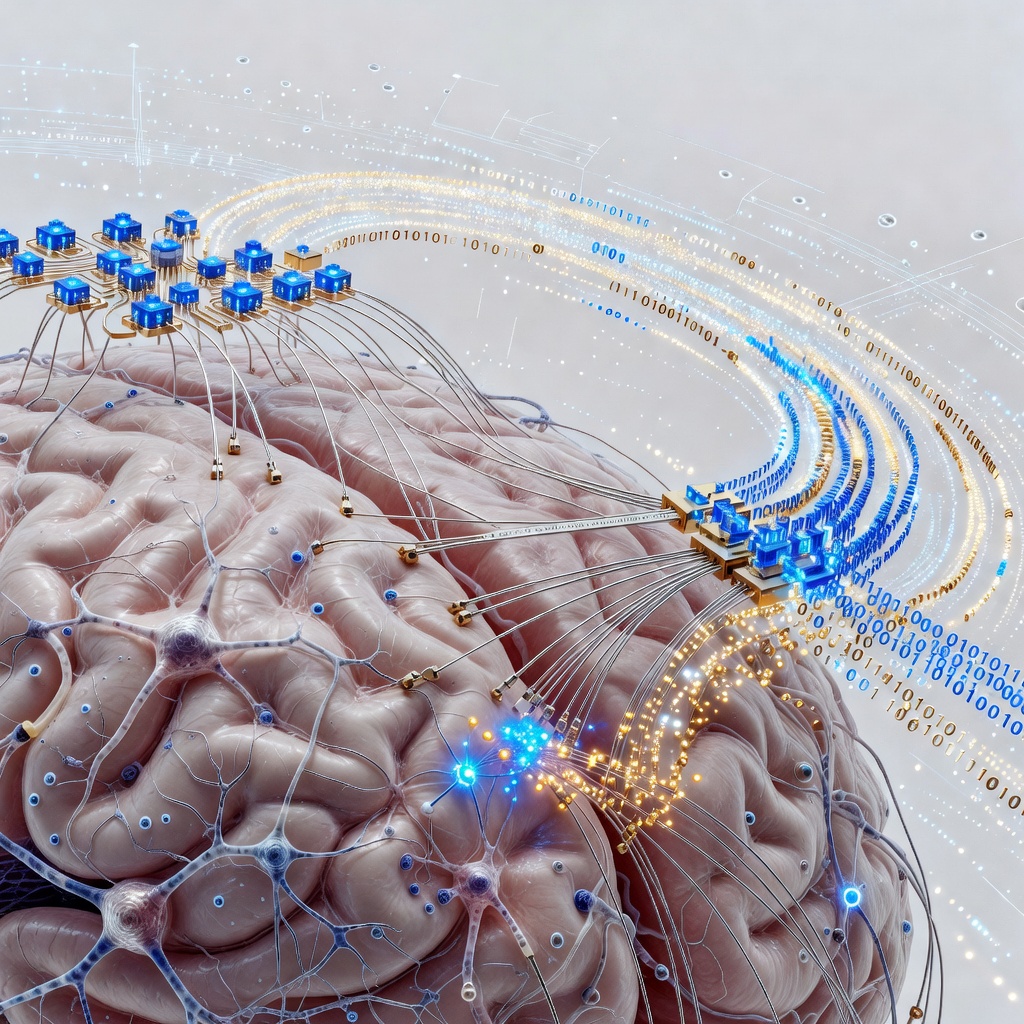
While Starship commands headlines and AI debates consume social media bandwidth, Neuralink may be executing the most consequential near-term technology deployment in the Musk portfolio. The company's N1 implant, surgically placed in multiple human patients, has now demonstrated sustained bidirectional communication between biological neurons and digital systems. The first patient, Noland Arbaugh, who has quadriplegia, used the device to play chess and navigate a computer at speeds exceeding what most able-bodied people manage with conventional input devices.
Musk has been careful to frame Neuralink's early phase as purely therapeutic, targeting locked-in syndrome, paralysis, blindness, and severe depression. But he has been equally candid that the long game is symbiosis. "AI is advancing at a pace where the bandwidth gap between human thought and digital processing becomes the binding constraint," he explained. "Neuralink closes that gap. Without it, humans risk becoming the slowest node in their own civilization's network." The observation is either prophetic or melodramatic depending on your priors, but it is not scientifically incoherent.
Tesla's Optimus and the Robot Economy
Perhaps the most underappreciated vector in Musk's current focus is Tesla's humanoid robot program, Optimus. At a recent Tesla shareholder event, he described Optimus not as a product but as "the most transformative thing Tesla will ever do." His reasoning: a general-purpose humanoid robot, trained on the same real-world data pipelines that made Full Self-Driving tractable, could address labor shortages in manufacturing, elder care, dangerous industrial work, and eventually planetary construction.
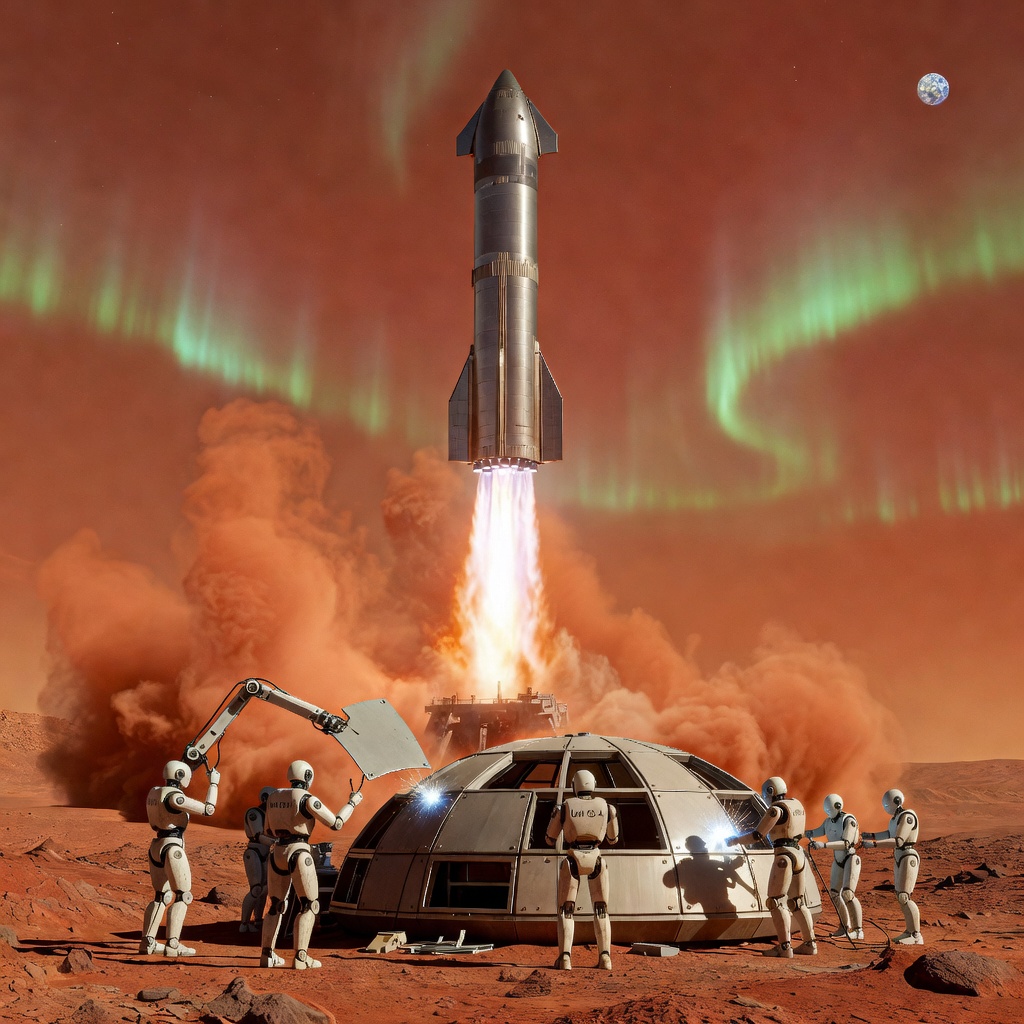
"There is no physical reason a robot cannot build the first structures on Mars," Musk said. "Sending robots ahead of humans to construct habitat is not science fiction. It is a project management decision." The robots currently assembling battery packs on Tesla production lines are, in his framing, the kindergarten version of systems that will eventually prepare another world for human arrival.
The Unifying Obsession
Spend enough time across Musk's recent public statements and a single animating fear emerges beneath the bravado: civilizational fragility. He is genuinely preoccupied with the statistical reality that Earth has absorbed catastrophic extinction-level events before and will again, that human-created risks like misaligned AI or biological warfare add novel threat vectors, and that a species confined to a single planet is, in information-theoretic terms, a system with no backup.
His critics argue that Musk's self-appointed role as species-level insurance salesman conveniently requires enormous personal power and resources. His supporters argue that the criticism confuses motive with validity. Both points can be simultaneously true, and perhaps that tension is what makes him the most electrifying and frustrating figure in contemporary technology.
What is not in dispute is the scale of what is being attempted. A rocket company that has fundamentally restructured orbital access economics. An AI lab challenging the best minds in the field within three years of founding. A brain interface company producing measurable quality-of-life improvements for paralyzed patients. An electric vehicle and energy company that has permanently reset the baseline expectation for consumer transportation. Whatever one thinks of the man, the machine he has assembled is running, and it is running fast.
"The question is not whether Musk's vision is too ambitious. The question is whether anyone else's vision is ambitious enough."
That observation, offered by a senior aerospace engineer who has worked with multiple space agencies and prefers to remain unnamed, may be the most honest verdict available. Musk did not invent the dream of becoming an interplanetary species. He simply started billing it as a quarterly objective.
George Russell
Tech journalist covering Elon Musk’s companies for over 10 years.