
Dawn at Boca Chica: Inside the 72 Hours That Will Define SpaceX's Next Chapter
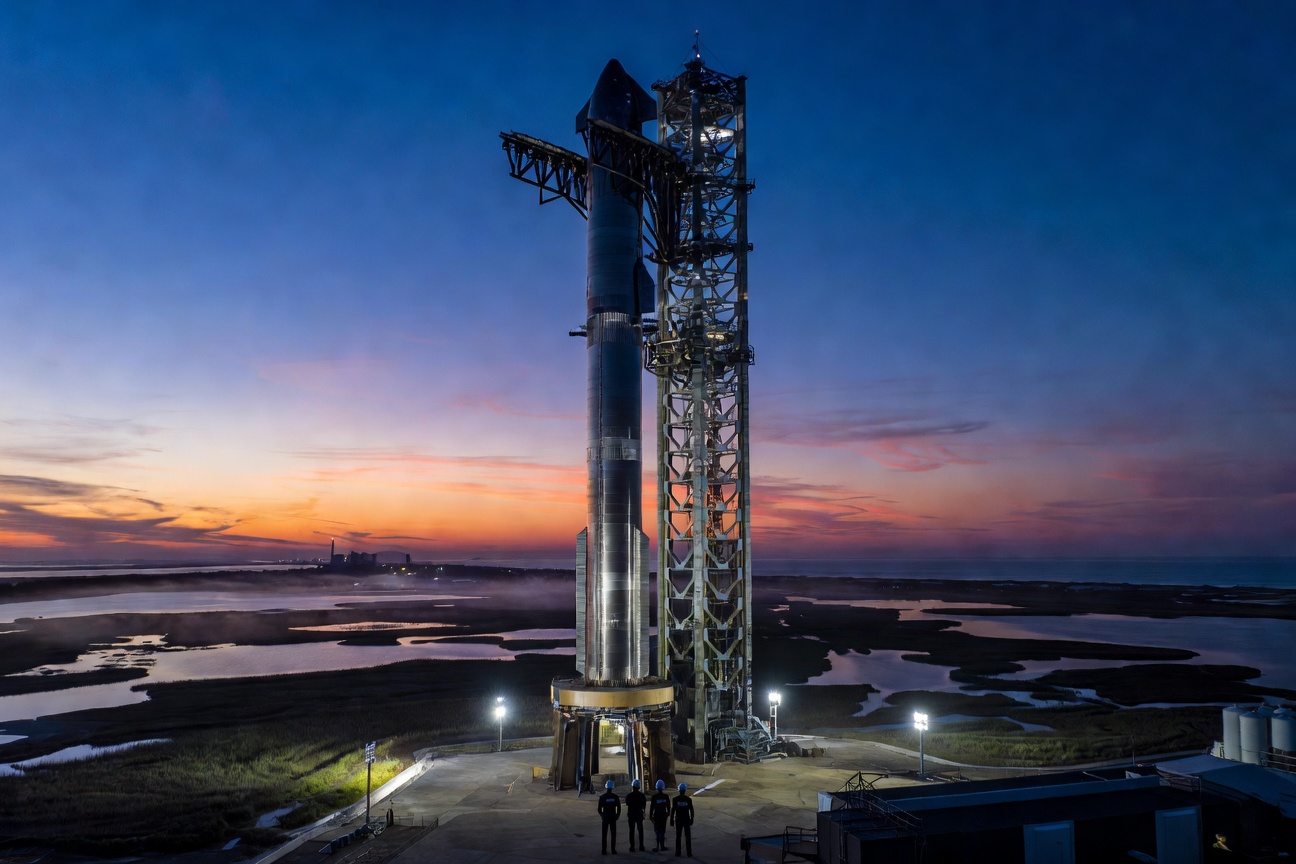
The coffee at the Starbase cafeteria tastes like iron and ambition. It is 4:47 a.m. on a Tuesday in South Texas, and the building smells of machine oil, printed circuit boards, and the faint sulfuric ghost of methane propellant drifting in from the pad. Outside, through reinforced windows still flecked with caliche dust from a previous static fire, the 123-meter silhouette of a fully stacked Starship vehicle looms against a sky the color of a fading bruise. Technicians in black SpaceX polos move beneath it in pools of white floodlight, tapping tablets, checking umbilical connections, whispering numbers into headsets. This is not a dress rehearsal. There are no dress rehearsals here anymore.
Seventy-two hours from now, if the range is clear and the liquid oxygen loading proceeds without anomaly, this vehicle will attempt something that would have qualified as science fiction at the turn of the century: a full integrated flight test with booster catch, upper-stage reentry, and a simulated payload deployment profile designed to mirror the logistics architecture that will one day place humans on the Moon and, eventually, Mars. The engineers walking these corridors are not thinking about eventually. They are thinking about Thursday.
The Machine That Ate the Calendar
What makes SpaceX's current operational tempo genuinely unprecedented is not any single program in isolation. It is the simultaneity. While Ship 35 prepares for flight at Boca Chica, a Falcon 9 is being rolled out at Cape Canaveral SLC-40 for yet another Starlink Group 12 mission, the company's sixth Starlink launch in fewer than 30 days. At the same time, engineers in Hawthorne, California are deep in hardware reviews for the Human Landing System variant of Starship, the version that NASA has contracted to carry Artemis astronauts down to the lunar surface, possibly as early as 2026. And in a separate facility that SpaceX rarely invites cameras into, a small team is running thermal simulations for the pressurized habitat modules that will form the first crewed Mars transit vehicle.
The breadth is staggering. The depth is what keeps the engineers up at night.
"We are not building one rocket program. We are building the circulatory system of a spacefaring civilization. Every launch, every caught booster, every satellite handshake is a heartbeat."
Starship: The Test Article That Became the Test
Six integrated flight tests have now taken place since the first dramatic, if explosive, liftoff in April 2023. Each successive flight has accomplished something the previous one could not. Flight 5's booster catch with the mechazilla arms in October 2024 reset the psychological baseline for what reusability could look like. But the program's current ambitions go considerably further. The target for 2025 is full rapid reusability of both the booster and the upper stage, validated through back-to-back launches with a turnaround measured in hours, not weeks.
The engineering challenges remaining are formidable but no longer mysterious. The Raptor 3 engine, now standard across both the booster ring and the upper stage, has demonstrated significant improvements in thrust-to-weight ratio and combustion stability. The heat shield tile replacement problem that plagued earlier flights has been partially addressed through a new high-temperature ceramic composite applied directly to the steel substrate in a honeycomb interlocking pattern, reducing both tile count and gap vulnerability. Hot-staging, proven in Flight 3, has become routine. The remaining dragons to slay are in the terminal guidance algorithms for the ship's landing burn and in the long-duration cryogenic propellant management needed for deep-space missions.

Starlink: The River That Funds the Ocean
Walk past the flight control monitors toward the finance wing of any SpaceX building and you will find the less glamorous but arguably more consequential story: Starlink is now the primary engine financing everything else. With an active satellite count pushing past 7,000 and subscriber numbers that industry analysts estimate exceed 4.5 million globally, the constellation generates a cash throughput that no rocket program in history has ever had behind it. The recently announced Starlink V3 satellites, larger and more capable, are being deployed at a rate that is compressing the timeline for global high-speed broadband saturation.
The strategic implications extend beyond telecommunications. Starlink's inter-satellite laser link architecture is being studied internally as a communications backbone for cislunar operations, meaning the same mesh network beaming Netflix to a cattle station in the Australian outback might one day relay telemetry from a lunar surface habitat. The convergence of these programs is not accidental. It is infrastructure thinking applied at civilizational scale.
There are friction points. Orbital congestion concerns have intensified among astronomers, with several major observatory consortia formally requesting regulatory intervention on V3 deployment density. SpaceX has countered with anti-reflectivity coatings and orbital altitude adjustments, though the scientific community remains divided on whether these measures are sufficient. The debate will not be resolved by press release. It will be resolved, slowly and imperfectly, by data.
Artemis and the Lunar Surface System: A Contract With History
NASA's Artemis program has, over the past two years, contracted SpaceX for two crewed lunar landing missions. The Human Landing System, a derivative of Starship stripped for lunar use and modified with landing legs optimized for regolith contact, is the most complex variant the company has ever attempted. It must perform an orbital rendezvous with the Orion capsule, descend unpowered through the final kilometers of vacuum to a precision landing near the lunar south pole, survive multiple lunar days and nights on the surface, and then execute a powered ascent to rendezvous with Orion again for the return journey.
The technical checklist is long. The political checklist is longer. NASA's own schedule pressures, particularly the delays accumulated in the Space Launch System development and the Orion capsule life support systems, mean that the Artemis III crewed landing is currently targeted no earlier than mid-2027 in the most optimistic internal projections. SpaceX's HLS hardware, however, is running ahead of that schedule, a rare inversion that has generated quiet but genuine tension between contractor and agency. The company has already begun propellant depot architecture tests relevant to the orbital refueling sequence that any lunar Starship mission requires.
Mars: The Horizon That Gets Closer Every Quarter
At Starbase, if you ask someone about Mars at 4:47 a.m. in front of a ticking countdown clock, you get a look that is equal parts reverence and exhaustion. Mars is why most of these people are here. It is also the program furthest from a launch date, though the gap is narrowing in ways that external observers often miss.
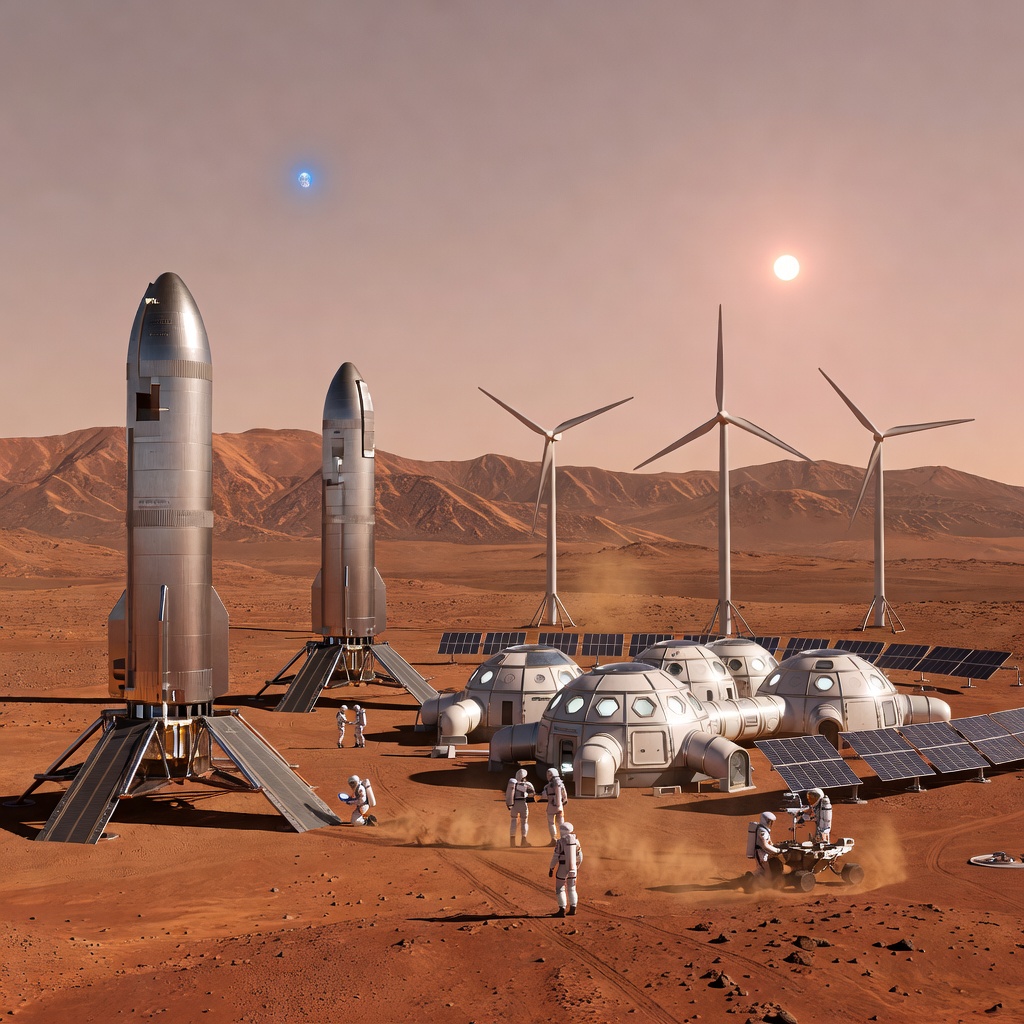
The Mars architecture depends on approximately three interconnected breakthroughs becoming operational in sequence: full and rapid reusability of Starship, orbital propellant transfer at scale, and closed-loop life support validated for missions lasting 26 months. Of these, the first is the closest to completion. The second has been demonstrated at laboratory scale but never in an actual on-orbit environment. The third remains primarily in simulation and Earth-based analog testing. SpaceX has stated publicly that uncrewed cargo missions to Mars, carrying primarily infrastructure hardware and propellant production equipment, could be launched as early as the 2026 Mars transfer window. Whether that timeline holds will depend significantly on what happens at Starbase over the next several months.
What is rarely discussed in mainstream coverage is the cascading dependency chain. Every Starlink revenue dollar, every Falcon 9 reliability milestone, every successful Starship booster catch is not just a win for that specific program. It is a deposit into the technical and financial account that Mars will eventually draw against. SpaceX has constructed an unusual business model: a profitable near-Earth operation that systematically cross-subsidizes a program with no near-term commercial return and an enormous long-term civilizational payoff.
The Next 72 Hours and Beyond
The countdown clock on the Starbase cafeteria wall ticks forward. Outside, the propellant loading team begins its pre-chill protocols, coaxing liquid oxygen and liquid methane to temperatures that would freeze carbon dioxide solid. The vehicle groans faintly as it adjusts to the thermal stress, a sound that engineers here describe, with deadpan affection, as the rocket thinking.
SpaceX in 2025 is an organization operating at the edge of its own ambitions, which is precisely where it has always done its best work. The programs are real. The hardware is on the pad. The challenges are not theoretical. And Thursday is coming fast.
The coffee, still terrible, gets poured again. No one here is going back to sleep.