
Forty-Eight Hours in the Life of the Woman Who Talks to Starships
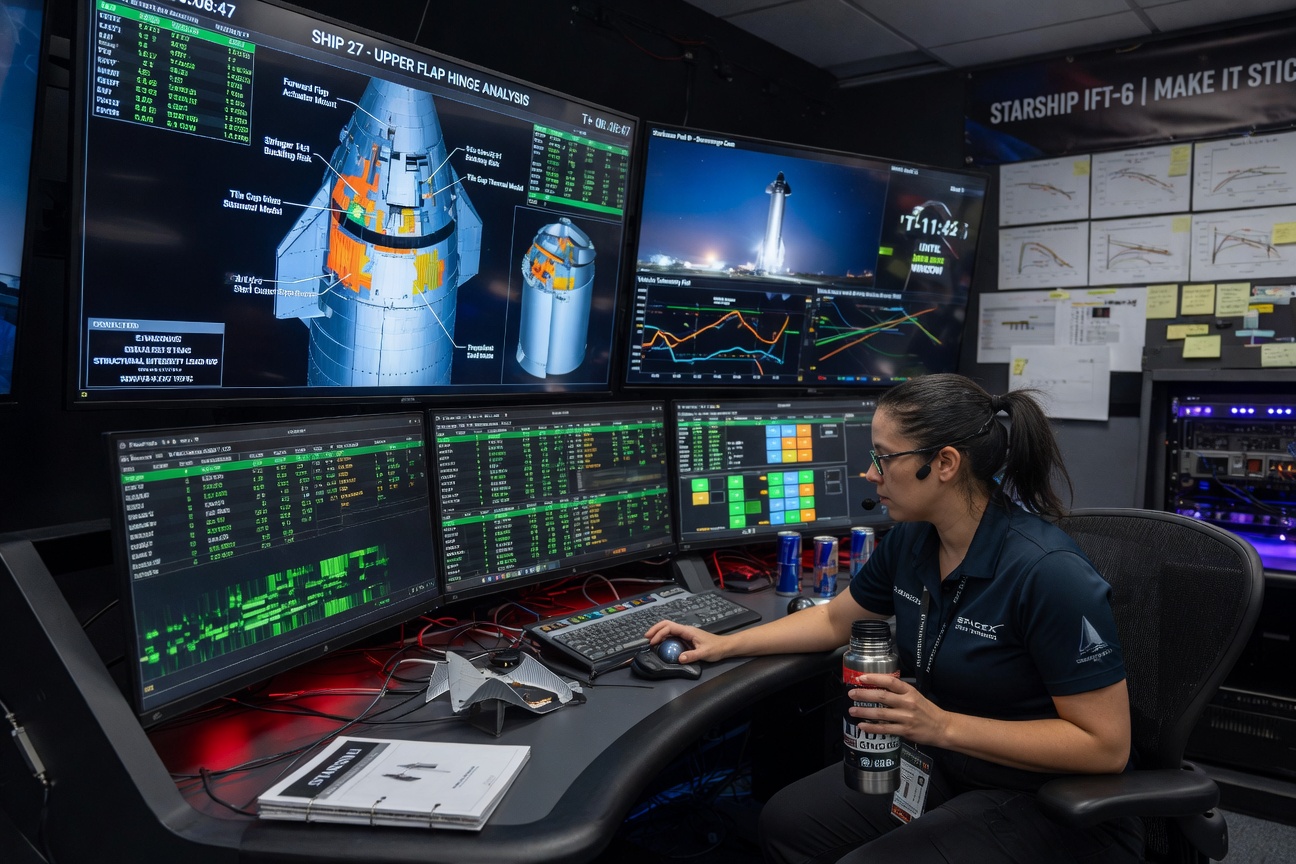
The alarm goes off at 4:47 a.m., thirteen minutes before it was supposed to, because Dr. Priya Nair set a second one and then forgot about it. She is already half-awake anyway. On her phone, a Slack thread marked #SL-batch-G14-review has accumulated 34 new messages since midnight, most of them timestamped from colleagues in Hawthorne, California, who have been massaging a launch window for a Starlink Group 14 deployment that keeps sliding due to upper-atmosphere drag forecasts nobody completely trusts. This is a Tuesday. It is also, by every measurable standard, a completely normal day in the life of someone who helps talk to Starships for a living.
The Unremarkable Miracle of Another Starlink Morning
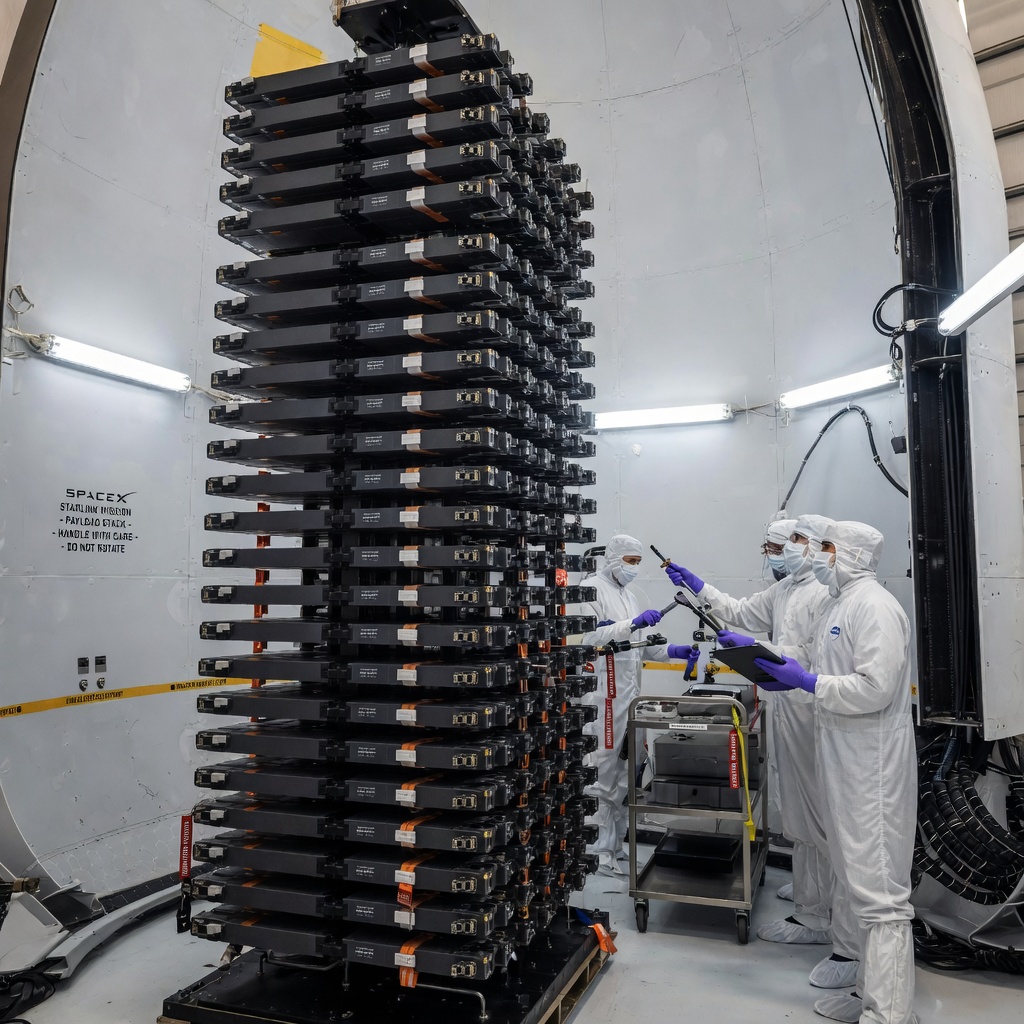
By 6:15 a.m., Priya is at her desk inside what SpaceX staff informally call the Fishbowl, a glass-walled coordination room at Starbase where Starship integration data and Falcon 9 mission feeds share wall space in a way that would have been science fiction a decade ago. The Starlink batch, 23 flat-panel satellites stacked like a deck of oversized playing cards inside a Falcon 9 fairing, is a mostly solved problem at this point. SpaceX has executed more than 200 Starlink launches. The cadence has become almost rhythmic, a quiet drumbeat underneath the louder percussion of everything else the company is attempting. And yet the group thread is still alive because atmospheric density at 550 kilometers is behaving oddly this week, mildly elevated due to a solar flux spike, and the drag budget for constellation station-keeping has to be recalculated fresh for every single batch. Priya scrolls, annotates a comment from a colleague about thruster duty-cycle margins, and presses send before her coffee is finished.
What most people do not appreciate about Starlink, she explains during a brief break between data reviews, is that the product is never static. "Every time we add satellites, we are not just filling holes in coverage. We are rebalancing a living system. Forty-seven countries added service agreements in the last 18 months. Each one changes traffic patterns, which changes power-load modeling, which changes how we think about the next orbital shell." The constellation currently exceeds 6,500 active satellites. The planned Starlink Gen 3 architecture, still in phased approval, would more than double that figure. Somewhere in that number is the bandwidth headroom that SpaceX believes Mars surface operations will eventually need, a detail that sounds distant until you realize the company is designing for it right now, inside ordinary Tuesday spreadsheets.
The 11 a.m. Anomaly and What It Reveals About Starship's Maturity
At 10:53 a.m., a sensor string on Starship's Ship 35 throws an unexpected thermal reading during a pre-static-fire chill sequence. The reading is not dangerous. It is, however, interesting enough to halt the countdown clock and summon three additional engineers to the console. Priya is one of them, pulled from a documentation review she was already three days behind on.
The sensor in question sits near one of the 39 Raptor 3 engines clustered in the Super Heavy booster's base. The Raptor 3, the current production variant, represents a generational leap from the original design: higher chamber pressure, simplified plumbing, and a manufacturing cost that SpaceX has publicly targeted at under $200,000 per unit, a figure that, if accurate, changes the economics of rocket propulsion more dramatically than anything since the shift from expendable to reusable stages. But complexity compressed into simplicity still contains surprises. For 22 minutes, the team works the problem methodically, pulling historical comparisons, running a thermal model, checking sensor calibration logs. The verdict: a calibration offset introduced during last week's ground service equipment swap. The reading was the sensor lying, not the engine struggling. The clock resumes.
"That process, right there, is what people underestimate," Priya says, gesturing at the now-calm console. "The vehicle is more capable than any rocket in history. But the capability only holds if the humans interpreting the data are relentlessly paranoid." She pauses. "Healthy paranoia. There's a difference."
The static fire itself, when it happens at 2:31 p.m., lasts six seconds and produces a concussive bloom of flame that flattens the surrounding grass for a quarter mile. On the data screens, it is a clean green cascade of nominal readings. Outside the Fishbowl windows, it is elemental and violent and briefly awe-inspiring. By 2:35 p.m., the team is already comparing thrust curves to the last three test burns. By 2:45 p.m., someone has started a new Slack thread.
Artemis, Acronyms, and the Weight of the Moon
The afternoon shifts register with a different kind of gravity. At 4:00 p.m., Priya joins a video call that includes representatives from NASA's Exploration Systems Development Mission Directorate, a Boeing subcontractor team, and two members of the Lunar Starship project group. The call is a Human Landing System coordination checkpoint, part of the rolling drumbeat of meetings that keeps the Artemis III timeline nominally on track for a crewed lunar surface landing.
Lunar Starship is, in many respects, the most technically demanding derivative of the base Starship architecture. It has to launch from Earth, rendezvous with a Gateway station or directly with Orion in lunar orbit, descend to the surface without the benefit of a thick atmosphere to slow it down, and ascend back to orbit entirely on propellant loaded at departure. The refueling architecture, which requires multiple Starship tanker flights to fill a depot vehicle before the lunar lander departs, is an engineering ballet that has never been performed at full scale. The current plan calls for somewhere between eight and sixteen tanker launches per lunar mission. Every one of those flights needs to hit its window.
On the call, there is a spirited but collegial disagreement about interface documentation for the crew egress tunnel, the passage through which astronauts will climb from the lander's pressurized cabin to the lunar surface. It is the kind of argument that is entirely about millimeters and handrail placement and yet carries the full weight of human life in a vacuum. Priya mostly listens, occasionally pulling up a shared CAD reference on her second monitor. "This is the work nobody photographs," she says afterward, shutting her laptop. "But if we get this wrong, nothing else matters."
After Dark: The Red Planet Creeps Into the Conversation
Dinner is a protein bar eaten at her desk during a systems review that runs long. By 8:30 p.m., most of the Fishbowl has emptied, leaving the blue-white glow of monitors and a skeleton crew. This is when the Mars conversations tend to happen, informally, off-agenda, among the people who stay late because they cannot quite leave.
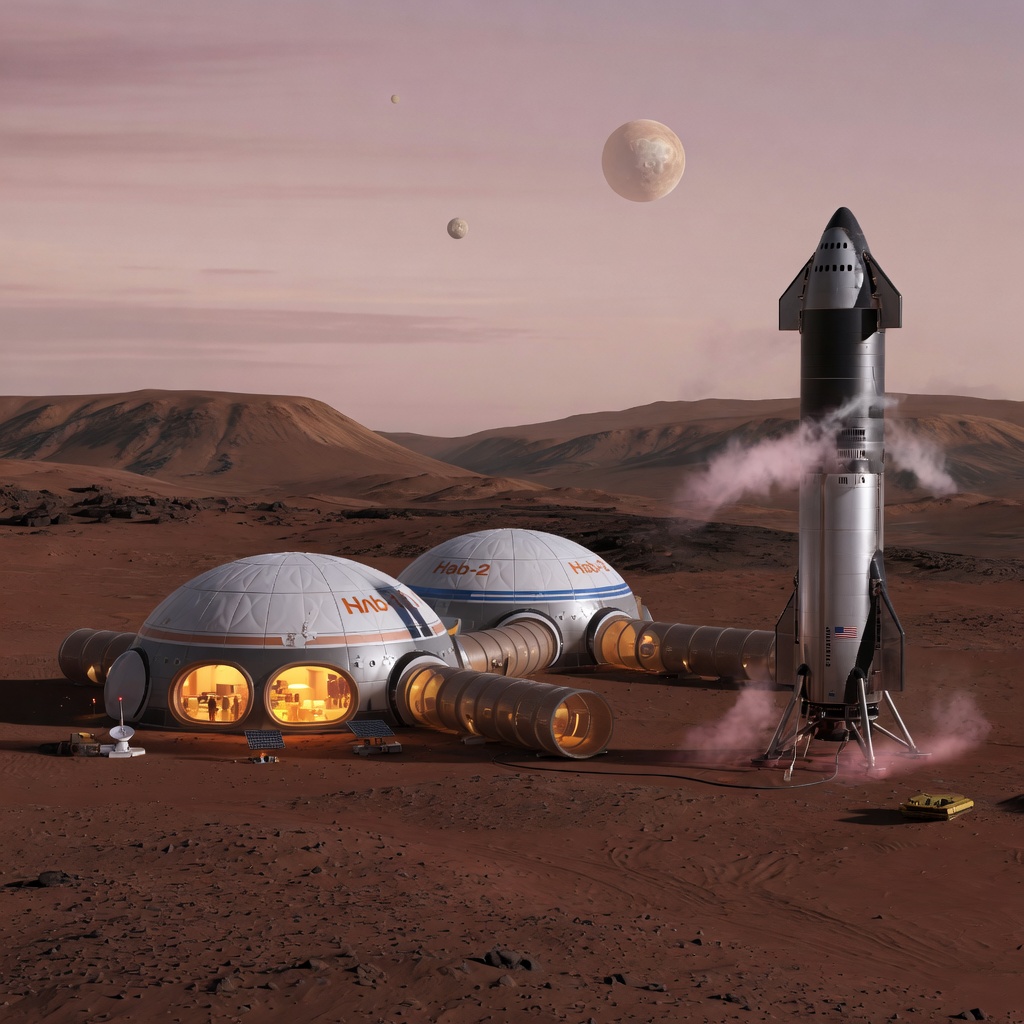
Tonight, someone pulls up the latest internal trajectory analysis for the 2026 Mars launch window. SpaceX has publicly stated its ambition to send uncrewed Starship vehicles to Mars during that window, which opens in late 2026 and spans roughly a month when Earth and Mars align favorably. The word "ambitious" understates it. Between now and then, Starship needs to complete full orbital flight with successful catch and reuse of the Super Heavy booster, demonstrate propellant transfer in orbit, validate the heat shield tile system through multiple high-energy reentries, and prove the Raptor engines can be restarted reliably in deep space conditions. That is not a to-do list. It is a civilization-scale engineering project compressed into a calendar.
And yet the people in this room do not talk about it the way an outsider might expect, with breathless wonder or defensive skepticism. They talk about it the way a structural engineer talks about a bridge that is two years from completion: with specific concerns, specific confidence, and an almost businesslike acceptance that the gap between where they are and where they need to be is simply work to be done. The propellant transfer demonstrations are progressing. The tile replacement cycle is improving with every reentry dataset. The catch mechanism that plucked a 70-meter booster out of the sky with mechanical arms, a feat so improbable it still feels borrowed from science fiction, worked. And then it worked again.
What the Morning Looks Like From Here
At 11:14 p.m., Priya closes her last ticket, a documentation update flagging a minor procedural discrepancy in the Starship propellant loading sequence that she spotted during the morning's anomaly review. Nobody asked her to find it. She found it because she was looking, the way people in this building tend to look, constantly, reflexively, with the low-grade vigilance of someone who understands that in aerospace, small discrepancies have a habit of becoming large ones at the worst possible moment.
She drives home under a South Texas sky thick with stars. Somewhere overhead, a freshly launched batch of Starlink satellites is completing its first orbital pass, already pinging ground stations, already beginning the weeks-long process of raising to operational altitude. On another orbital plane, debris from a previous mission drifts in catalogued silence. At Cape Canaveral, a Falcon 9 is being rolled to the pad for a launch 36 hours out. At Starbase, Ship 35 has been pronounced healthy after its static fire, and the conversation about its next test has already begun.
The scale of what SpaceX is attempting across all these programs simultaneously, Starlink's global coverage, Starship's reusability revolution, Artemis's return to the Moon, the long Mars horizon, does not feel abstract from inside it. It feels like exactly what it is: a very large number of very specific problems being worked by people who set alarms at 4:47 in the morning and check Slack before their coffee is done. That is not a romantic image. It is, however, the accurate one. And accuracy, as Dr. Priya Nair would tell you, is the whole point.