The Neighbors Who Became a Power Plant: How Virtual Grids Are Rewriting Energy Poverty
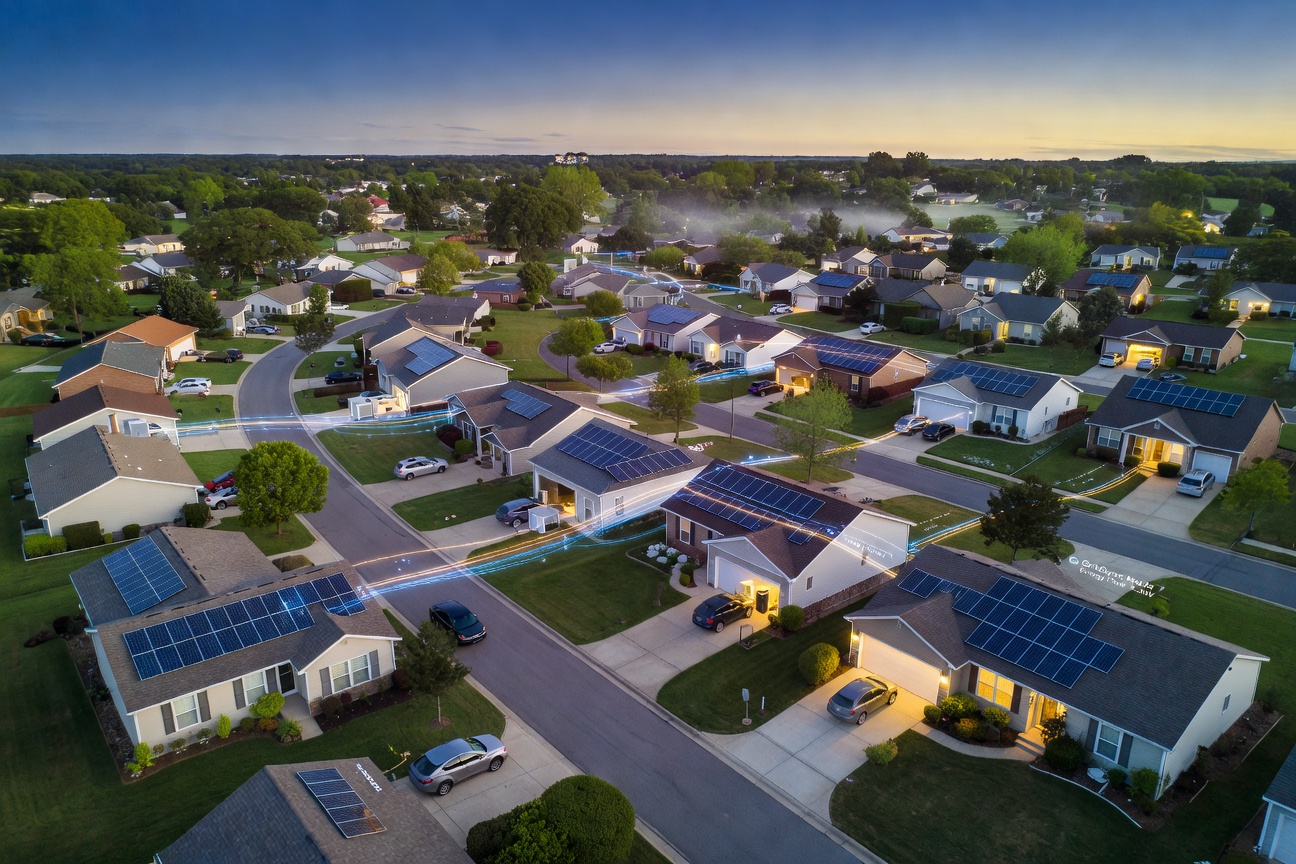
Marcelina Reyes did not set out to become a power company. The retired school librarian in Oxnard, California, simply wanted to stop dreading her summer electricity bills, which regularly climbed past $400 a month while she rationed the air conditioning her asthmatic granddaughter desperately needed. Today, a slate of solar panels crowns her roof, a wall-mounted battery hums in her garage, and an app on her phone shows her selling surplus electricity back into a pooled neighborhood network during peak demand hours. She earns credits. Her grid bill is nearly zero. And on the three hottest days of last August, her block collectively kept the lights on for a local dialysis clinic when the broader utility grid faltered.
From Passive Consumers to Active Architects
The transformation Marcelina stumbled into has a formal name: the virtual power plant, or VPP. It is not a building, not a dam, not a field of spinning turbines. It is software choreographing thousands of distributed batteries, solar arrays, and smart appliances into a single coordinated entity capable of responding to grid stress in milliseconds. What makes this moment genuinely historic is the collision of three maturing technologies: affordable rooftop photovoltaics, increasingly dense lithium iron phosphate battery storage, and the machine-learning dispatch systems that stitch them into coherent action. The result is a fundamentally new social contract around electricity.
For decades, the grid operated as a one-way street. Utilities generated power at centralized plants and pushed it outward. Consumers paid, consumed, and complained. That architecture encoded a profound power asymmetry, and it hurt the most vulnerable communities hardest. Low-income neighborhoods, medically dependent households, and disaster-prone coastal towns all shared the same fragility: when the centralized system broke, they broke with it, often last in line for repair crews.
The Megapack Backbone
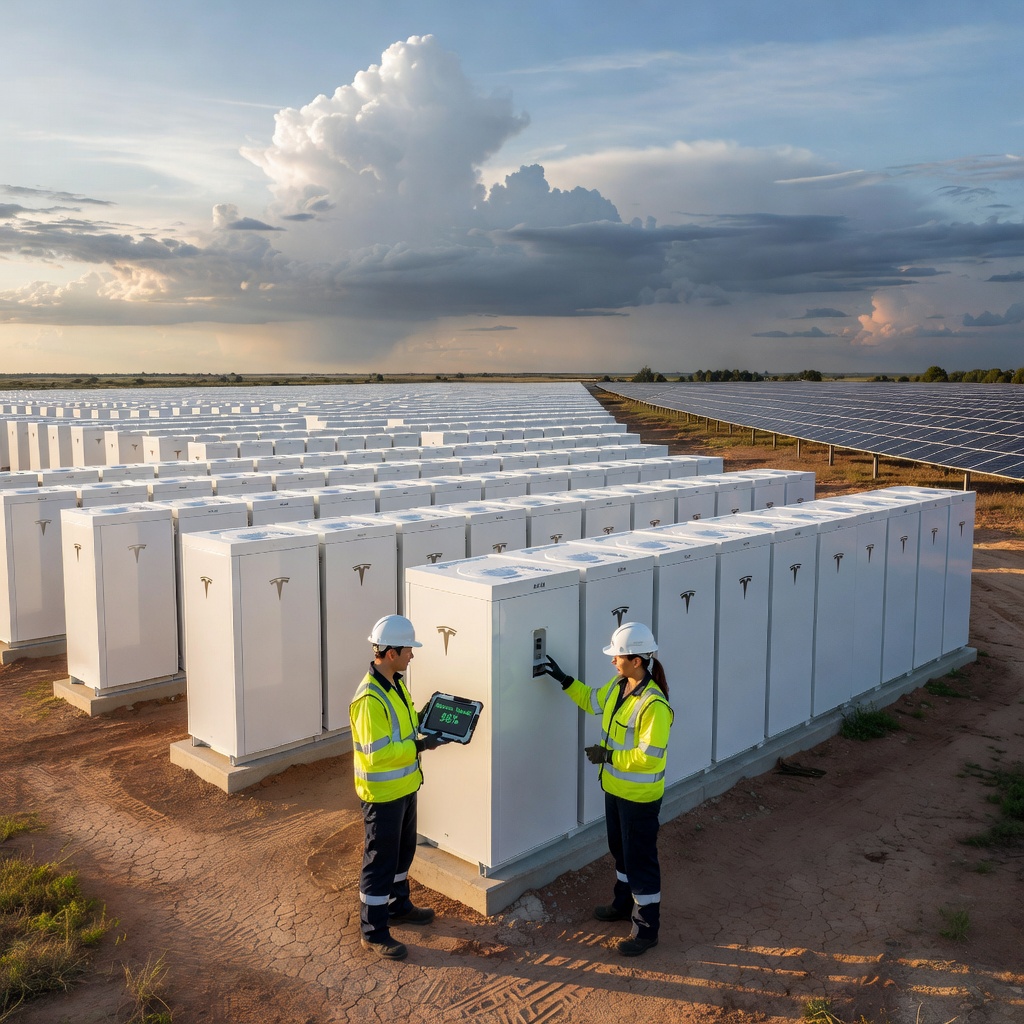
Anchoring the largest of these networks are utility-scale battery systems, among them Tesla's Megapack, a refrigerator-white monolith about the size of a shipping container capable of storing roughly 3.9 megawatt-hours of electricity per unit. Gigawatt-hour-scale installations are now operating or under construction on multiple continents. The Hornsdale Power Reserve in South Australia, one of the earliest large deployments, famously responded to a sudden generator failure in 140 milliseconds, roughly sixty times faster than a gas peaker plant could have reacted. That speed is not just impressive engineering; it is, for communities on medically fragile ground, potentially life-saving.
The architecture of the emerging grid resembles a coral reef more than a power station. At the base are the utility-scale Megapacks, providing bedrock frequency regulation and emergency reserves. Growing from that base are commercial and industrial batteries at schools, hospitals, and warehouses. And at the tips, countless residential solar-plus-storage systems like Marcelina's, each tiny on its own, collectively enormous. The VPP software is the water that flows through it all, routing electrons and value simultaneously.
In Puerto Rico, where Hurricane Maria in 2017 produced the longest blackout in American history and left over 3,000 people dead from storm and storm-related causes, this layered model is being rebuilt almost from scratch. Community microgrids anchored by solar arrays and battery banks now protect rural health clinics and water treatment facilities that once depended on a centralized grid repeatedly proven to be catastrophically fragile. The lesson from Puerto Rico is one that planners across the hurricane belt, the wildfire corridor, and the tornado alley are absorbing: resilience cannot be a feature delivered from a distance. It must be woven into the neighborhood itself.
The Equity Equation
Critics have rightly pointed out that the first wave of distributed solar benefited affluent homeowners who could afford upfront costs, claimed tax credits unavailable to renters, and left low-income communities watching from the sidelines while subsidizing a transition they did not share in. That critique was accurate. It is becoming less so, and the shift matters enormously for the humans at the center of this story.
Community solar programs, often called solar gardens, allow renters and low-income households to subscribe to a share of a remotely located solar array and receive bill credits accordingly. Several American states now mandate that a defined percentage of community solar capacity be reserved for income-qualified subscribers. When that community solar array is paired with grid-scale battery storage, subscribers gain not just cheaper daytime power but reliable after-dark electricity, including on the evenings following the summer storms that so often trigger demand spikes and rolling blackouts in underserved neighborhoods.
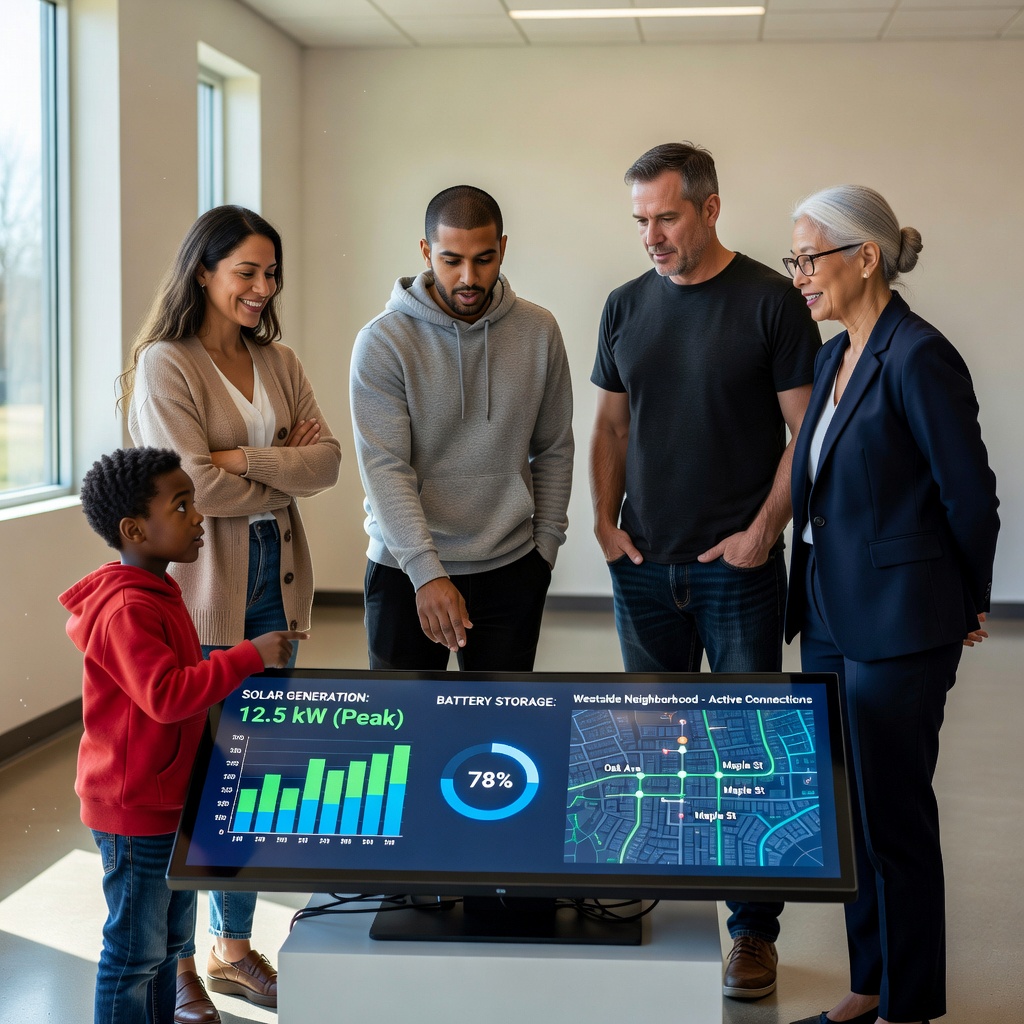
DeShawn Pittman runs an energy cooperative in Baltimore that aggregates rooftop solar from 340 row houses into a single VPP contract with the regional grid operator. Most of his members are Black homeowners in neighborhoods where utility bills historically consumed a disproportionate share of household income. Last summer, his cooperative dispatched stored electricity into the grid during a five-day heat emergency and generated enough revenue to fund weatherization upgrades for twelve of his lowest-income member households. The grid emergency that would once have hit his neighbors hardest instead became a source of community wealth. That inversion is not incremental progress. It is a structural transformation.
The Software Layer Nobody Sees
What makes the difference between a collection of batteries and a genuinely intelligent network is the dispatch intelligence running beneath the surface. Modern VPP platforms ingest weather forecasts, real-time wholesale electricity prices, individual household demand predictions, and grid operator signals simultaneously, then optimize charge and discharge decisions across thousands of endpoints every few seconds. For participants, this is largely invisible, which is by design. Marcelina does not want to think about electricity markets while making breakfast. She wants her house to be comfortable, her bills to be low, and her granddaughter to breathe easily.
What participants do see, increasingly, is money flowing in unexpected directions. Several VPP operators now offer performance bonuses when enrolled households successfully reduce load during declared grid emergencies. Others offer baseline monthly payments simply for making battery capacity available, regardless of whether it is called upon. For households that have historically had no financial relationship with energy infrastructure except as customers, these payments represent a qualitative shift in economic agency.
What Comes Next
The trajectory of the technology points toward further compression of costs and further expansion of eligibility. Battery prices have fallen roughly 90 percent over the past decade, a curve that continues to steepen as manufacturing scales. Vehicle-to-grid technology, which allows electric vehicles to discharge stored energy back into the home or grid, is adding millions of mobile battery units to the available pool without requiring households to purchase dedicated storage hardware. When your car becomes part of the neighborhood power plant, the boundary between transportation infrastructure and energy infrastructure dissolves entirely.
Regulatory frameworks are straining to keep pace. Grid operators accustomed to dealing with a few hundred large generators are learning to manage millions of tiny ones. New interconnection standards, revised rate structures, and updated market rules are grinding through utility commissions and federal agencies on timelines that frustrate technologists and community advocates alike. The gap between what the technology can do today and what the regulatory system permits it to do is probably the largest single brake on the transition.
But for Marcelina Reyes, that policy friction is a background noise compared to the immediate reality of a cool house, a healthy granddaughter, and a modest monthly credit appearing in her energy account. She did not run for office, did not lobby a utility commission, did not write a white paper on distributed energy resource management. She signed up for a solar lease, joined a VPP program her utility offered, and became, without quite realizing it, part of the answer to one of the most consequential infrastructure challenges of the century. That is how most revolutions actually happen: not in press releases, but in small decisions made by people who just wanted something to work.