
Debate on Wheels: What Experts Actually Disagree About When It Comes to Tesla's Electric and Autonomous Future
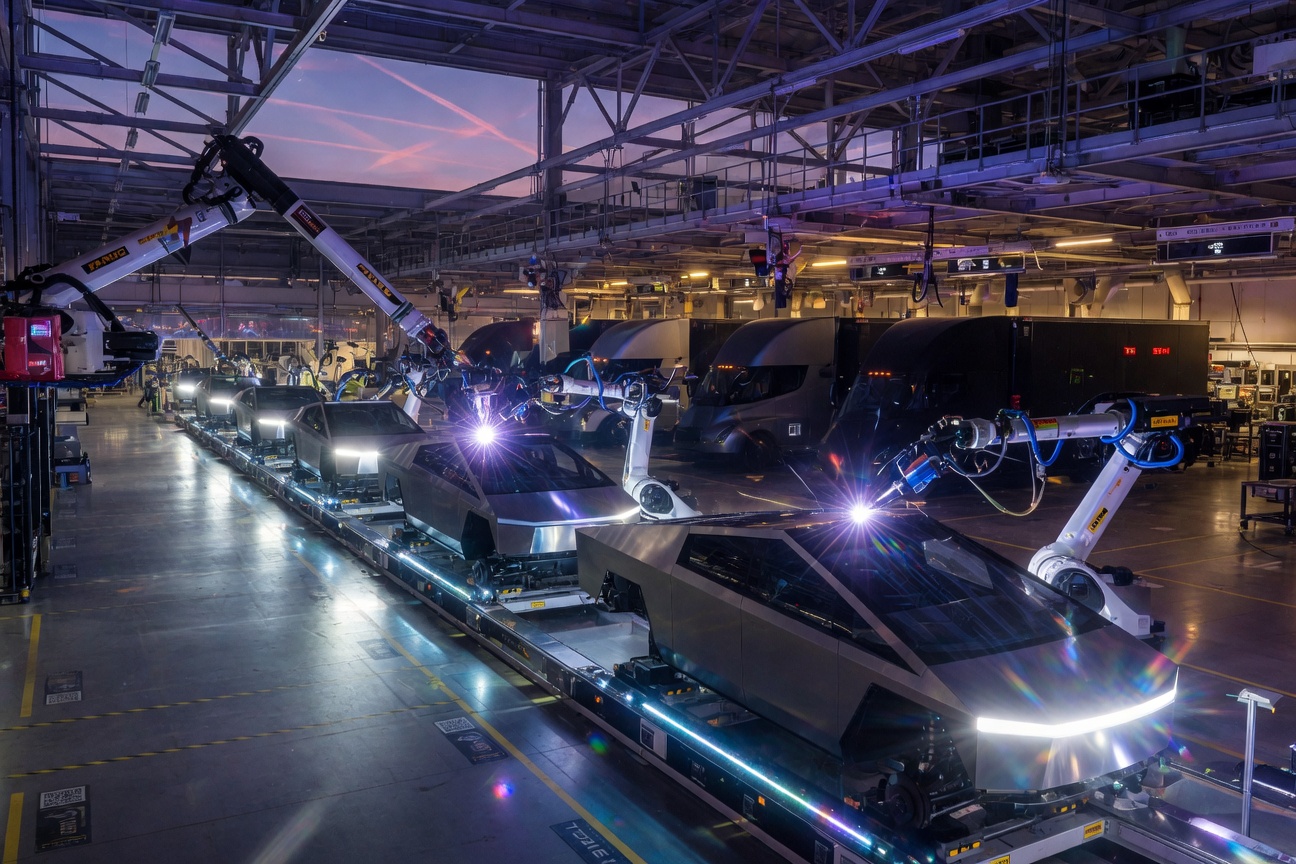
Ask ten transportation economists, five robotics engineers, three supply chain analysts, and a handful of autonomous systems academics what Tesla is actually getting right in 2025 and you will not get one consensus answer. You will get a seminar. You will get arguments. You will get at least one overturned coffee cup. The company's electric vehicle lineup, its Cybertruck and Semi programs, its factory automation strategy, and its autonomy roadmap are not simply business stories. They have become something rarer and more interesting: genuine sites of scientific and industrial controversy, where smart people armed with real data arrive at profoundly different conclusions.
The Cybertruck Problem: Icon, Liability, or Engineering Pivot?
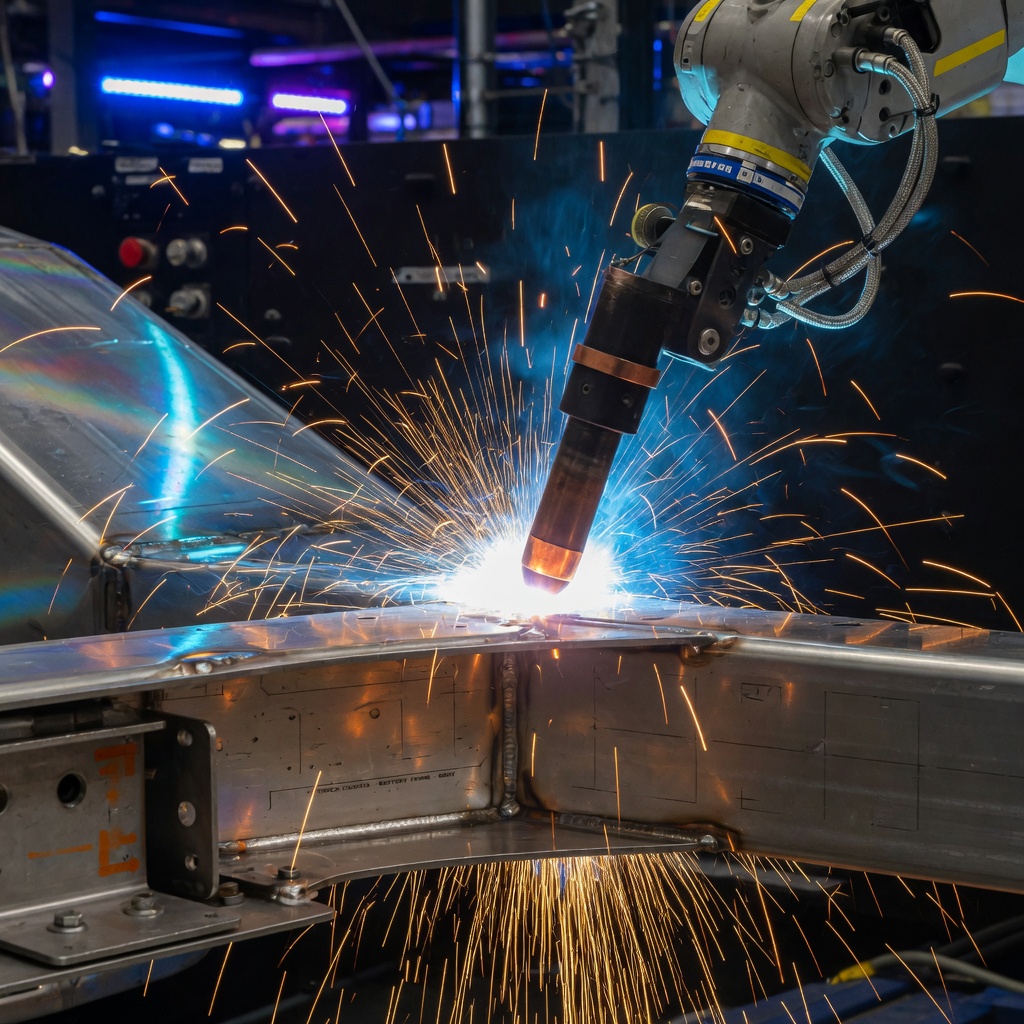
Almost no vehicle in recent memory has generated as much expert disagreement as the Cybertruck. When it finally entered meaningful production and delivery volumes, observers split immediately into camps that barely acknowledge each other's evidence. Structural engineers who analyzed the stainless steel exoskeleton design praised its resistance to denting and panel deformation under lateral stress, a genuine departure from conventional body-on-frame logic. Materials scientists, however, pointed to the thermal expansion coefficient of austenitic stainless steel as a latent manufacturing headache, particularly in the precision tolerances required for a mass-market vehicle. Both groups are working from valid physics. They simply weight the tradeoffs differently.
Consumer reliability data emerging from early Cybertruck owners has added fuel to the debate. Quality tracking organizations noted recall patterns and fit-finish variance above segment averages in the vehicle's first full production year. Tesla defenders correctly argue that recall issuance is partly a function of aggressive monitoring rather than unique fragility, and that patch rates and over-the-air fix speeds are legitimately faster than legacy competitors. Critics counter that software patches cannot address mechanical seal failures or accelerator pedal assembly tolerances. Both arguments appear in peer-reviewed fleet analysis literature. The honest answer is that the long-term durability picture for a stainless-body electric truck simply does not exist yet because nobody has had one long enough.
Tesla Semi: The Commercial Freight Experiment Nobody Can Fully Evaluate Yet
The Tesla Semi represents perhaps the most acute case of premature certainty on all sides of the EV debate. Early adopters in commercial logistics, including Pepsi's well-publicized fleet trial, reported energy efficiency figures that, if representative, would meaningfully disrupt diesel operating economics for certain route profiles. Transportation economists at several research universities modeled those numbers and found the cost-per-mile case compelling for hub-to-hub routes under 300 miles with predictable loading. That is a real and substantial market segment.
But other logistics researchers have published sharply different conclusions. Their argument centers not on the truck itself but on infrastructure readiness and total fleet economics at scale. Charging a Class 8 electric truck to operational range requires megawatt-scale charging infrastructure that simply does not exist at most freight terminals, truck stops, or loading docks outside purpose-built Tesla partner sites. The capital expenditure required to retrofit a mid-size trucking operation is not trivial. Academic papers modeling fleet transition costs for regional carriers routinely show 7 to 12 year payback horizons under current grid electricity pricing in most U.S. markets, horizons that stretch further in markets with industrial electricity premiums.
Proponents respond that infrastructure deployment curves tend to be lumpy and then suddenly ubiquitous, citing EV passenger car charging as a historical analog. Infrastructure pessimists reply that passenger car chargers and megawatt freight chargers are not remotely comparable deployment challenges. Both sides have credible economic modeling. The Semi is simultaneously a remarkable engineering achievement and an open empirical question about whether the world around it can adapt fast enough.
Manufacturing Philosophy: The Unigiga Debate
Tesla's manufacturing approach, defined by the continuous expansion of Giga-scale facilities, integrated casting of large structural components, and deep vertical integration of battery and drive unit production, has attracted genuinely divergent assessments from manufacturing science and operations research communities.
On one side sit researchers who study lean manufacturing and find Tesla's megacasting strategy intellectually compelling. Replacing dozens of stamped and welded components with a single cast structural element reduces assembly complexity, improves structural rigidity, and theoretically shrinks the defect surface area in production. MIT's manufacturing research community has noted the boldness of the approach. Japanese automotive engineering academics, steeped in Toyota Production System orthodoxy, have been notably more skeptical. Their critique is not that the casts are poorly made but that large monocoque castings create replacement cost structures unfavorable for consumers and create quality branching problems where a single cast defect condemns a larger sub-assembly than would otherwise be the case.
The introduction of Tesla's Optimus humanoid robot program into factory operations adds another contested layer. Tesla has signaled that Optimus units are performing real assembly tasks at Gigafactories, a claim that has been met with deep skepticism from robotics engineers familiar with the sensorimotor complexity of unstructured assembly environments. Some academic roboticists have called current demonstrations impressive but fundamentally limited proofs of concept. Others argue that even marginal useful task automation at scale changes the economics of labor-intensive assembly steps in meaningful ways. The question of how rapidly robot capability compounds is, genuinely, not a settled empirical matter.
The Autonomy Rorschach Test
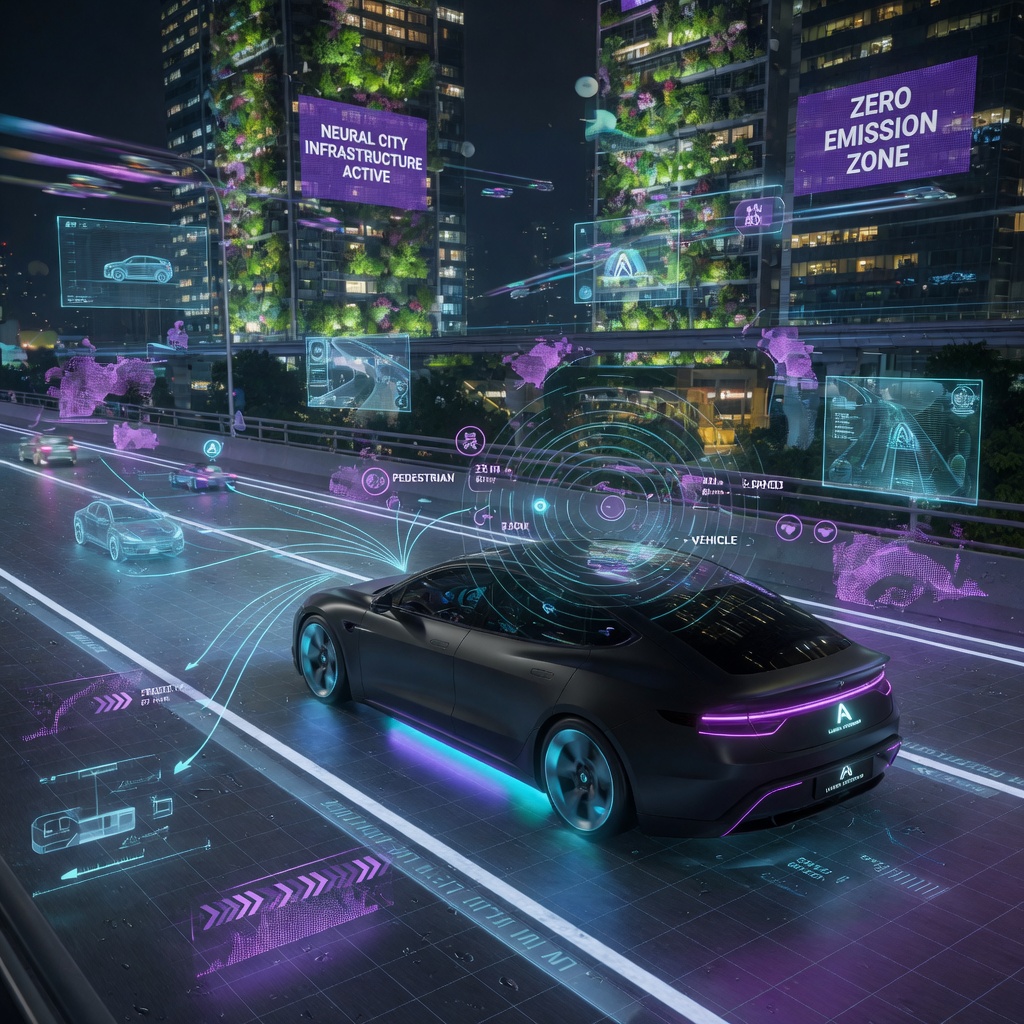
Perhaps no aspect of Tesla's roadmap generates more heat among technical experts than its Full Self-Driving and Autopilot programs. The company's camera-only sensor strategy, rejecting lidar in favor of vision-based neural networks, is a real philosophical and engineering divide with serious people on both sides.
Computer vision researchers who work within Tesla-adjacent AI circles argue that the company's data advantage, derived from millions of real-world fleet miles, makes its neural net training corpus categorically different from what any competitor can field. The argument is that at sufficient data scale, a vision-based system can generalize to edge cases that rule-based lidar systems will always struggle with, because the edge case space is too large to enumerate. There is genuine machine learning theory supporting this view.
Autonomous systems academics with safety engineering backgrounds push back with equal force. Their concern is not whether Tesla's neural networks are impressive. Many acknowledge that they are. The concern is about failure mode transparency. A lidar plus camera fusion system fails in ways that can be characterized and bounded. A large neural network operating on camera input alone can fail in ways that are fundamentally harder to anticipate, model, or certify. Regulatory scientists studying autonomous vehicle safety certification have noted that the absence of interpretable failure envelopes creates genuine challenges for any framework seeking to license these systems for unsupervised public road operation.
The recent Cybercab robotaxi program expansion brings this debate into sharp commercial focus. Tesla's move toward driverless paid rides in limited geofenced zones has been evaluated by transportation researchers as both an audacious market entry and a compressed timeline risk. Actuarial models of autonomous vehicle liability remain poorly developed precisely because the incident data from true Level 4 deployments is thin and geographically concentrated.
What the Disagreement Itself Tells Us
Here is what may be the most underappreciated insight buried inside all these competing expert perspectives: the fact that serious, well-credentialed researchers are reaching opposite conclusions from the same Tesla data is itself significant. It signals that we are genuinely in an exploratory phase of electric vehicle and autonomous systems development, not a consolidation phase. The technologies are not mature enough to produce the kind of settled empirical record that ends scientific debates.
That means the popular media habit of either triumphantly validating or catastrophically dismissing Tesla's progress is almost certainly wrong in both directions. The Cybertruck is neither the vehicle of the future nor a stainless steel folly. The Semi is neither the death knell of diesel nor a doomed experiment in physics denial. Tesla's factory robots are neither incoming workforce replacements nor theatrical demonstrations. Full Self-Driving is neither weeks from full deployment nor a decade from relevance.
What these technologies are is contested, contested by people who know what they are talking about, using evidence that has not yet had time to mature. For entrepreneurs, engineers, and technologists trying to build around or alongside Tesla's trajectory, that ambiguity is not a reason for paralysis. It is, rather, an accurate map of the terrain. The debate is the data. And right now, it suggests that the most dangerous position of all is certainty.

George Russell
Tech journalist covering Elon Musk’s companies for over 10 years.