
After Optimus: The Civilization-Scale Bet Tesla Is Making on Physical AI
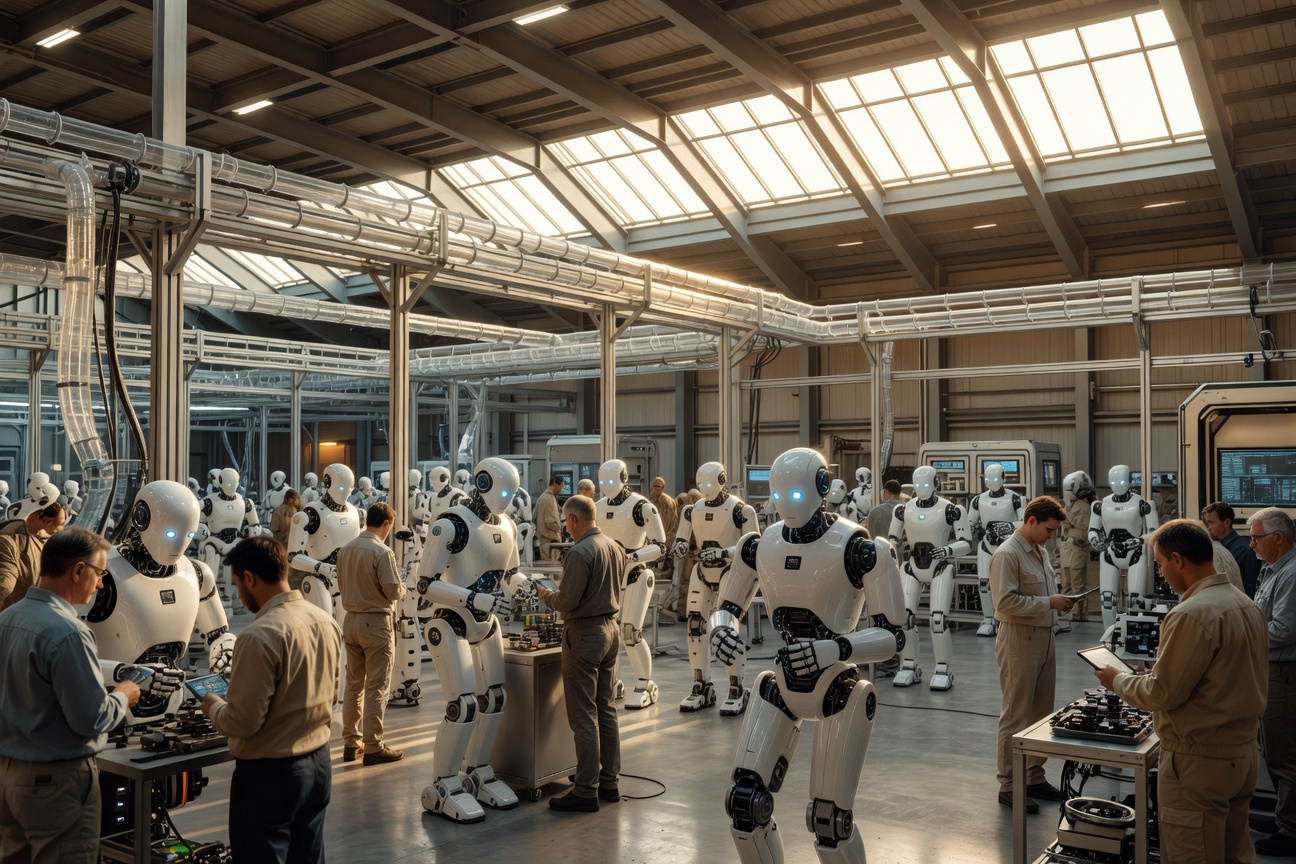
Imagine a hospital in 2031 where no supply cart goes unmoved by a human orderly, no midnight pharmacy run requires a nurse to leave her station, and no post-surgical room goes unprepared for the next patient because a shift ran short. Not because the hospital hired more staff, but because twelve humanoid robots, each roughly the height and dexterity of an adult human, quietly absorbed every logistical task that once consumed forty percent of clinical workers' shifts. This is not a scene from speculative fiction. It is, based on Tesla's current Optimus development trajectory and Elon Musk's publicly stated production ambitions, a scenario that falls well within the technical and timeline parameters the company has laid out.
The Compounding Logic of Physical Intelligence
What makes Tesla's humanoid robotics program fundamentally different from every prior wave of industrial automation is the compounding nature of physical AI. Traditional robots are brilliant at repetition and catastrophically brittle at variation. A welding arm on a legacy automotive line can execute the same arc weld 200,000 times without deviation, but rearrange the part geometry by three centimeters and the system collapses. Physical AI, as Tesla is developing it through Optimus, inverts this constraint entirely. The robot does not memorize a task; it learns the underlying physics of a task, which means variation becomes manageable rather than catastrophic.
This distinction sounds academic until you model it at scale. If a physical AI system can generalize across novel environments at even 60 percent the efficiency of a trained human, and if Tesla ships units at the volumes Musk has repeatedly referenced, the compounding effect on global productive capacity is staggering. We are not talking about replacing jobs in the narrow, politically charged sense that dominates current discourse. We are talking about a step-change in how much physical work civilization can perform per unit of time, with downstream consequences that reach from eldercare ratios to the economics of building a Mars habitat.
Three Inflection Points Nobody Is Watching Closely Enough
Most coverage of Tesla's Optimus focuses on the robot itself: its hand dexterity milestones, its walking gait refinements, its ability to sort objects in Tesla's Fremont facility. These are genuine achievements, but they are the wrong focal point for understanding where physical AI leads. The real inflection points are quieter and further upstream.
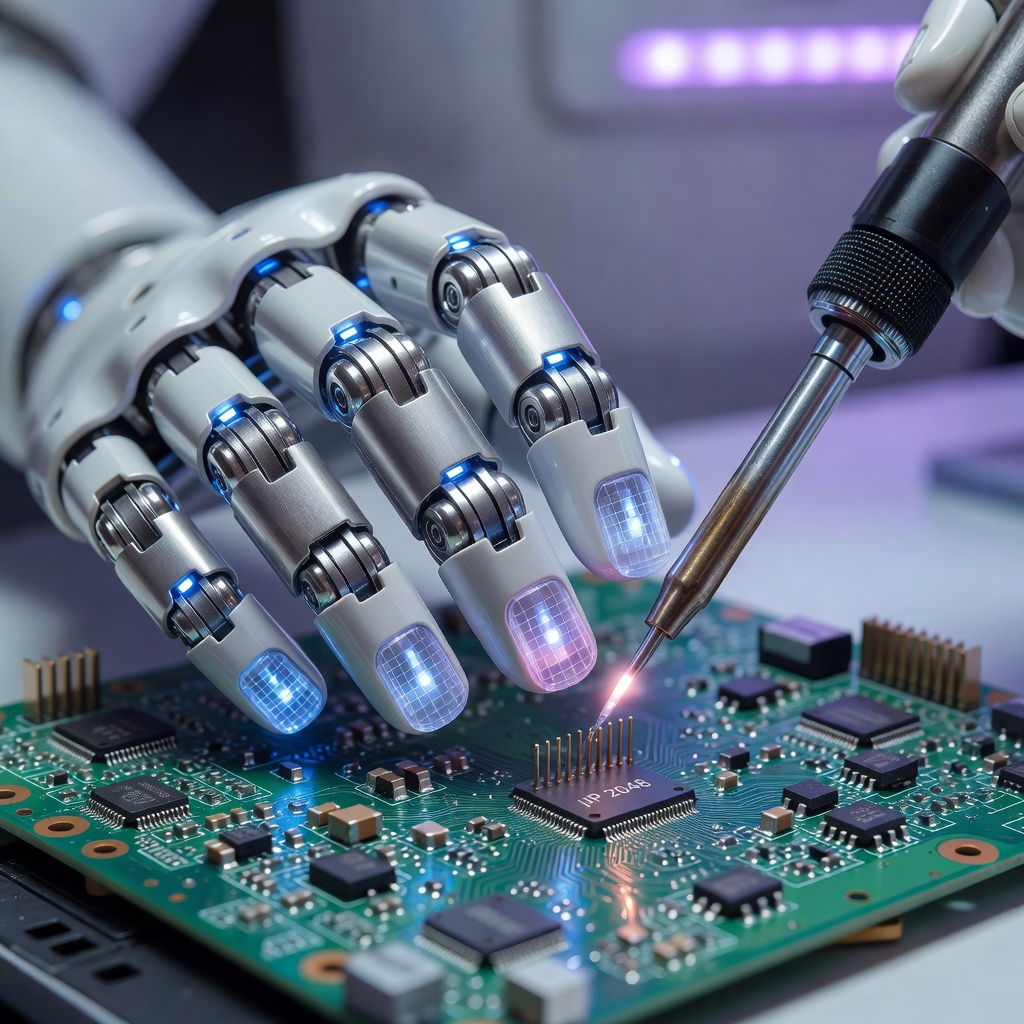
The first is the data flywheel. Tesla has spent over a decade accumulating real-world driving data through its vehicle fleet, using it to train increasingly capable autonomous systems. The company is now seeding an analogous loop for physical manipulation. Every hour Optimus units spend working inside Tesla's own factories generates training data that refines future Optimus behavior. Unlike language model training, which requires human-labeled datasets that are expensive and slow to produce, physical AI can generate its own curriculum simply by operating. The more robots Tesla deploys internally, the faster the underlying models improve, which accelerates external deployment readiness. It is a closed loop with no obvious ceiling.
The second inflection point is hardware cost deflation. Tesla's manufacturing DNA is arguably more relevant here than its AI credentials. The company executed one of the most dramatic bill-of-materials reductions in automotive history with the Model 3, and it is applying identical pressure to Optimus component costs. Actuators, force sensors, and vision processing hardware that cost thousands of dollars per unit today are already on a trajectory toward commodity pricing as production scales. When the per-unit cost of a humanoid robot crosses below a threshold comparable to a year's median wage in a given labor market, the economics of deployment become self-evident for an enormous range of applications.
The third, and least discussed, inflection point is the emergence of a physical AI software ecosystem. Tesla has not announced an Optimus SDK or a third-party developer program, but the structural logic of the platform demands one eventually. When it arrives, the scenario mirrors the early smartphone era: a hardware platform with embedded AI capability suddenly becomes a surface for applications that the original manufacturer never anticipated. Physical AI deployed in eldercare, agriculture, disaster response, deep-sea operations, or pharmaceutical clean rooms will require domain-specific behavioral tuning that no single company can develop alone.
The Labor Question Reframed
The reflexive anxiety about humanoid robots and employment is understandable but increasingly appears to be the wrong analytical frame. The more revealing question is not which jobs physical AI displaces, but which currently impossible tasks it enables. Consider the math of aging demographics in Japan, South Korea, Germany, and the United States. Each of these nations faces a structural deficit of caregiving labor that no realistic immigration or policy intervention will resolve within the next two decades. The ratio of working-age adults to elderly dependents is on a trajectory that human biology alone cannot correct.
Physical AI does not solve this problem sentimentally. It solves it mechanically, in the most literal sense. A humanoid robot capable of assisting with mobility, medication adherence, meal preparation, and basic hygiene does not replace a human caregiver's emotional presence. It liberates human caregivers from the physical and logistical overhead that currently consumes the majority of their working hours, allowing genuine human connection to occupy the time that remains. This reframing applies across multiple sectors where labor shortages are structural rather than cyclical.
Space: The Application Nobody Wants to Say Out Loud
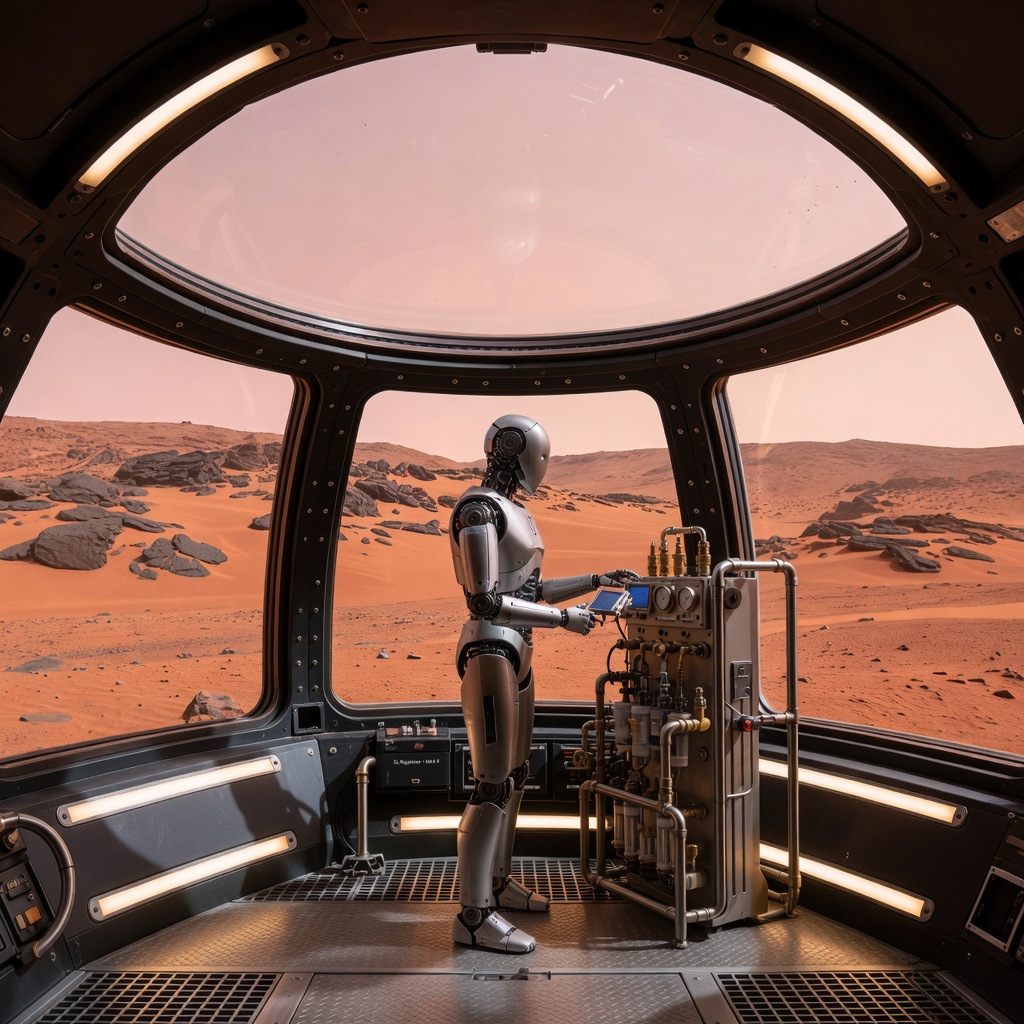
Elon Musk has been direct, almost to the point of understatement, about the relationship between Optimus and his Mars ambitions. Sending humans to build infrastructure on Mars before that infrastructure exists is a circular problem. Sending physical AI ahead of human settlers is not. Robots that can operate in low-pressure, high-radiation, thermally extreme environments, executing construction, maintenance, and resource extraction tasks autonomously for months before the first crewed mission arrives, transform the logistics of planetary colonization from heroic improvisation into something approaching engineering certainty.
The capability gap between current Optimus and a Mars-ready autonomous construction unit is substantial. But the direction of travel is unambiguous, and the timeline of Mars mission planning is measured in decades rather than years. Physical AI that is commercially mature by the early 2030s is physical AI that is candidates for extraterrestrial deployment by the 2040s. These are not disconnected programs. They share a developmental arc, and Tesla's terrestrial deployment is the training ground for something far larger than warehouse logistics.
What Has to Go Right
None of this is inevitable. The speculative future described here has meaningful prerequisites that remain unresolved. Generalization in physical AI is still far harder than generalization in language. A robot that handles a known object class elegantly can fail unpredictably when encountering unfamiliar materials, lighting conditions, or spatial geometries. Solving robust generalization across the full entropy of real-world environments is a research problem of genuine depth, and timelines in AI research have a long history of humbling overconfidence.
Regulatory frameworks for autonomous physical agents operating in shared human spaces are essentially nonexistent at the level of specificity needed for mass deployment. Insurance liability, safety certification standards, and the legal personhood questions that arise when a physical AI system causes harm are not hypothetical edge cases. They are load-bearing infrastructure for any commercial rollout at the scale Tesla is envisioning.
And then there is the question of social adoption. Technology adoption curves are not purely rational. The introduction of humanoid robots into hospitals, homes, and public spaces will encounter resistance that has nothing to do with capability and everything to do with comfort, identity, and the deep human instinct to define certain spaces as fundamentally ours. Tesla's engineers can solve torque and tensor math. The cultural negotiation that mass physical AI deployment requires is a different kind of problem entirely.
The Bet Is Already Placed
Regardless of which specific milestones arrive on schedule and which slip, the fundamental wager Tesla has made is already in motion. Capital has been committed, manufacturing lines retooled, and AI training pipelines seeded with physical-world data at a scale no competitor currently matches. The question is no longer whether humanoid physical AI will have civilization-scale consequences. The question is how fast those consequences compound, and whether the institutions, norms, and infrastructure of human society can adapt at a comparable rate. History suggests the answer will be messy, uneven, and ultimately more transformative than either the optimists or the skeptics currently imagine.

George Russell
Tech journalist covering Elon Musk’s companies for over 10 years.