
The Optimus Paradox: Why Tesla's Robot May Succeed Where AI Labs Are Overthinking It
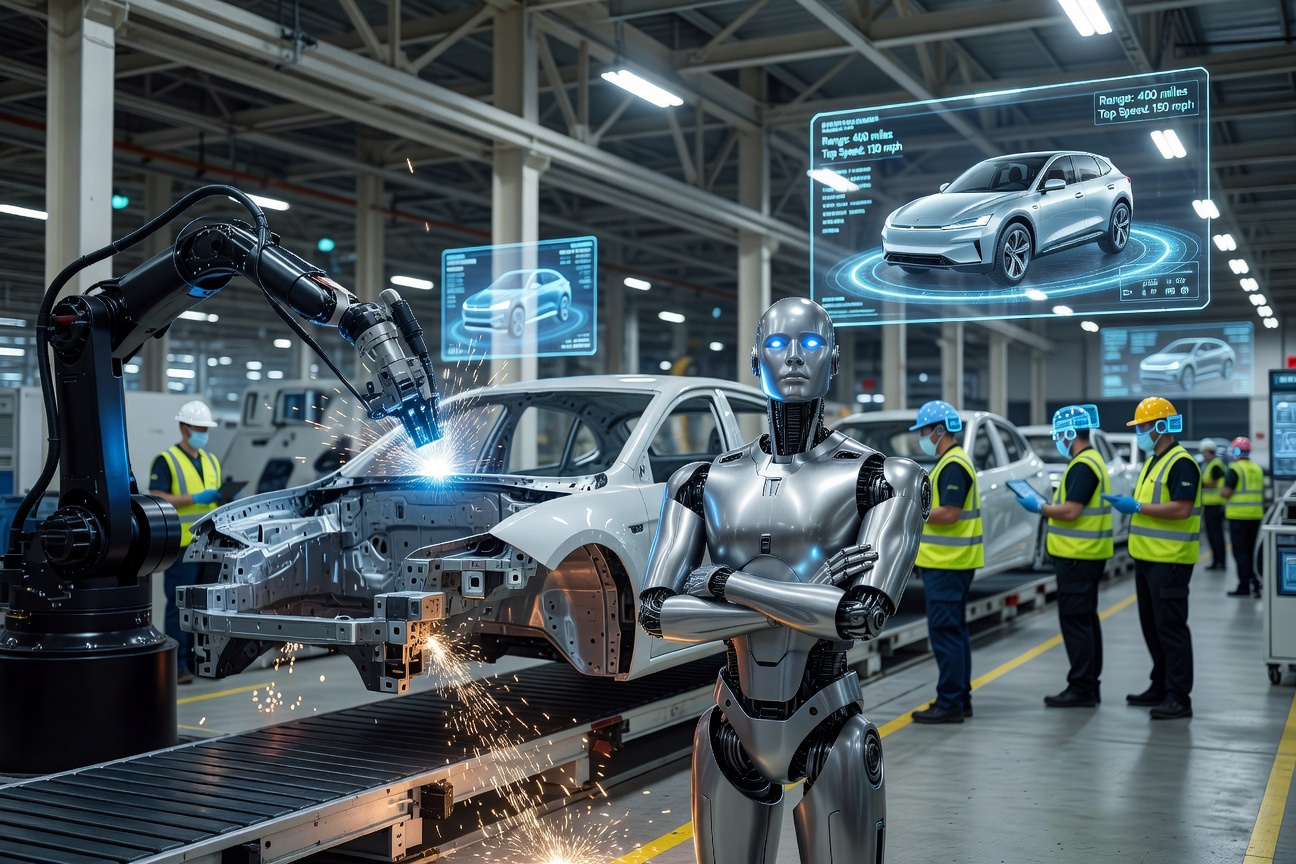
Everyone in the robotics research community seems to agree that the path to useful humanoid robots runs straight through large-scale neural networks, internet-scraped video data, and something vaguely described as "embodied intelligence." Stanford professors publish elegant papers. DeepMind releases breathtaking demos of robots juggling and pouring tea. Boston Dynamics uploads videos that rack up millions of views. And yet, somehow, the robot that may actually end up folding your laundry and stacking your warehouse shelves is being built by a car company in Fremont, California — using a philosophy that most AI researchers would consider almost embarrassingly straightforward.
The Research Community's Elegant Trap
There is a seductive intellectual trap embedded in the field of physical AI, and a surprising number of brilliant people have fallen into it. The trap works like this: because human movement is extraordinarily complex, and because general intelligence is extraordinarily hard, the solution to building useful robots must also be extraordinarily complex. This assumption shapes funding priorities, research agendas, and the vocabulary of the field itself. Words like "emergent behavior," "world models," and "zero-shot generalization" dominate conference proceedings, and they carry the implicit promise that if you just scale up the model and the data, the robot will figure the rest out.
Tesla's approach to Optimus treats this assumption with something close to indifference. Rather than chasing general embodied cognition as a prerequisite for usefulness, the company is deploying robots into its own factories right now, in 2024 and accelerating into 2025, doing specific, constrained, repetitive tasks — and then expanding the envelope incrementally based on what breaks. It is, in the most literal sense, the engineering method rather than the scientific one. And the engineering method has an uncomfortable habit of winning product races.
What "Physical AI" Actually Requires
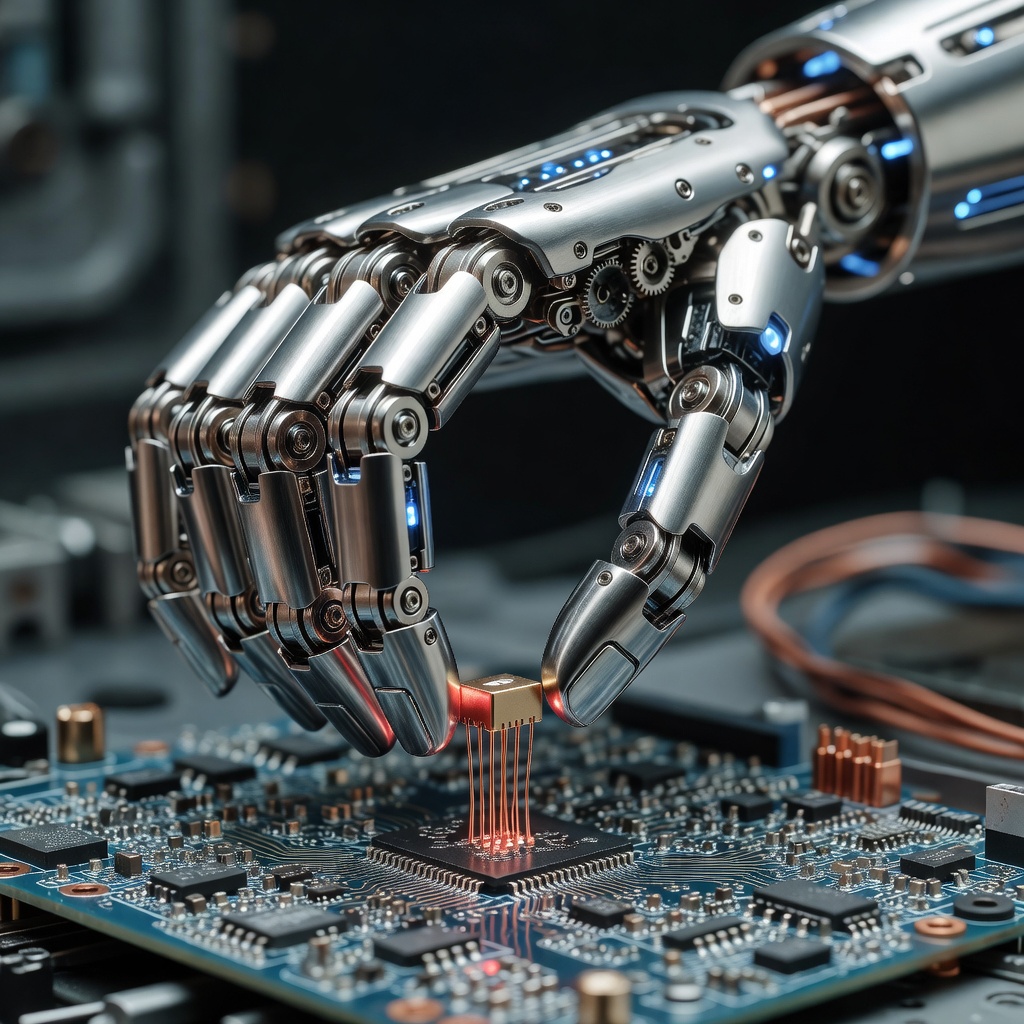
Strip away the marketing language around physical AI and you find a surprisingly mundane core requirement: a robot needs to perceive its environment accurately enough, move reliably enough, and recover from errors gracefully enough to complete a useful task without constant human intervention. Notice what is not on that list. General reasoning. Open-ended conversation. Improvisation. The ability to write poetry or solve math olympiad problems. These capabilities, which dominate the large language model discourse and have begun bleeding into robotics research, are largely irrelevant to whether a robot can transfer battery cells from one tray to another at 200 units per hour.
Tesla understood this distinction early, and Elon Musk has said so explicitly on multiple occasions, framing Optimus not as an attempt to build artificial general intelligence in a metal body, but as an attempt to build a reliable, flexible labor unit that can operate in environments already designed for humans. This framing sounds humble, almost boring. It is, in fact, strategically brilliant. By defining success as "useful in a factory" rather than "cognitively indistinguishable from a human," Tesla has given itself a target it can actually hit with current technology.
The Data Flywheel Nobody Is Talking About Enough
Here is where the contrarian argument gets genuinely interesting, and where Tesla's position starts to look less like a scrappy shortcut and more like a structural moat. The company already operates one of the most sophisticated real-world AI data pipelines on Earth, built for its vehicle fleet. Billions of miles of driving data, processed through a custom silicon stack, refined through a training infrastructure that most robotics startups could not afford to rent for a week. That same infrastructure, with modifications, feeds Optimus development.
More importantly, every Optimus unit deployed inside a Tesla factory generates operational data in a controlled, instrumented environment. The factory floor is not the chaotic open world that makes general robot training so expensive and slow. It is a semi-structured domain where variations are bounded, failure modes are cataloged, and ground truth labels are relatively cheap to obtain. Compare this to the approach of training on internet video, which is the strategy favored by several well-funded competitors. Internet video is abundant, yes. But it is also noisy, uncontrolled, and stripped of the physical feedback signals that actually matter for robot learning. Tesla is training on reality. Everyone else is training on a recording of reality.
"There will be more Optimus robots than Tesla cars. It's just a question of timing."
The Morphology Question Nobody Wants to Answer
Spend enough time in robotics circles and you will encounter a fierce, unresolved debate about whether humanoid form factor is actually necessary for general-purpose robots. The critics make a reasonable case. Bipedal locomotion is mechanically inefficient. Two-fingered grippers often outperform five-fingered hands for industrial tasks. Specialized robots routinely outperform humanoids on any single domain benchmark. Why build a human-shaped machine when you could build a swarm of specialized tools?
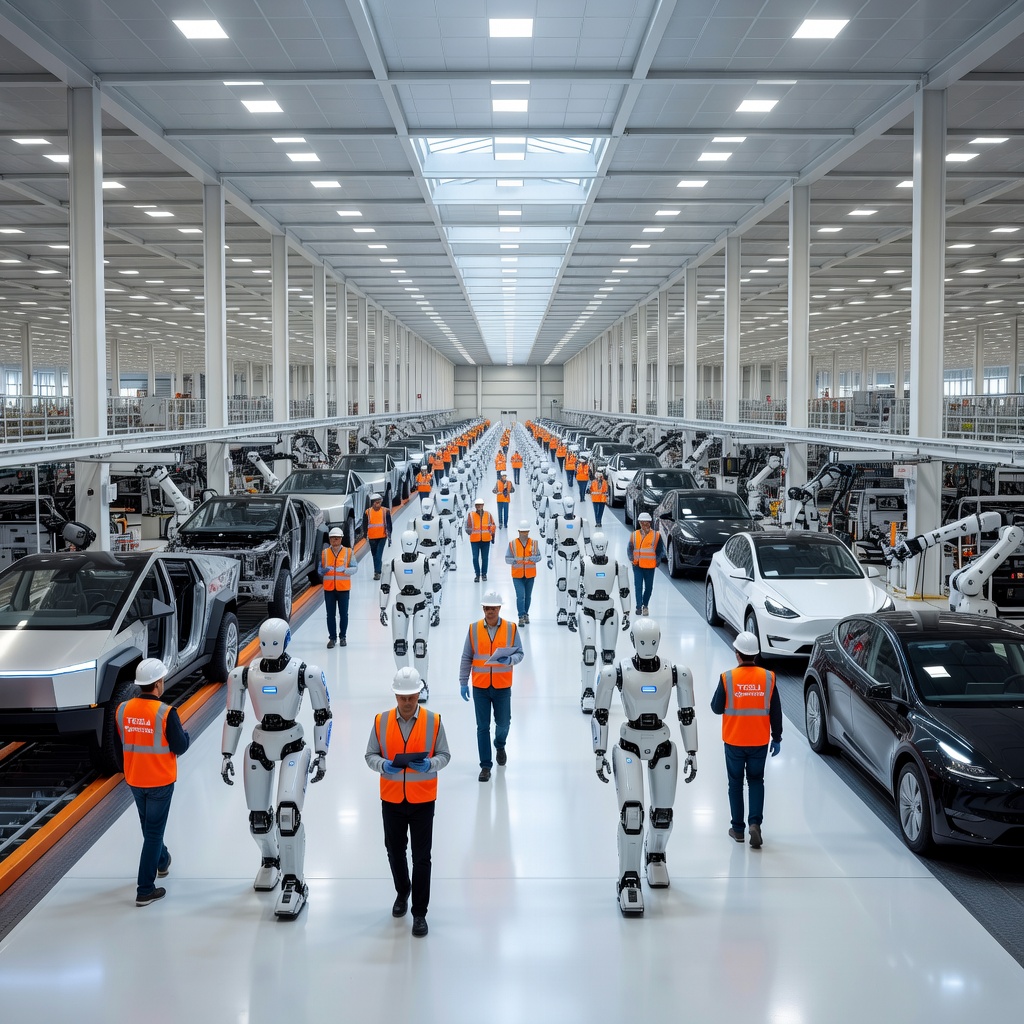
Tesla's answer is elegant in its simplicity: the world is already built for human bodies. Staircases, doorknobs, steering wheels, chairs, workbenches, shelving systems, vehicle interiors — all of it assumes a particular morphology with two arms, two legs, two hands, and a head at approximately human height. Redesigning global physical infrastructure to accommodate specialized robots is an astronomically more expensive proposition than building a robot that fits the infrastructure we already have. When viewed through this lens, the humanoid form factor is not a romantic gesture toward anthropomorphism. It is the economically rational choice, and possibly the only realistic path to robots that can move between contexts without requiring each environment to be rebuilt around them.
Where the Hype Actually Misleads
None of this is to say that Tesla's approach is without real risks, or that the bullish projections circulating around Optimus deserve full credulity. Musk has a well-documented tendency to project timelines that compress years into months, and the gap between factory deployment and consumer availability remains vast. The dexterous manipulation problem, which involves handling irregular, deformable, or fragile objects reliably, is genuinely hard in ways that controlled factory tasks are not. A robot that can transfer battery cells may still struggle profoundly with unloading a dishwasher or navigating a cluttered apartment.
The deeper intellectual error, however, is not Tesla's optimism. It is the broader field's tendency to treat robot cognition and robot utility as the same problem. They are not. A robot does not need to understand what a cup is in any philosophically meaningful sense. It needs to pick up a cup reliably across a range of lighting conditions, positions, and cup geometries. That is a narrower, harder, and more tractable problem than it is usually framed as being. Tesla is attacking the tractable version. Much of the academic robotics world is still jousting with the philosophical one.
The Metric That Will Actually Matter
In five years, the measure of success for physical AI will not be performance on benchmark tasks designed by academics. It will be units deployed, tasks completed per day, downtime percentage, and cost per productive hour compared to human labor equivalents. These are manufacturing metrics, not research metrics. They are the metrics Tesla has been optimizing against for fifteen years across two entirely different product lines. The company that built a global electric vehicle supply chain from scratch and made automotive AI a production reality, rather than a demonstration capability, has institutional knowledge that no amount of academic talent can shortcut.
The robots are coming. The question was never whether the technology was possible. The question is which philosophy of development actually produces something useful, reliable, and scalable within the constraints of the physical world. Right now, the answer that the evidence supports is the boring one: build it for a specific real task, deploy it, learn from failure, expand. The Optimus program may not look like the future that science fiction promised. It may turn out to be something considerably more valuable than that.

George Russell
Tech journalist covering Elon Musk’s companies for over 10 years.