
Ground Truth: How the Satellite Internet Arms Race Is Forcing a Complete Reinvention of Ground Infrastructure
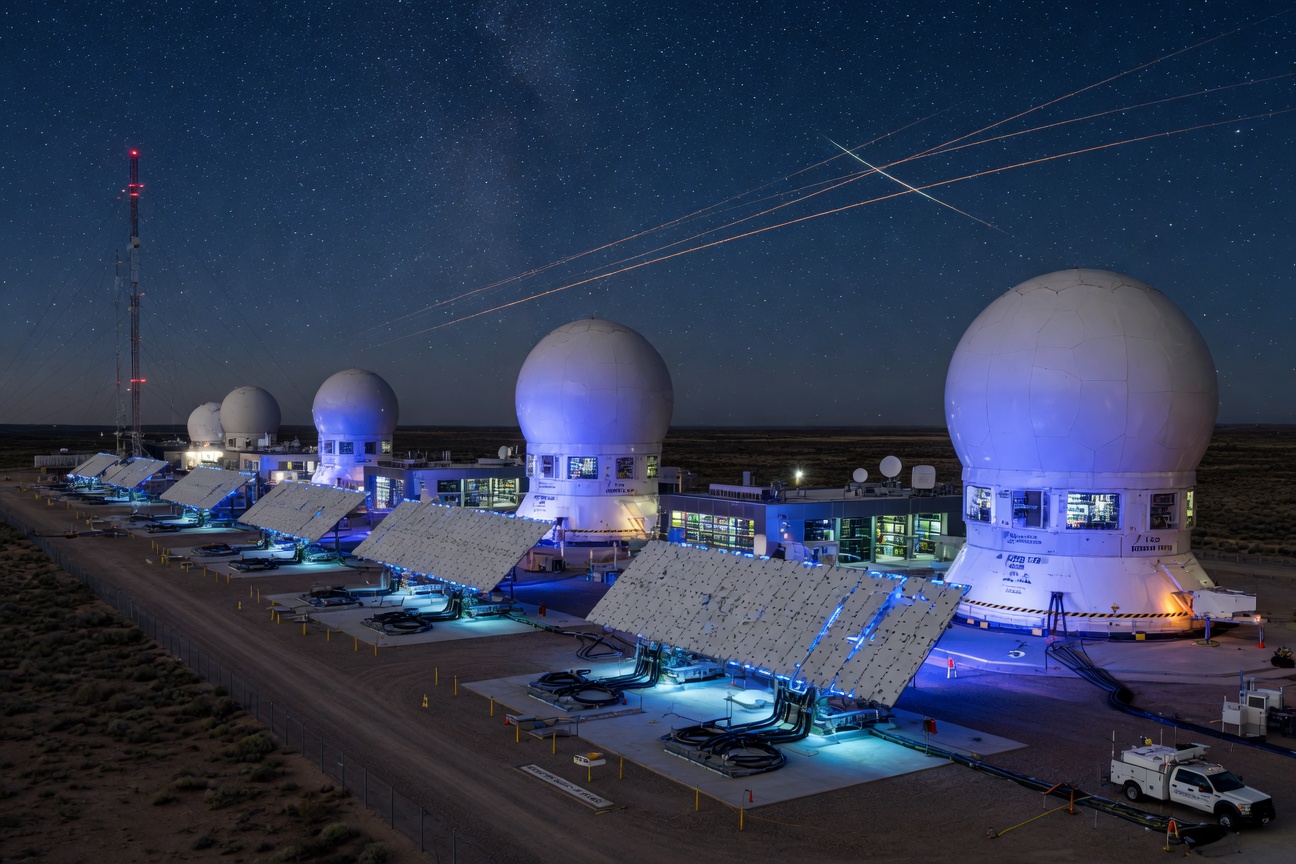
Everybody is watching the sky. Launch cadences, orbital shell densities, inter-satellite laser links, constellation architecture debates. The satellite internet story has been told almost exclusively as a story about what happens above the Karman line. But spend time with the engineers and investors who are actually writing the checks that fund the next wave of connectivity R&D, and a radically different picture emerges. The real bottleneck, the place where billions of dollars in competitive advantage will be won or surrendered, is a few meters off the ground.
Ground infrastructure for satellite broadband is undergoing its most dramatic reinvention since the first VSAT dishes started appearing on rooftops in the 1980s. Phased-array antenna technology, edge computing integration, software-defined gateways, and AI-driven beam management are converging into a new class of hardware and software stack that most consumers will never see but will absolutely feel. And the funding flowing into this layer of the ecosystem has reached a scale that should command serious attention from anyone tracking where the tech industry is heading.
The Antenna Problem Nobody Talks About Enough
Ask a satellite engineer what keeps them awake at night, and the answer is rarely about rockets or orbital mechanics. It is about terminals. Specifically, the challenge of building a user terminal that is cheap enough for mass-market deployment, power-efficient enough for mobile and off-grid use, and technically sophisticated enough to track a low Earth orbit satellite moving at roughly 27,000 kilometers per hour across the sky.
Starlink's flat-panel dish, colloquially known as "Dishy," was a genuine engineering milestone when it debuted. But the competitive landscape has accelerated sharply since then. Amazon's Project Kuiper has publicly committed to manufacturing terminals at a sub-$400 cost target, a threshold that analysts widely consider the tipping point for serious enterprise and consumer market penetration in price-sensitive regions. Meanwhile, a cohort of specialized hardware startups, many of them spun out of defense contractors and academic RF research labs, are pushing phased-array unit costs toward levels that would have seemed fantastical three years ago.
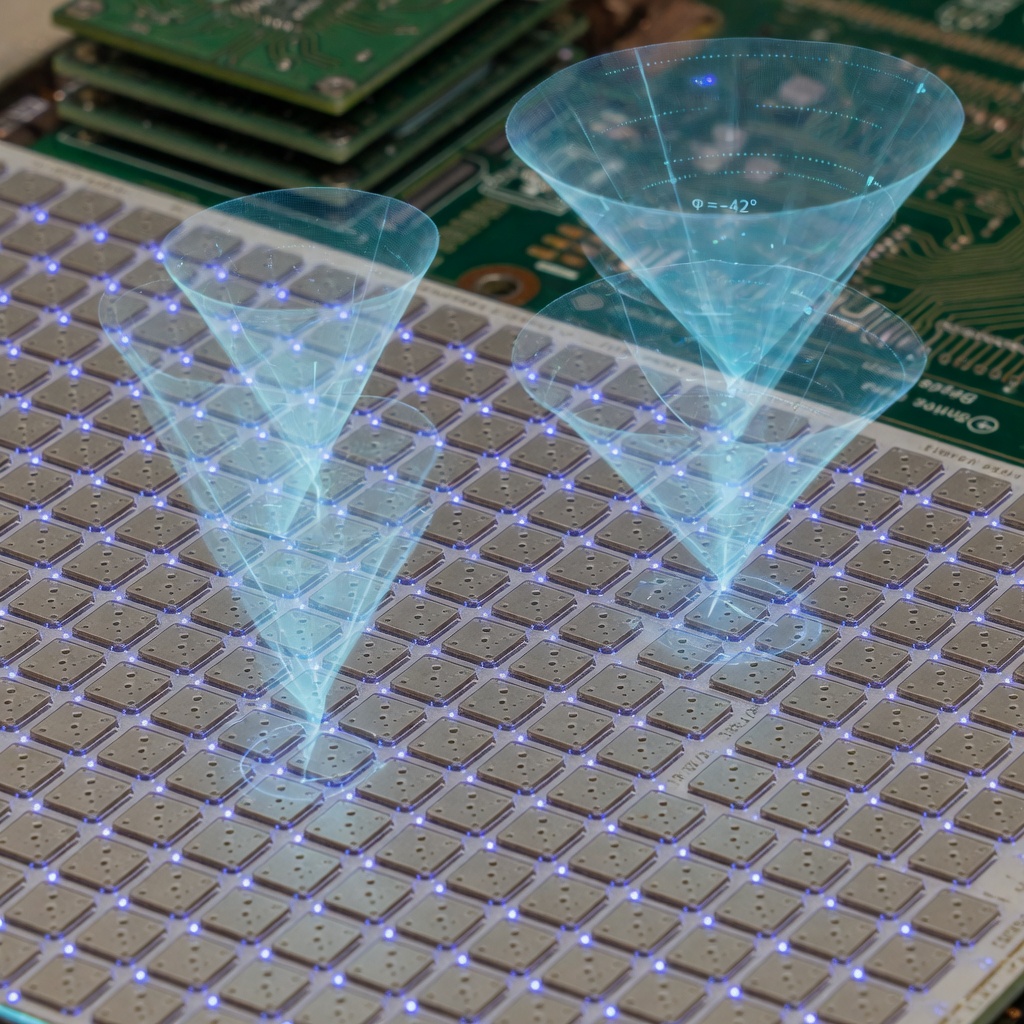
The underlying technology driving this cost compression is the flat-panel electronically steerable antenna, which replaces mechanical dish pointing with software-controlled beam steering across thousands of tiny antenna elements. Manufacturing these at scale requires semiconductor fabrication techniques borrowed from the mobile chip industry, and the R&D investment required is substantial. Kymeta, Isotropic Systems (now part of SES), and a handful of stealth-mode startups backed by strategic investors including traditional telecom players are all racing to own this component layer. Whoever cracks the terminal cost equation at scale does not just win a hardware contract. They potentially control the on-ramp to a multi-hundred-billion-dollar connectivity market.
Gateway Economics and the Telecom Incumbent Dilemma
Further up the ground stack, the gateway station business is undergoing an equally significant transformation, with implications that cut directly into the revenue models of traditional telecom operators. Legacy satellite operators ran relatively small numbers of large, expensive ground stations connected to geostationary satellites whose fixed positions made infrastructure planning straightforward. LEO constellations operate on entirely different physics. A Starlink or Kuiper satellite is overhead for minutes at a time, meaning ground networks must hand off signals continuously across geographically distributed gateway stations.
This architectural requirement has two profound commercial consequences. First, it creates an enormous deployment burden: SpaceX has been building out gateway ground stations across dozens of countries simultaneously, a logistics and regulatory challenge that rivals the complexity of the space segment itself. Second, and more interesting from an industry-impact perspective, it creates a compelling entry point for telecom operators who want to participate in the LEO ecosystem without building their own constellation. Providing land, power, fiber backhaul, and regulatory relationships for gateway hosting is a business model that traditional telcos understand deeply. Several major operators in Europe, Southeast Asia, and Latin America are currently in negotiations or early deployment phases for exactly this kind of infrastructure partnership.
The financial logic is compelling on both sides. Constellation operators get faster global coverage without the capital intensity of owning every ground node. Telcos get a recurring infrastructure revenue stream and a hedge against the existential risk of being bypassed entirely by direct-to-consumer satellite services. It is the kind of frenemies arrangement that the telecom industry specializes in, and it is reshaping balance sheets and strategic roadmaps at carriers that most people associate purely with fiber and 5G.
Edge Computing Enters the Orbital Stack
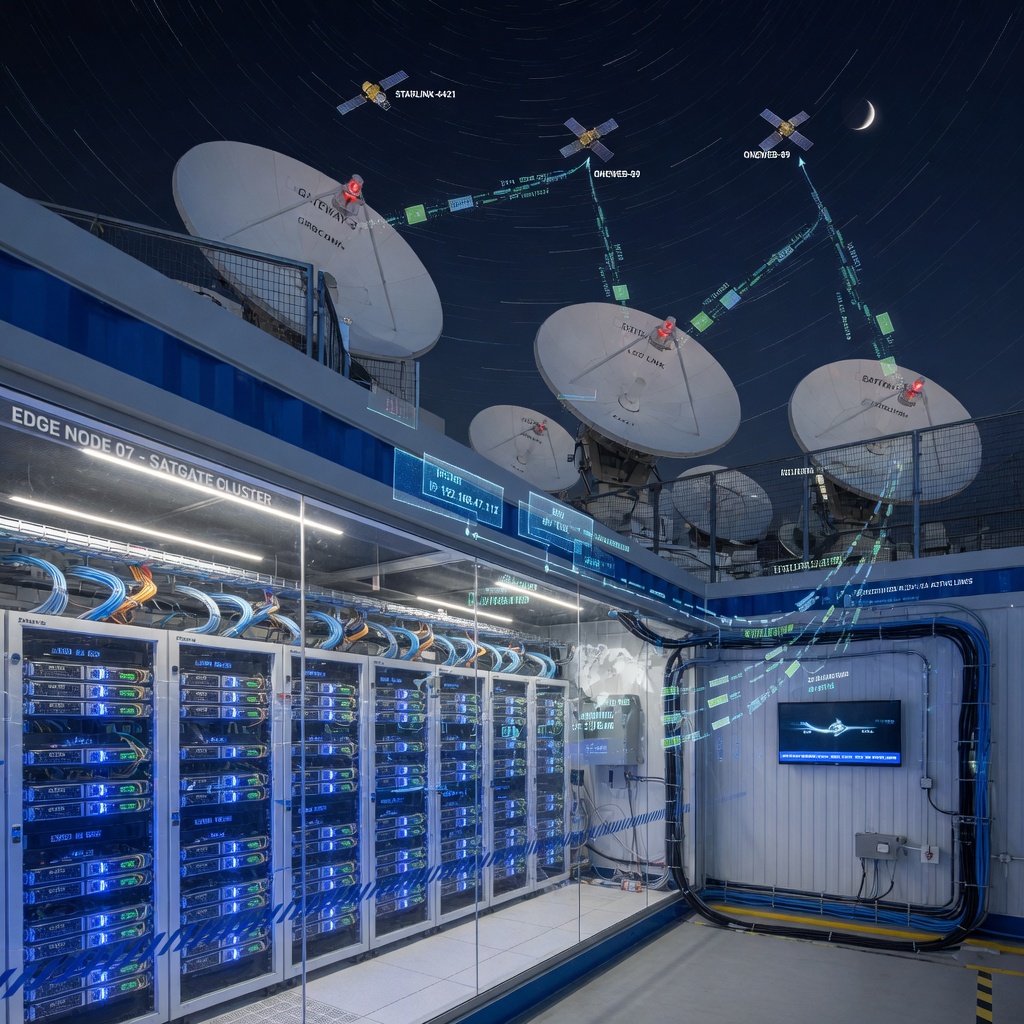
Perhaps the most consequential R&D frontier in the ground infrastructure space is the convergence of satellite connectivity with edge computing architecture. The premise is straightforward but the execution is technically demanding: instead of routing all satellite traffic back to centralized cloud data centers, you place compute capacity as close to the user terminal as possible, either at the gateway station or in some emerging architectures, on the satellites themselves.
The latency and cost implications are significant. A fishing vessel in the South Pacific using satellite internet to run real-time catch monitoring software does not need that data to travel to a Virginia data center and back. Processing it at the nearest gateway node, or eventually on an orbital compute platform, could reduce round-trip times by an order of magnitude while cutting data transport costs substantially. Microsoft's Azure Space initiative, AWS Ground Station, and Google's investment in SES's MEO constellation all reflect this understanding that the edge computing and satellite connectivity markets are converging toward a single infrastructure category.
Funding in this intersection space has been particularly aggressive. Venture capital investments in companies building satellite-native edge computing platforms exceeded $2 billion globally in the past 18 months, according to multiple industry tracking sources, with particular concentration in defense-adjacent applications where low-latency distributed compute has obvious and immediate value. The commercial spillover into industrial IoT, precision agriculture, and autonomous maritime operations is expected to follow within a two-to-four year horizon as unit economics improve.
The Regulatory Terrain Is as Contested as the Technical
No discussion of ground infrastructure investment is complete without acknowledging the regulatory dimension, which for many operators represents a harder constraint than the engineering challenges. Spectrum allocation for gateway operations, landing rights for satellite services, and national security reviews of foreign-owned ground infrastructure are all active friction points that directly affect where capital can flow and how fast deployments can scale.
SpaceX has navigated this terrain more aggressively than any competitor, securing operational licenses in over 60 countries for Starlink while simultaneously lobbying at the ITU level for favorable spectrum coordination outcomes. The company's willingness to accept regulatory friction as a cost of doing business at speed has created a template, but also a set of precedents and counterreactions that will shape the competitive landscape for years. Several governments that initially welcomed Starlink are now drafting more restrictive frameworks for ground station ownership and data routing requirements, a trend that will complicate market entry calculations for Kuiper, Telesat Lightspeed, and the growing roster of regional constellation projects backed by Chinese, European, and Indian capital.
Where the Money Is Actually Flowing
"The satellite internet story has been told almost exclusively as a story about what happens above the Karman line. But the real bottleneck is a few meters off the ground."
Strip away the orbital theatrics and the R&D investment story for satellite internet ground infrastructure breaks down into three dominant themes. Terminal cost reduction through semiconductor-scale manufacturing is attracting both strategic corporate investment and growth equity, with several terminal hardware companies currently valued above $500 million despite being pre-revenue at scale. Gateway network buildout, particularly in emerging markets where fiber backhaul is thin, is drawing sovereign wealth fund interest alongside traditional infrastructure private equity. And the edge computing integration layer is the current darling of venture capital, where the narrative of "space-powered cloud infrastructure" is commanding valuations that reflect an expectation of winner-take-most market dynamics.
What makes this moment distinctive is that all three investment themes are reaching commercial inflection simultaneously. Terminal hardware is approaching the price points required for enterprise mass deployment. Gateway networks have enough density in key markets to support serious service-level agreements. And edge computing architectures are mature enough to support commercial pilots with paying enterprise customers. The ground infrastructure layer is no longer a limiting factor waiting to catch up with the space segment. It is becoming, in the assessment of a growing number of industry strategists, the actual source of durable competitive advantage in a market where launching more satellites is increasingly a commodity activity.
The companies that understand this earliest, and invest accordingly, will not just build better satellite internet services. They will own the physical and software substrate through which a genuinely global digital economy operates. That is a different kind of power than getting a rocket off the pad. It is quieter, harder to see from the outside, and considerably more difficult to replicate once established.