
6 AM, No Keys Required: One Engineer's Morning Commute Aboard Tesla's Autonomous Future
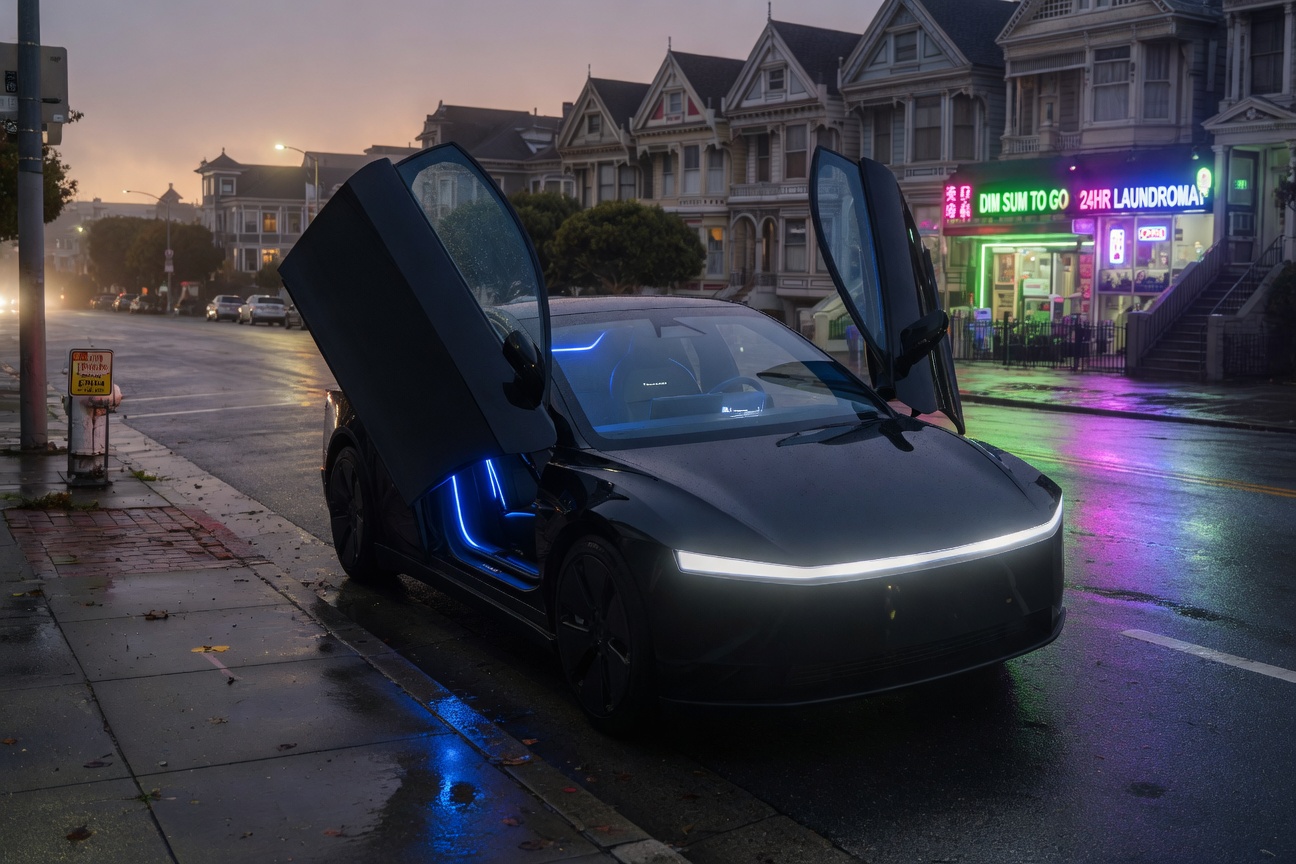
The alarm goes off at 5:47 AM, and Maya Reyes does something that would have seemed absurd to her parents: she does not check traffic. There is nothing to check. Before her feet hit the floor, a push notification from the Tesla Robotaxi app has already confirmed that a Cybercab is routing toward her block in South San Francisco, ETA 6:04 AM, charge level 84 percent, interior temperature pre-set to 68 degrees Fahrenheit because the app learned her preference three weeks ago without her ever entering a single setting. The car knows. That is the part that still gives her a small, involuntary thrill, even after eighteen months of helping to build the system that makes it possible.
The Engineer Who Rides Her Own Work
Maya is a 31-year-old FSD Integration Engineer at Tesla's Palo Alto autonomy division, one of roughly 400 people whose daily job is to interrogate the neural network stack powering Full Self-Driving and translate its behavioral outputs into the operational logic of the expanding Cybercab fleet. She is not a celebrity inside the company. She does not run press briefings or ring opening bells. She writes edge-case scenario scripts, reviews disengagement logs, and on Tuesdays she rides her own work to the office, a kind of living quality-assurance ritual that the team started informally and that management quickly formalized into a structured feedback protocol.
This particular Tuesday, she has agreed to narrate that ritual for an outside observer, walking through every moment of her interaction with the autonomous ride-hailing network from the first ping to the last, without filtering for the polished version.
The Cybercab arrives at 6:03 AM, a full minute early. It is the production-spec two-seater, the compact butterfly-door design that Tesla formally unveiled after years of teased silhouettes and leaked renders. No steering wheel. No pedals. The interior is wider than it looks from the outside because the absent driver's console reclaimed roughly fourteen inches of horizontal cabin space, giving the single bench seat a first-class aircraft feel in a footprint barely larger than a compact sedan. Maya opens the door with a tap on her phone, drops into the seat, and the car begins moving before she has clipped her seatbelt. Not recklessly. It simply has no reason to wait.
"The first time I rode one as a passenger and not a monitor, I kept reaching for a grab handle that wasn't there. Not because the driving was scary. Because I was trained to be scared."
What FSD Actually Feels Like From the Inside
The route to Tesla's Palo Alto campus covers 28 miles and, on this morning, involves a construction detour on Highway 101 that was not in any map database as of midnight. This is the scenario that autonomy skeptics love to invoke, the unplanned, the unstructured, the genuinely novel. Maya watches the Cybercab's behavior with the practiced eye of someone who has spent hundreds of hours reviewing the very sensor fusion logs this car is generating right now.
The system identifies the lane closure via camera arrays approximately 340 meters before the merge point, which Maya notes is actually farther than most attentive human drivers would consciously register a merge advisory. The car does not brake sharply or hesitate in the uncanny stuttering way that earlier FSD versions were notorious for. It eases into the adjacent lane with a confidence that is, she admits, better described as fluid than cautious. The neural planner has seen hundreds of thousands of similar scenarios in simulation and real-world fleet data. The construction zone is not new to it in any meaningful sense, even if this specific cone placement is.
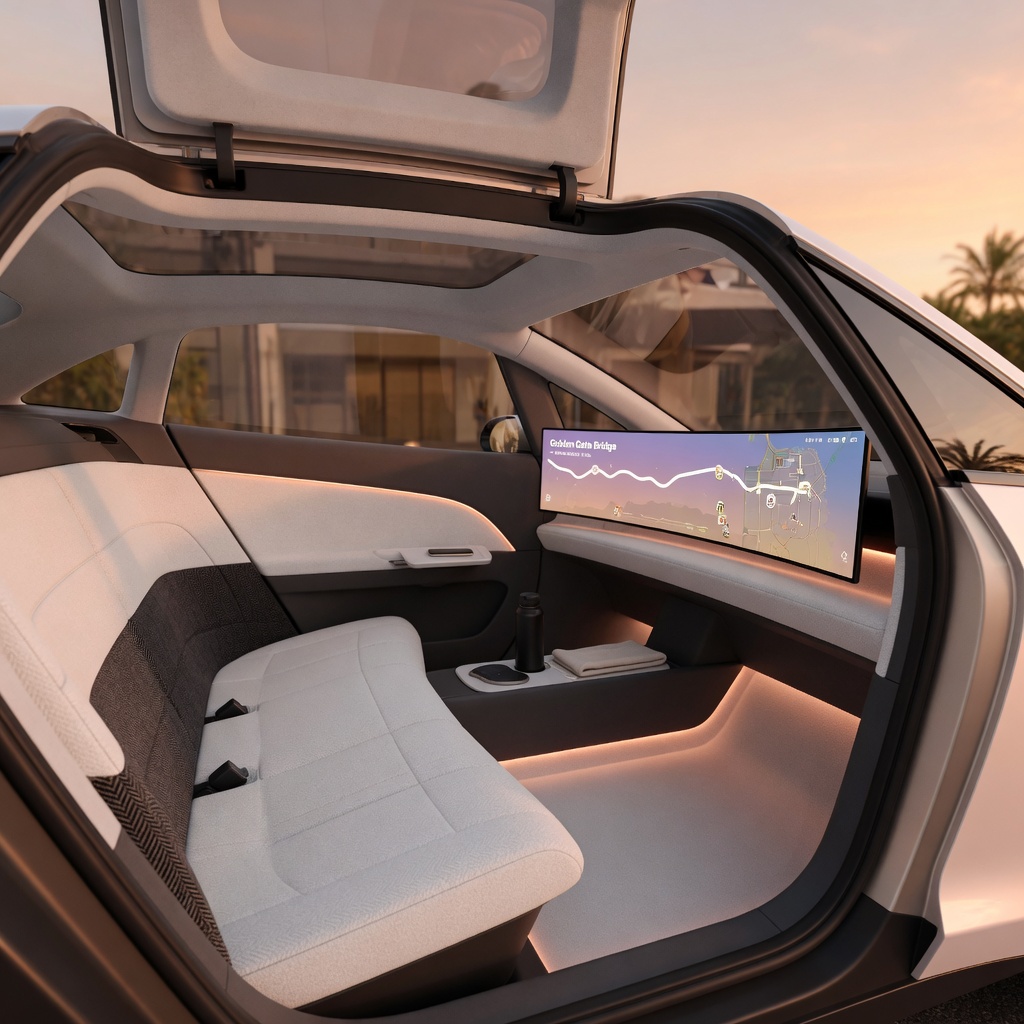
What Maya is actually watching, she explains, is not whether the car handles the detour. She expects it to. She is watching the micro-decisions: how the car positions itself relative to a construction worker standing near the shoulder, how it modulates speed when a merging semi-truck's trailer swings wide, how it resolves a brief ambiguity when a flagman's gesture could be interpreted as either a wave-through or a hold. The car reads it as a wave-through. It is correct. Maya exhales.
"That flagman decision," she says, pulling up the live telemetry on her phone, "that one goes straight into the scenario library. We'll run 10,000 synthetic variations of that gesture by end of week."
The Fleet Behind the Single Car
What makes Maya's commute meaningful beyond its personal convenience is what it represents at scale. The Cybercab she is riding is one node in a network that Tesla is actively expanding across designated metro zones, with Austin and San Francisco serving as the primary operational proving grounds before broader rollout phases begin. Each vehicle in the fleet is not merely serving passengers. It is continuously uploading anonymized perception data, routing decisions, and behavioral outcomes back to Tesla's training infrastructure, a feedback loop that tightens the model with every mile driven by every car in the network simultaneously.
This is the architectural advantage that Tesla's approach carries over competitors relying on high-definition pre-mapped environments. The Cybercab does not need a perfect map. It needs enough real-world variety to generalize, and with a fleet measured in the thousands and a consumer FSD install base providing additional supervised learning data from millions of human-monitored miles, the variety arrives at a volume no rival has matched. Maya is careful not to frame this as a solved problem. "Volume of data is not wisdom," she says. "The curation is everything. Bad data at scale just trains bad behavior faster." Her team's job is, in large part, the curation.
Midday: The Dispatch Dashboard
By 10:30 AM, Maya is at her standing desk in the open-plan autonomy floor, three monitors arranged in a shallow arc. The leftmost screen shows a live operational map of the San Francisco Cybercab zone: 47 vehicles active, color-coded by mission status. Green dots are in-trip. Yellow are repositioning. Two orange dots indicate vehicles that have pulled into a designated safe-stop for a remote human review, triggered automatically when the onboard system logged a confidence score below its operational threshold during a complex intersection scenario earlier that morning.
Those two orange dots are Maya's first priority. She pulls the sensor logs, reviews the video reconstruction, and within eleven minutes has classified both incidents: one is a genuine edge case worthy of model retraining flagging, the other is a false positive triggered by unusual sunlight diffraction off a wet road surface that the system misclassified as a stationary obstacle. The car stopped safely, which is the correct behavior. But it stopped unnecessarily, which is a friction point for the passenger experience and, at fleet scale, a source of traffic disruption. Both outcomes get documented. Both feed different pipelines.
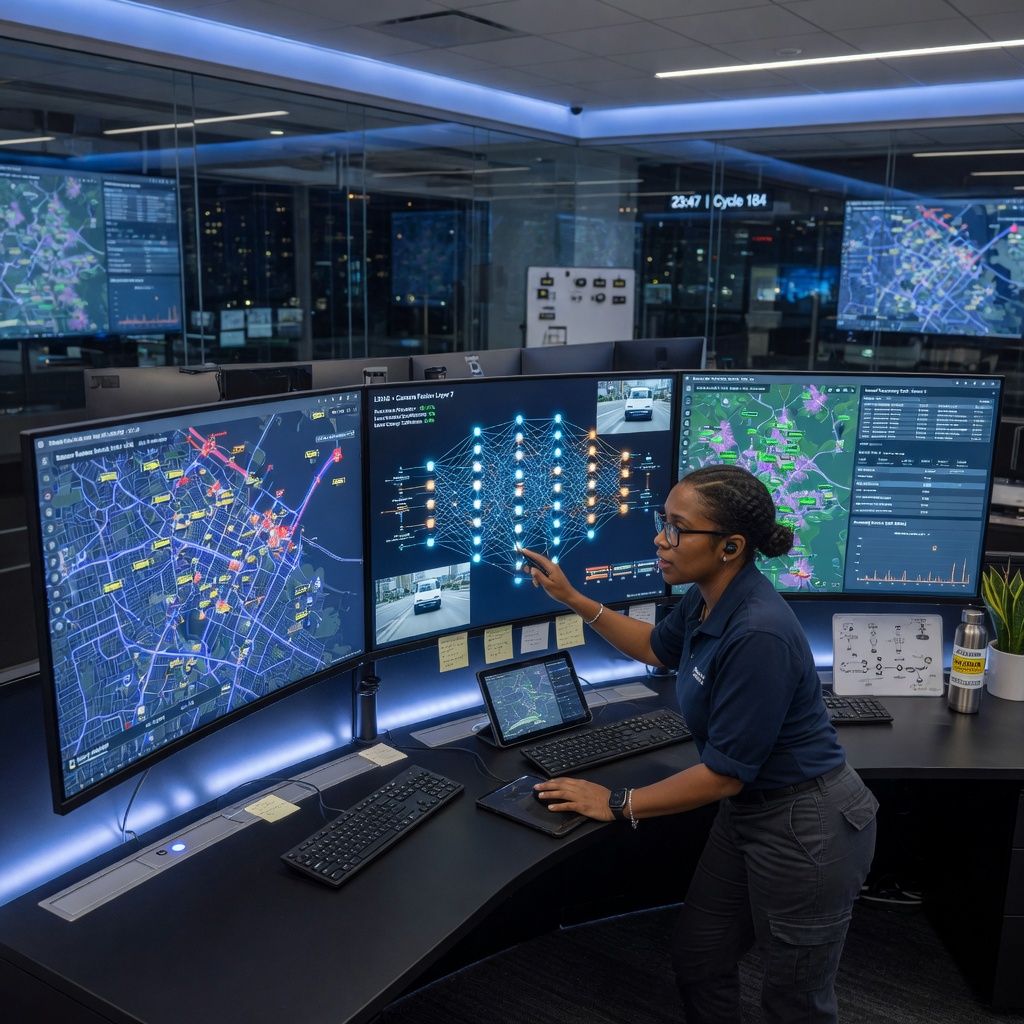
This is the invisible labor of autonomous mobility. The passenger in that orange-dot Cybercab experienced a 90-second unexpected stop and mild annoyance. Maya experienced it as a data point with a story. The gap between those two experiences, between riding a technology and building it, is the gap that her Tuesday commute ritual is specifically designed to narrow.
The Ride Home, and What It Means
At 7:22 PM, Maya requests a return Cybercab from the office. The app shows a four-minute wait, which she uses to finish a voice memo about a routing optimization idea that occurred to her while reviewing afternoon dispatch logs. When the car arrives, it is a different unit from the morning, with 91,000 fleet miles on its odometer, a vehicle that has carried hundreds of passengers and logged millions of edge-case micro-decisions since it was first activated. It drives her home with the same smooth indifference to drama as the morning car.
Somewhere around the midpoint of the 101, she stops monitoring and just rides. The city slides past the window. The car anticipates a yellow light and coasts, something a hurried human driver rarely chooses to do. A cyclist cuts across the intersection ahead and the car's response is so measured, so pre-emptively absorbed into its speed modulation, that Maya barely registers it as an event at all.
That, she says later, is the benchmark she actually cares about. Not the dramatic save. Not the impressive construction-zone navigation. The benchmark is the moment when a technology stops announcing itself and simply becomes the texture of daily life. By that measure, she thinks Tesla's Cybercab network is closer than the public debate currently acknowledges, not because the hard problems are solved, but because the remaining distance between impressive-and-noticed and reliable-and-invisible is precisely the distance her team is crossing, one flagman's gesture and one false-positive sunlight reflection at a time.
The car stops at her curb at 7:58 PM. The door opens. She steps out into the evening air and, for a moment, does not reach for her keys, because she does not have any. That detail will never stop being quietly remarkable to her. She hopes it stays that way.

Alex Rivera
Tech journalist covering Elon Musk’s companies for over 8 years.