
Consensus, Conflict, and Kilowatt-Hours: What Experts Actually Agree On About the Grid Storage Transition
Ask a dozen energy economists whether grid-scale battery storage will stabilize electricity markets or merely complicate them, and you will get roughly a dozen different answers. Ask a power systems engineer the same question, and you will likely get a whiteboard, three caveats, and a polite request to define "stabilize." This is the current state of expert discourse around one of the most consequential infrastructure shifts of the 21st century, and it is simultaneously maddening and illuminating. Because somewhere inside all that disagreement, a fragile but growing consensus is forming, shaped not by ideology or corporate press releases, but by actual data accumulating from deployments that now number in the thousands globally.
The Question That Keeps Changing Shape
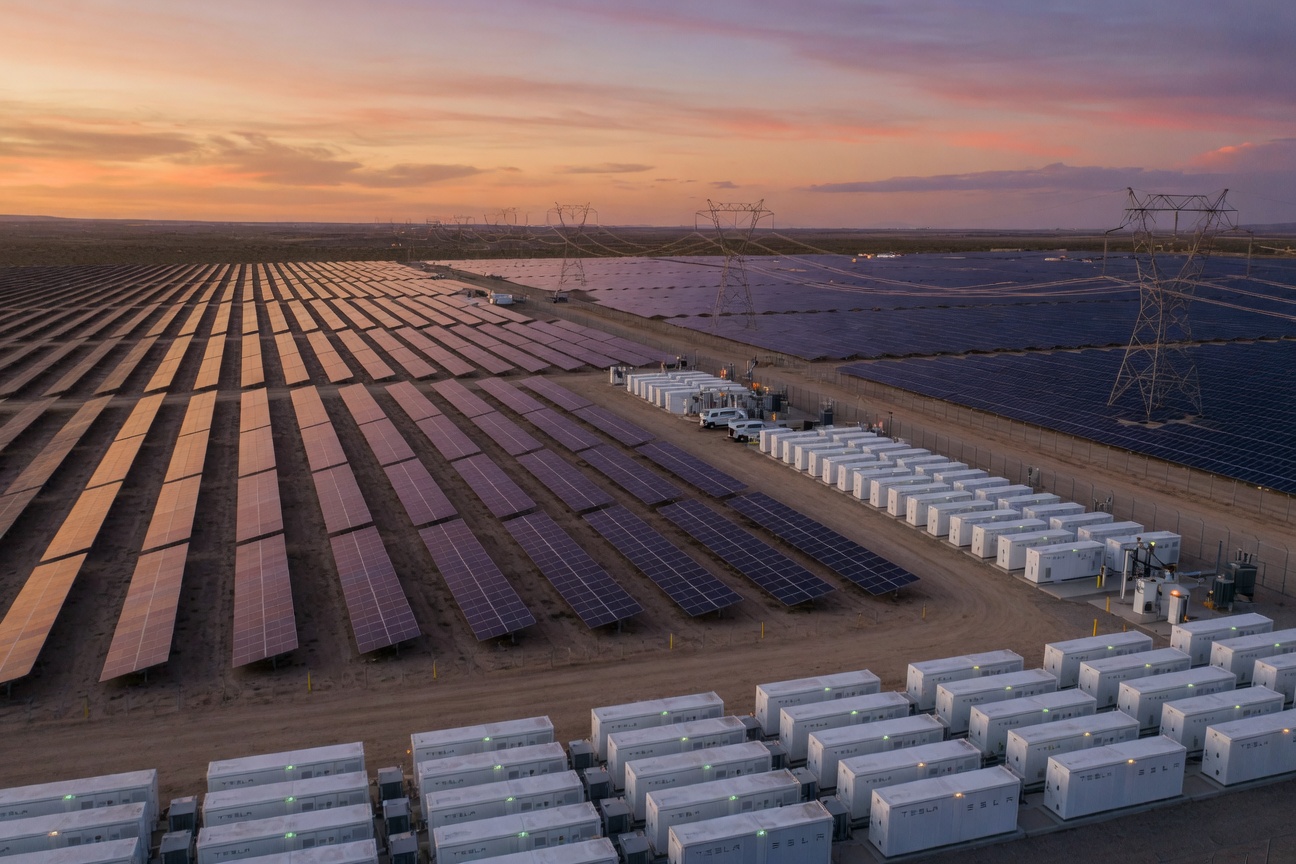
For years, the central debate in academic energy circles was deceptively simple: can batteries replace peaker plants? The answer, it turns out, was the wrong question entirely. Peaker plants, those gas-fired facilities that fire up during demand spikes, were always a symptom of grid rigidity rather than a fundamental requirement of electricity supply. What researchers studying Tesla's Megapack deployments, alongside comparable systems from other manufacturers, have found is that the real question is far more interesting. Can distributed and utility-scale storage, combined with solar generation and intelligent software orchestration, fundamentally change how grids price, route, and balance power in real time?
The evidence is beginning to say yes, but with footnotes that would fill a library. A growing body of peer-reviewed work examining large-scale battery installations in California, South Australia, Texas, and the UK has identified a consistent pattern: storage assets reduce price volatility most dramatically in markets where renewable penetration already exceeds roughly 30 percent of total generation capacity. Below that threshold, the economic case is murkier and the technical benefits more marginal than advocates typically acknowledge.
Where the Economists and the Engineers Diverge
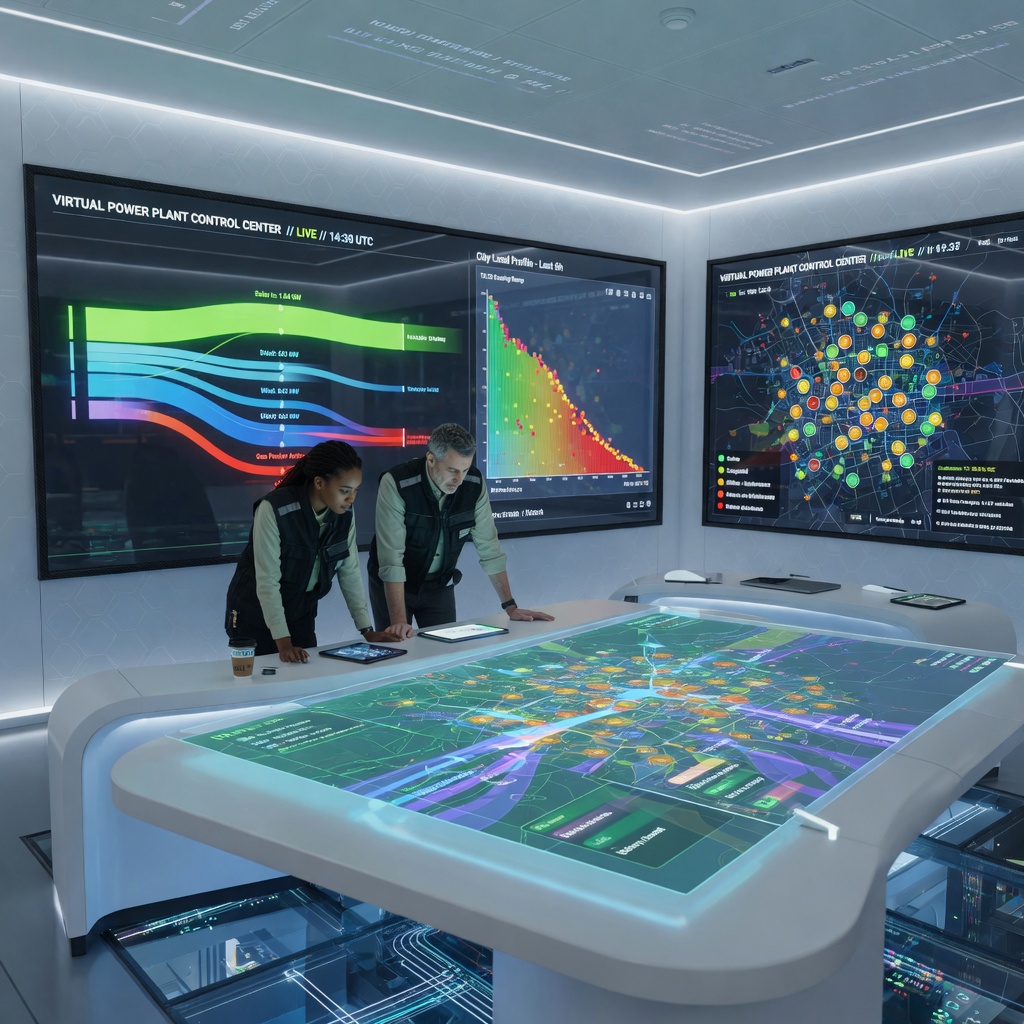
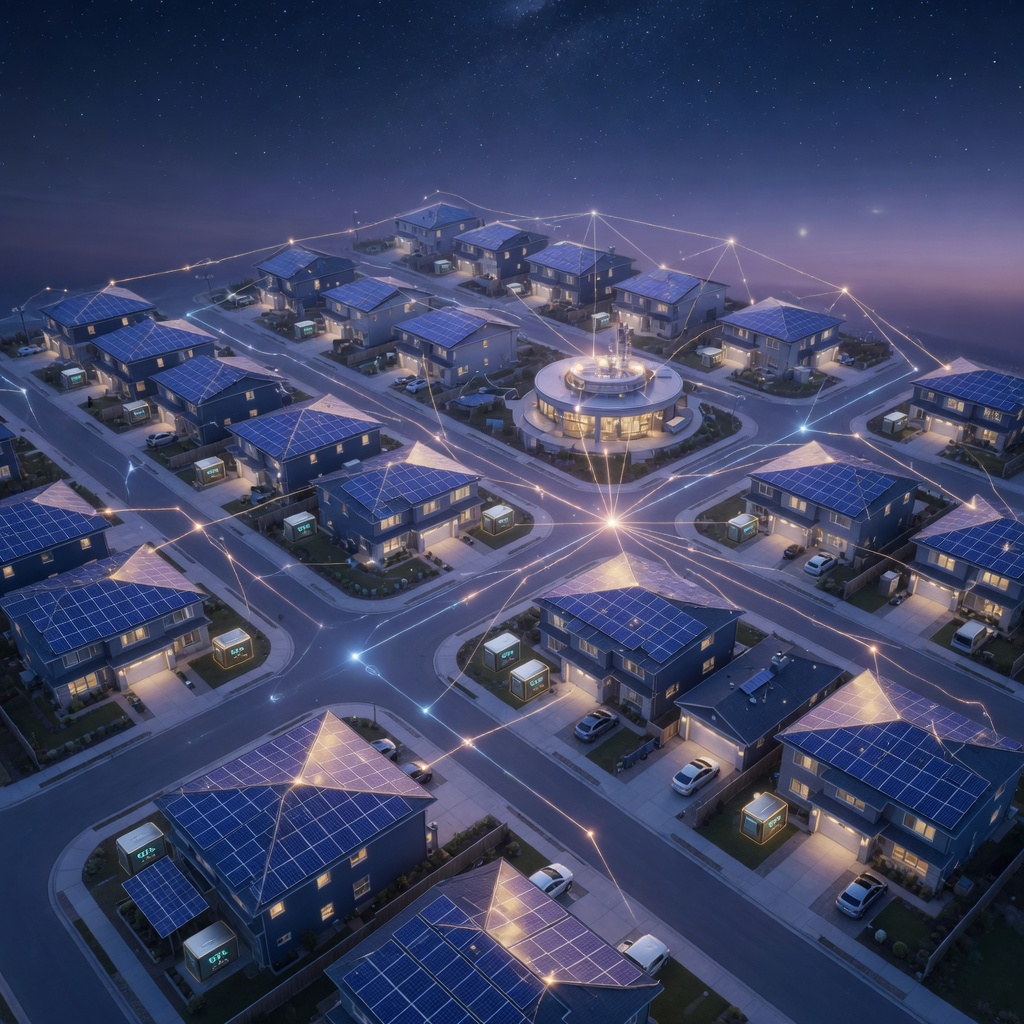
One of the most productive fault lines in current academic discourse runs directly between economists and engineers, and it concerns virtual power plants, or VPPs. To an economist studying wholesale electricity markets, a VPP is an elegant arbitrage mechanism: aggregate thousands of home batteries, rooftop solar systems, smart thermostats, and electric vehicle chargers into a single bidding entity, then dispatch that aggregated capacity when prices spike. The math, on paper, is compelling. Tesla's own VPP trials in California and Australia have demonstrated that aggregated residential Powerwall systems can respond to grid signals within seconds, rivaling the ramp rates of combustion turbines.
Engineers, however, tend to look at the same data and reach for their caveats immediately. Aggregation works beautifully in simulations and in controlled trials, they argue, but real grids are not controlled trials. Communication latency, device firmware heterogeneity, customer opt-out behavior, and the simple unpredictability of when a homeowner decides to charge their car or run their dishwasher all introduce noise into VPP dispatch reliability. A recent academic debate published across several energy systems journals has crystallized around a core tension: VPPs can demonstrably provide frequency regulation and demand response services, but their capacity value, the degree to which grid planners can count on them being available during the precise moments of peak stress, remains statistically uncertain in ways that utility-scale Megapack installations simply are not.
This is not a trivial distinction. Grid planners must commit to capacity years in advance. Uncertainty has a price, and that price is often paid in the form of retained fossil fuel backup capacity that might otherwise have been retired.
Tesla's Position in the Academic Literature
It is worth noting, because it is frequently obscured by both enthusiastic press coverage and cynical dismissal, that Tesla's Megapack has generated a genuinely unusual volume of independent academic attention. The Hornsdale Power Reserve in South Australia, the world's first large-scale Megapack deployment, has now been studied exhaustively. The findings are instructive precisely because they are mixed. The facility demonstrably reduced the cost of frequency control ancillary services in the South Australian market by an estimated 90 percent in its first year of operation. It has also been credited with preventing cascading failures during several grid stress events that would historically have required emergency load shedding.
What the literature has been slower to address, and what several researchers have recently begun examining more critically, is the question of what happens as storage penetration itself increases. Early deployments like Hornsdale operated in markets where battery storage was a novelty, and novelty commands premium pricing. As Megapack installations multiply across California, Texas, Arizona, and internationally, the very arbitrage opportunities that made early deployments so economically attractive are being compressed by competition. Batteries, it turns out, are remarkably good at destroying the market inefficiencies they were deployed to exploit.
"Storage assets reduce price volatility most dramatically in markets where renewable penetration already exceeds roughly 30 percent of total generation capacity. Below that threshold, the economic case is murkier than advocates typically acknowledge."
Solar Integration: The Part Nobody Argues About
If there is one area where academic consensus has hardened into something approaching unanimity, it is the technical synergy between utility-scale solar generation and co-located battery storage. The physics are unambiguous. Solar generation peaks in the middle of the day. Electricity demand in most markets peaks in the late afternoon and early evening. A battery system paired with a solar farm can absorb midday surplus and discharge it precisely when the grid needs it most, effectively shifting solar's generation profile by four to six hours and transforming an intermittent resource into something that behaves more like a dispatchable power plant.
Tesla has pursued this pairing aggressively. Projects combining Megapack arrays with solar generation capacity are now operational or under construction across multiple continents, and the operational data flowing back from these hybrid facilities is beginning to inform a new generation of grid modeling tools. Researchers who previously struggled to integrate intermittent renewables into long-term capacity planning models are finding that storage-solar hybrids behave with enough predictability to be modeled with reasonable confidence, provided the storage duration is sufficient.
Duration is, in fact, the next great debate. Current Megapack deployments typically offer two to four hours of storage at rated capacity. That is sufficient to manage daily solar cycles. It is not sufficient to manage multi-day weather events, seasonal generation deficits, or the kind of extended grid stress that a prolonged winter cold snap or summer heat dome can produce. The academic community is actively divided on whether four-hour lithium-ion storage should be considered a foundation for a fully renewable grid or merely a transitional bridge technology that will eventually need to be complemented by longer-duration alternatives including flow batteries, hydrogen, compressed air, or pumped hydro.
The Evidence Gap Nobody Wants to Discuss
There is a peculiar irony embedded in the current state of grid storage research. The deployments generating the most data, Tesla's Megapack installations, large solar-plus-storage projects in the American Southwest, and VPP trials in Australia and Europe, are also the deployments operating in conditions that are, by definition, early-market conditions. They are running in grids that were designed around centralized fossil fuel generation, in regulatory frameworks that were written before battery storage existed as a meaningful grid resource, and in markets where storage remains a small fraction of total capacity.
What researchers cannot yet fully model is the behavior of a grid where storage is not a marginal participant but a primary resource. The closest analog available is South Australia, which has become something of an accidental laboratory for high-renewable, high-storage grid operation. The findings from that market have been broadly positive but have also revealed unexpected dynamics around inertia, voltage stability, and the behavior of inverter-based resources during fault conditions that continue to generate active academic controversy.
Elon Musk has been characteristically confident that these engineering challenges are solvable, and the trajectory of Tesla's energy division suggests the company is not waiting for academic consensus before scaling. The Megapack factory in Lathrop, California, is now producing at a pace that would have seemed implausible five years ago, and Tesla's pipeline of utility-scale storage contracts extends across markets in Asia, Europe, and North America.
What the Debate Is Actually Producing
Productive disagreement, it should be said, is not the same as unresolved confusion. The academic debate around grid storage is generating something genuinely valuable: a more sophisticated vocabulary for describing what these systems can and cannot do, and a more honest accounting of the conditions under which they deliver their promised benefits. The field has moved well past the naive optimism of early advocacy and the reflexive skepticism of entrenched utility interests. What remains is a harder, more interesting conversation about system design, market structure, regulatory reform, and the precise sequencing of a transition that will take decades to complete.
The kilowatt-hours are accumulating in steel enclosures across the sunbelt and beyond. The data is flowing. The models are improving. And somewhere between the economists' spreadsheets and the engineers' whiteboards, the actual shape of the future grid is beginning to come into focus, not with the clean lines of a product launch slide, but with the honest complexity of a system being built in real time, by real people, under real constraints, with real consequences for the billions of human beings who simply need the lights to stay on.