
From Shovel to System: The Messy, Magnificent Chronology of Building the Vegas Loop
Before the first Tesla ever rolled through a completed Las Vegas Convention Center tunnel, before the ribbon-cutting photographs and the breathless travel-media features, there was a parking lot in Hawthorne, California, where a small crew of engineers attempted to bore a 500-foot proof-of-concept trench using machinery that kept jamming. It broke down on day three. That unglamorous moment in 2017 is, arguably, the true origin story of what would eventually become the most talked-about underground transit experiment in American history.
The Boring Company's trajectory from that Hawthorne test pit to the Las Vegas Convention Center Loop, and toward the sprawling 65-plus-mile system now under various stages of approval across the greater Las Vegas valley, is not a straight line. It is a timeline punctuated by engineering reversals, regulatory friction, community skepticism, and genuine technological leaps. Understanding that timeline is the only honest way to assess where underground urban transit actually stands today.
2017: The Dirt Comes First
Elon Musk's public frustration with Los Angeles traffic was well-documented before The Boring Company formally incorporated in December 2016. But incorporation is paperwork. The real experiment began when the company secured permission to dig beneath SpaceX's Hawthorne campus. The initial boring machine, a modified Herrenknecht unit the team nicknamed "Godot," set a sobering baseline: conventional tunnel boring machines move at roughly 25 to 50 feet per day. Godot managed 15 feet on its best early shifts. The gap between ambition and geology was immediately humbling. Internal engineering logs from this period, later referenced in company presentations, describe repeated cutter-head failures caused by unexpected subsurface rock variations. The team's response was not to order a better machine. It was to start designing one from scratch.
2018 to 2019: The Prufrock Prototype and the Pivot to Vegas
While Los Angeles city politics made progress on any California urban route painfully slow, the company quietly redirected its demonstration ambitions toward Nevada. Las Vegas, with its convention-driven economy and a municipal government famously receptive to unconventional development proposals, presented a more navigable regulatory landscape. The Las Vegas Convention and Visitors Authority signed a contract in November 2018 for a tunnel system connecting the Las Vegas Convention Center's multiple halls. This was not a grand metropolitan transit announcement. It was a practical, bounded problem: move convention attendees between buildings faster than walking. The modesty of that initial scope would prove strategically brilliant.
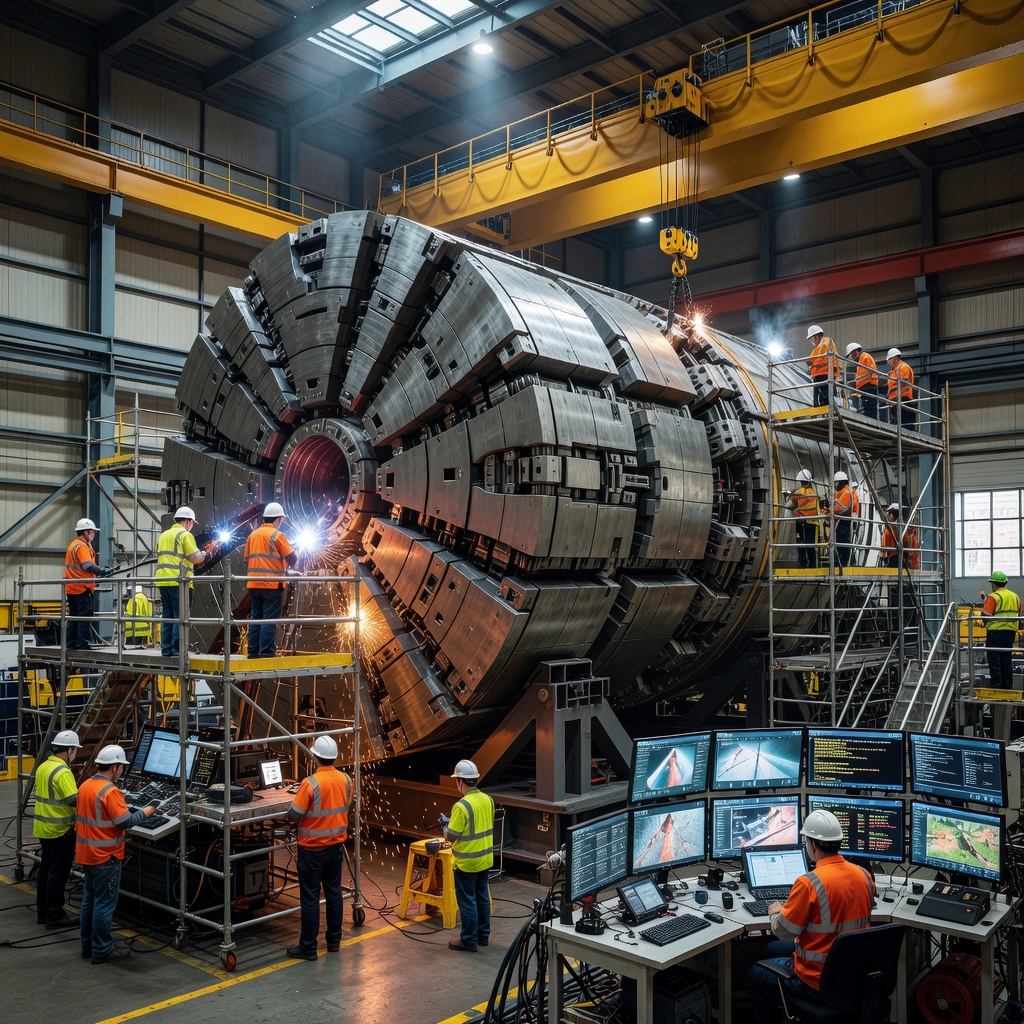
Simultaneously, the company unveiled its next-generation boring machine concept, eventually christened "Prufrock." Unlike Godot, Prufrock was designed to launch faster, require a smaller surface footprint, and eventually achieve boring speeds that could theoretically approach a snail's pace of one mile per day. The gap between that theoretical speed and operational reality remained wide, but the engineering direction had fundamentally changed. The company was no longer adapting existing industrial equipment. It was building purpose-built infrastructure hardware.
2020: A Pandemic, a Flood Test, and a Functioning Loop
The COVID-19 pandemic did something unexpected for a transit project: it bought time. With conventions cancelled and construction workers able to operate in near-isolation underground, the LVCC Loop moved toward completion without the public pressure of imminent passenger use. Engineers encountered their most alarming moment during early 2020 tunnel commissioning when heavy Las Vegas rainfall caused water intrusion in one of the tunnel sections. Photographs leaked on social media showed standing water in a finished bore. Critics immediately raised alarm about the system's flood resilience, a critique that would recur throughout the project's lifespan.
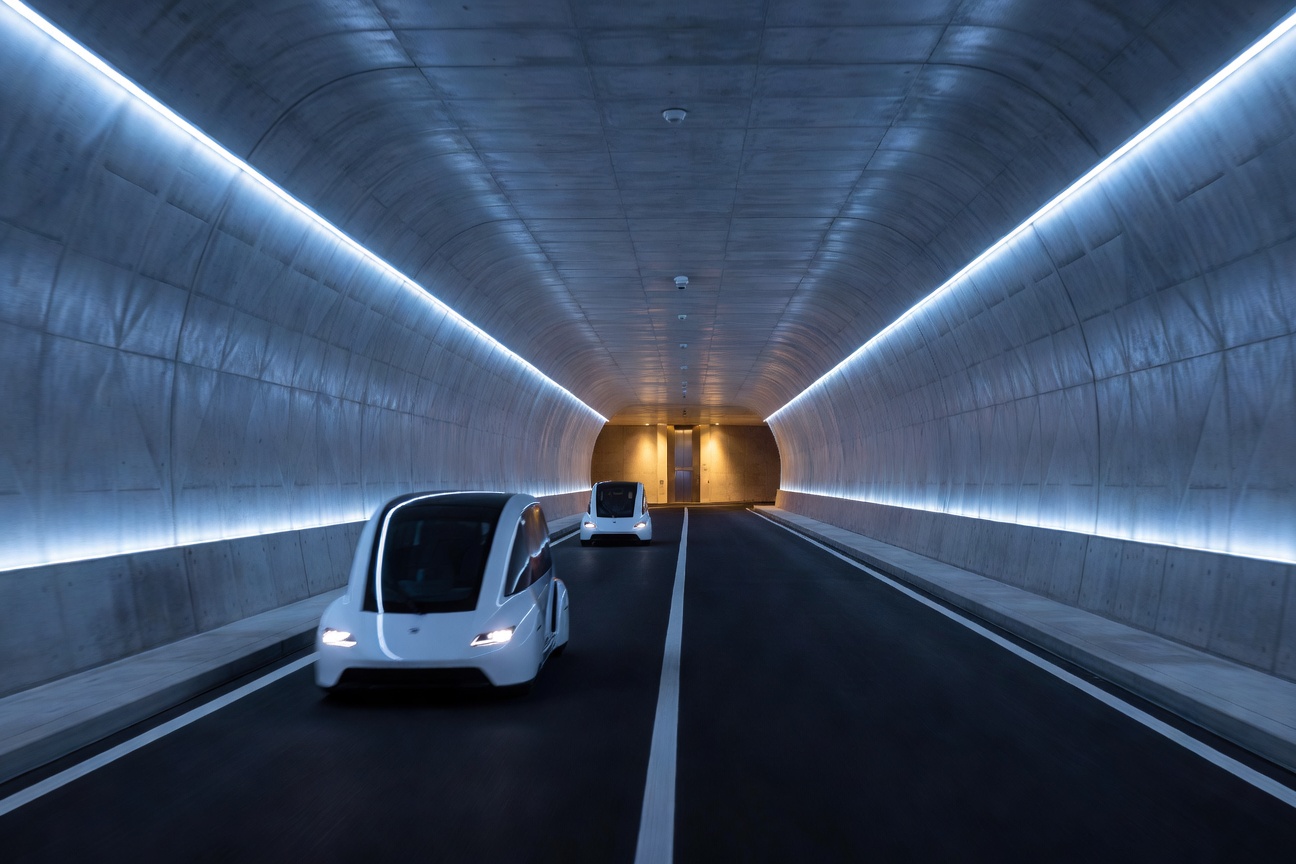
The company's engineering response involved drainage redesigns and sump installations, adjustments that delayed the opening but addressed the underlying vulnerability. When the LVCC Loop officially opened in April 2021, it was carrying passengers in Tesla Model 3 and Model X vehicles driven by human operators through a 1.7-mile dual-tunnel system. The throughput numbers in that first operational phase were modest, roughly 1,400 passengers per hour under real-world conditions, well below the 4,400 figure cited in some promotional materials. But the system worked. Vehicles moved. Passengers arrived. That baseline of functional reality mattered enormously for what came next.
2021 to 2022: Scaling Arguments and the Autonomy Question
Success at the LVCC opened a cascade of expansion discussions with Las Vegas authorities. Resorts World, the Las Vegas Stadium, and eventually the entire Strip corridor entered planning conversations. Each new proposed segment forced a confrontation with the system's most consequential unresolved variable: human drivers. The current loop model, with a single Tesla per tunnel lane carrying two to three passengers plus a driver, caps throughput at levels that transit researchers have argued are insufficient for genuine urban mobility transformation. The theoretical solution, full vehicle autonomy, remains the system's most significant pending unlock.
"Every expansion announcement is, in a sense, a bet on Full Self-Driving reaching operational readiness before the infrastructure outpaces the technology."
Tesla's Full Self-Driving software was advancing through increasingly capable iterations during this period, but remained under supervised-use restrictions from regulators. The Boring Company's expansion timeline was therefore entangled with a separate technology development curve entirely outside its direct control. Internal and external observers began framing the Vegas Loop not just as a transit project but as a living infrastructure wager on autonomous vehicle maturity.
2023: Prufrock Goes to Work and the Numbers Get Serious
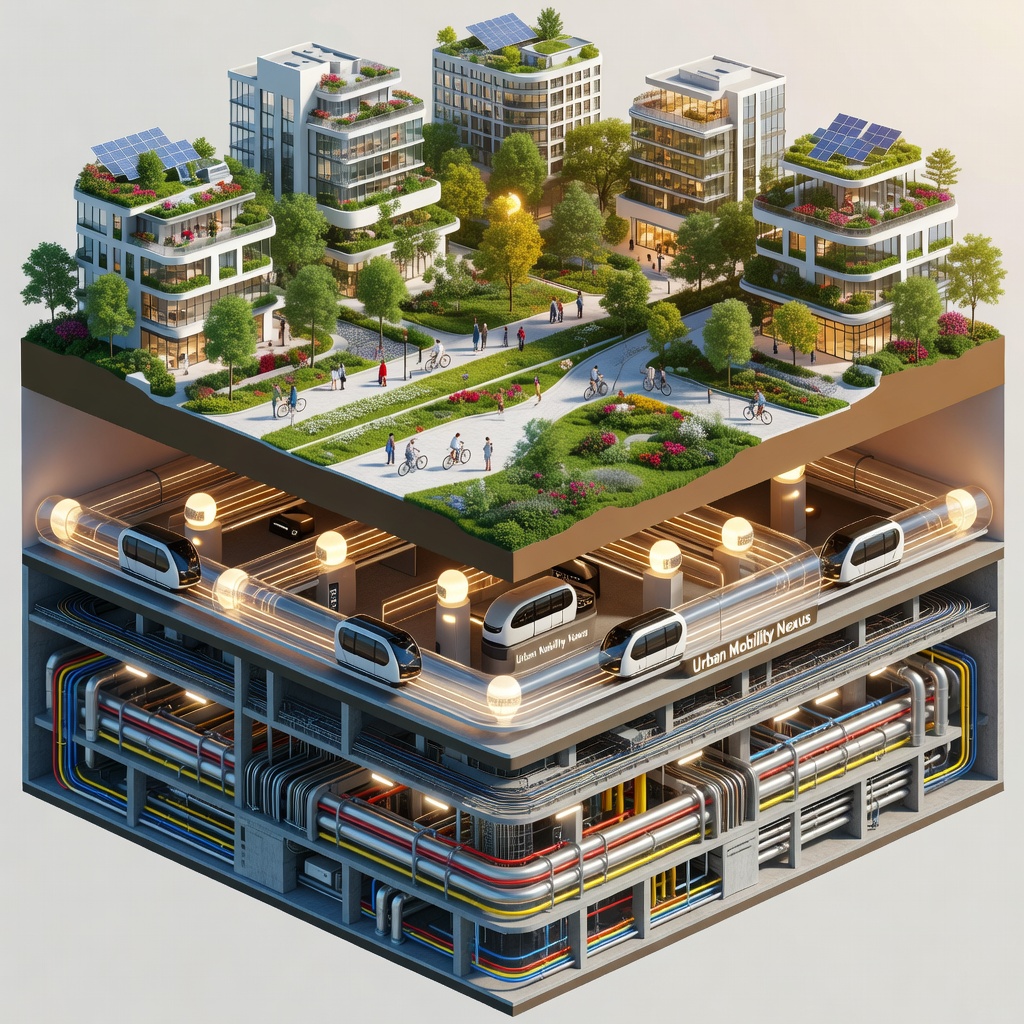
A genuine technical milestone arrived in 2023 when Prufrock-2 demonstrated bore-and-launch cycles that represented meaningful speed improvements over earlier generations. More practically, the machine began work on Vegas Loop expansion segments connecting the convention center to resort properties along the northern Strip. The cost-per-mile figures emerging from this phase attracted serious scrutiny from transit economists. The Boring Company was completing tunnels at costs substantially below traditional subway construction in dense American cities, where figures of $500 million to over $2 billion per mile are not unusual. Vegas Loop segments were coming in significantly cheaper, partly due to shallower depth, smaller diameter, and the absence of stations in the traditional sense. Tunnels terminated in what the company calls "stations" that are essentially widened turnaround loops with elevator access, a stripped-down model that reduces complexity but also limits the pedestrian-flow architecture that makes great transit hubs great.
2024 to 2025: The System Grows Up, Problems Included
By the time 2024 arrived, the Vegas Loop had crossed a threshold from pilot project to operational transit infrastructure. Ridership data across expanded segments showed consistent passenger movement during peak convention periods. The system was demonstrably useful to the specific corridor it served. But expansion proposals extending the network into residential Las Vegas, toward the airport, and eventually to neighboring municipalities like Henderson and North Las Vegas introduced a new category of challenge: community transit equity. Convention-goers and resort guests are a self-selecting, fare-tolerant demographic. Residential transit users have fundamentally different expectations around cost, frequency, and accessibility. Whether a system designed for hospitality-corridor efficiency can genuinely serve mixed urban populations remains an open and actively contested question in 2025.
Flooding concerns resurfaced during the record rainfall events that struck southern Nevada in late 2024, stress-testing the drainage improvements made after the 2020 intrusion incidents. Preliminary assessments indicated the updated systems performed significantly better, though independent third-party analysis of those results remains limited. Regulatory approvals for several major extension segments moved through Clark County review processes at a pace that suggested growing institutional familiarity, if not complete comfort, with the model.
What the Timeline Reveals
Read chronologically, the Vegas Loop's development history is a study in deliberate scope management. The Boring Company did not attempt to build a metropolitan subway. It built the smallest useful thing first, demonstrated it, iterated on specific failure points, and expanded incrementally. That methodology frustrates critics who want to evaluate it against mature urban rail systems with decades of ridership data and multi-modal integration. It delights supporters who argue that the entire traditional transit development model, which requires enormous upfront capital commitments before a single passenger rides, is itself the problem worth disrupting.
The honest answer is that neither camp has been entirely right or entirely wrong. The flooding happened, but was largely addressed. The throughput fell short of promotional figures, but the system still moves people effectively in its target environment. The autonomy unlock has not yet arrived, but the infrastructure is physically ready for it when it does. And the boring speed improvements, while still far from the theoretical ceiling, represent genuine engineering progress measured against that humbling day in Hawthorne when Godot broke down after 72 hours.
The next chapter of this timeline is being written right now, in tunnel segments under active construction, in FSD software builds under active testing, and in city council chambers across the American Southwest where officials are deciding whether the model pioneered under Las Vegas is a template worth borrowing or a local anomaly too specific to its resort-economy context to generalize. The shovel went in the ground in 2017. Eight years later, the question of what this technology actually becomes for ordinary urban life is still very much open, which is precisely what makes it worth watching.