
Sunrise at the Storage Field: A Day Inside the Facilities Remaking the American Grid
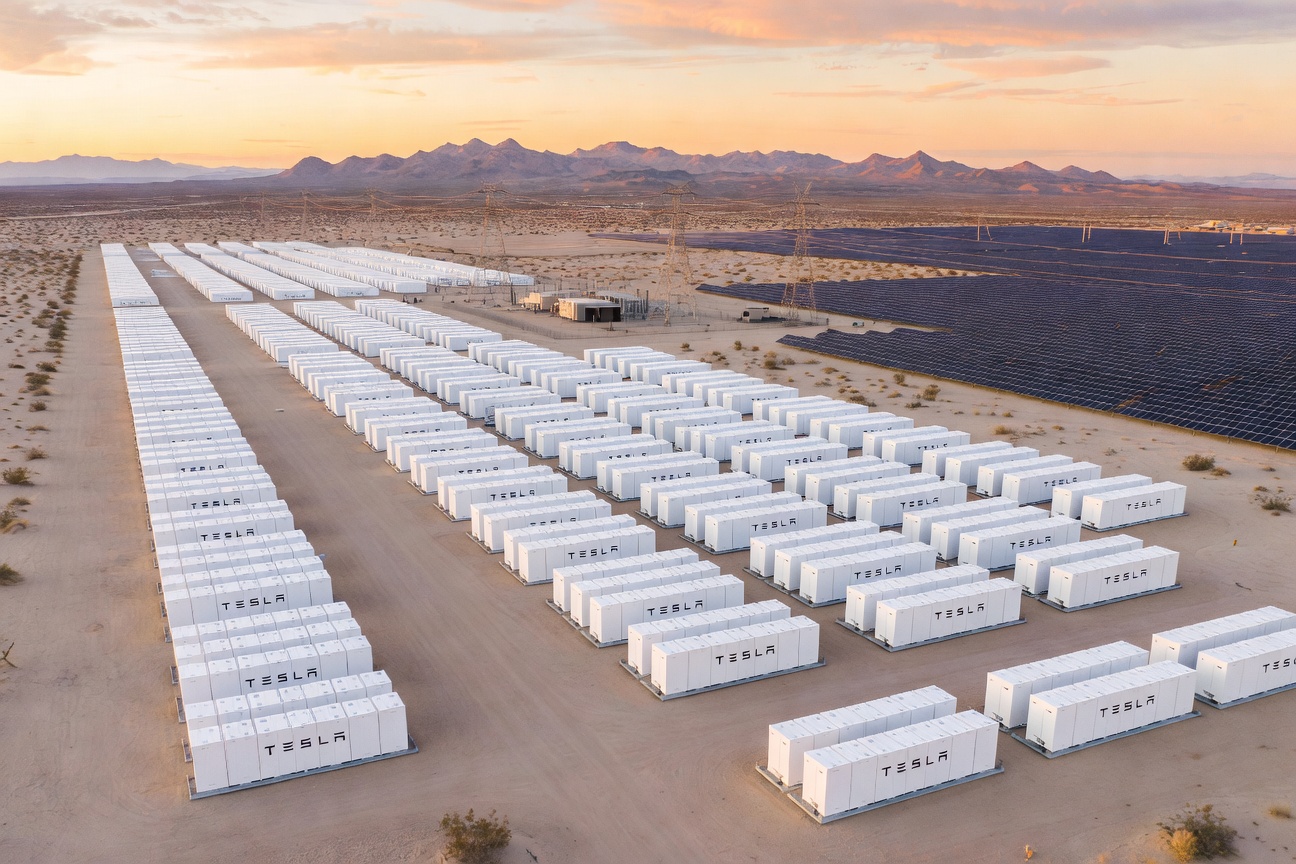
At 4:47 a.m., before the sun clears the San Gabriel Mountains, the batteries are already working. Two hundred and sixteen Tesla Megapacks stretch across a scrubbed gravel plain in the western Mojave, their white aluminum housings glowing faintly under sodium-vapor security lights. There is no roar here, no cloud of steam, no spinning turbine. Just a low-frequency hum you feel more in your sternum than your ears, and a faint warmth radiating from the inverter cabinets. Inside this 380-megawatt-hour facility, electrons collected yesterday from a 200-megawatt solar array are being released into the California ISO grid at a price determined 37 seconds ago by a machine-learning algorithm that monitors 14 grid signals simultaneously. By 6:15 a.m., when demand begins to spike, this site will have earned its owner roughly $48,000 from a single morning discharge. It will do this every day for the next two decades.
This is not a science experiment. It is not a pilot program or a proof of concept. It is the new normal, assembled in plain sight while most of the country still imagines power as something that comes from a smokestack somewhere over the horizon.
The Geometry of a New Grid
Understanding what is happening to American electricity infrastructure requires abandoning the mental map most people carry. The old grid was linear: fuel in, electricity out, delivered via a hub-and-spoke hierarchy that flowed in one direction. The new grid is a mesh, a sprawling bidirectional fabric where generation, storage, and consumption are happening at the same time, sometimes in the same building, increasingly in the same battery cabinet.
Tesla's Megapack has become the load-bearing unit of this transformation. Each cabinet holds roughly 3.9 megawatt-hours of usable capacity and is designed to be stacked into configurations ranging from modest 10MWh municipal backup installations to the now-operational Elkhorn Battery in Monterey County, California, which holds 182.5MWh and dispatches power across the Bay Area. The Lathrop Megafactory in California's Central Valley, which reached full production velocity in early 2024, is now producing enough Megapacks each week to add several hundred megawatt-hours of grid storage capacity to the global market. The pace is staggering by historical energy infrastructure standards, where projects typically crawl through decade-long planning horizons.
What makes the geometry interesting is not just the hardware but where it lands. Megapacks are appearing at former coal plant sites, on brownfield industrial parcels, at the edges of suburban solar farms, and, increasingly, co-located with offshore wind interconnection points along the Eastern Seaboard. They are filling the gaps that made renewables unreliable, the four-hour shoulder between peak solar generation and peak evening demand, the overnight hours when wind production outpaces consumption, the sudden frequency dips when a large generator trips offline.
Software Is the Real Power Plant

Back at the Mojave site, a field engineer named Marcus pulls up a dashboard on a ruggedized tablet. The screen shows state-of-charge curves, inverter temperatures, cell-level voltage differentials, and a live feed of the day-ahead price forecast generated by Tesla's Autobidder platform. Autobidder is the software layer that sits above the physical hardware and makes the economic decisions: when to charge, when to discharge, how aggressively to participate in ancillary services markets, and how to balance degradation costs against revenue opportunities. It is, in operational terms, the actual power plant. The Megapacks are just where the energy physically lives.
This distinction matters enormously when you start thinking about virtual power plants, or VPPs. A VPP is a network of distributed energy resources, rooftop solar panels, home batteries like the Tesla Powerwall, commercial backup systems, even smart water heaters and EV chargers, that are coordinated by software to behave as a single dispatchable generation asset. The individual components might be scattered across hundreds of square miles. The control logic knits them into something that a grid operator can call on the way they would call on a gas peaker plant.
Tesla's Virtual Power Plant program in California has enrolled thousands of Powerwall-equipped homes. During grid stress events last summer, the program dispatched over 75MWh of stored household energy into the grid in under 90 seconds. The homeowners received bill credits. The grid avoided a rolling blackout. No new power plant was built. The math works because the infrastructure was already installed for a different primary purpose, home backup and solar self-consumption, and the VPP participation is essentially unlocking latent grid capacity that existed but was previously invisible to system operators.
Solar's New Partner in Scale
Utility-scale solar has undergone its own quiet revolution in parallel. Module prices have fallen more than 90 percent over the past 15 years, and the levelized cost of solar-plus-storage is now competitive with natural gas combined-cycle plants in most of the United States, without subsidies. The Inflation Reduction Act's investment tax credits accelerated the economics further, triggering a wave of project announcements that has overwhelmed interconnection queues at regional transmission organizations across the country.
The interconnection backlog is, paradoxically, one of the most important stories in American energy and one of the least covered. As of early 2025, more than 2,600 gigawatts of generation capacity, mostly solar, wind, and battery storage, is sitting in interconnection queues waiting for grid studies and approval to connect. That figure is roughly twice the total installed generating capacity of the entire United States. The bottleneck is not technology, financing, or public will. It is administrative and engineering bandwidth at utilities and regional grid operators, organizations that were built to evaluate one or two large plant applications per year and are now facing hundreds.
Tesla and other large storage developers have begun working directly with transmission planners to co-locate storage at existing high-voltage substations, bypassing the queue to some extent by treating new storage as an upgrade to existing infrastructure rather than a new interconnection. It is a regulatory workaround born of necessity, and it is accelerating deployment in ways that conventional project development timelines never could.
The Missing Middle: Community and Industrial Scale
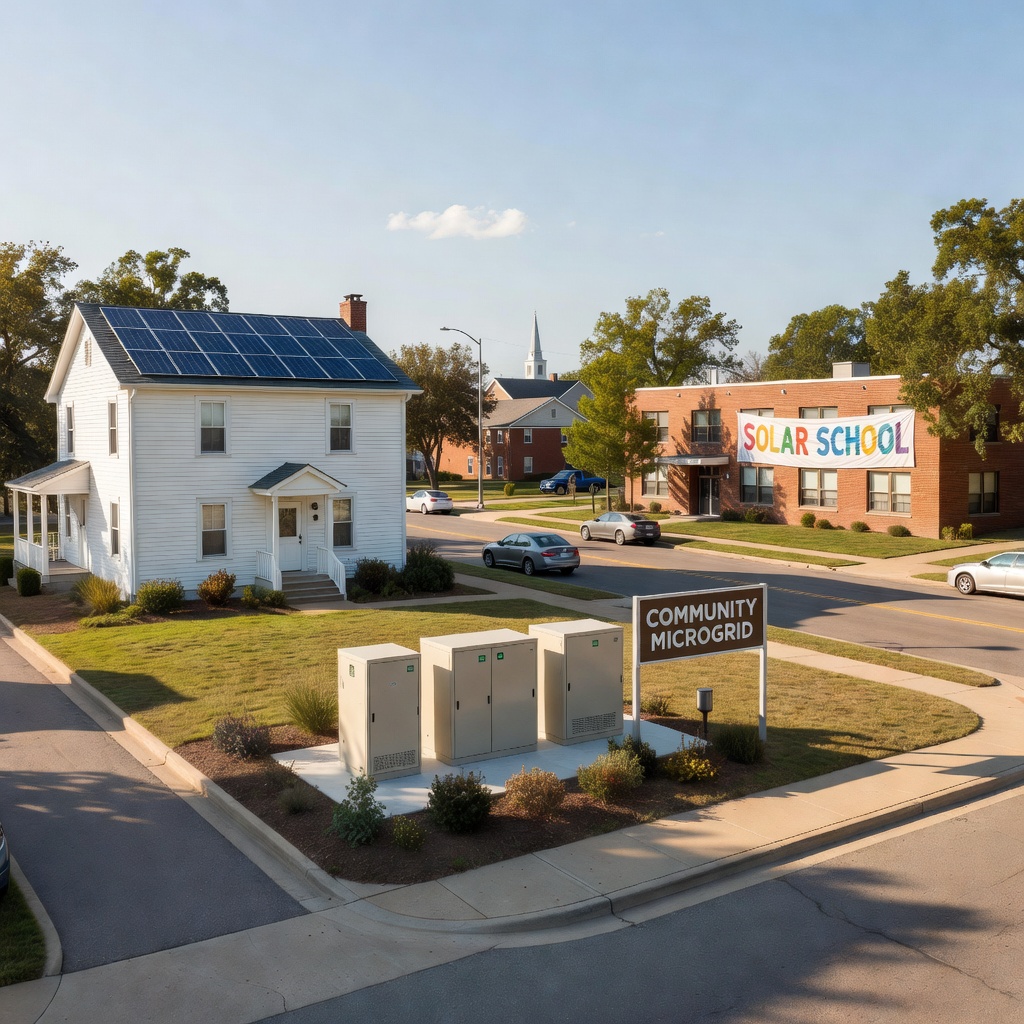
Between the individual Powerwall homeowner and the multi-hundred-megawatt Megapack installation lies an underserved and increasingly important middle tier: the community microgrid, the industrial facility with 10 to 50MWh of behind-the-meter storage, the municipal water treatment plant that co-locates solar and batteries to flatten its enormous energy bills. This is the segment where the economics are most interesting and the deployment curves are steepest right now.
A wastewater treatment facility in central Arizona recently commissioned a 14MWh Megapack system paired with 6MW of rooftop and carport solar. Before the project, the facility paid demand charges, fees based on peak consumption in any 15-minute window during the billing cycle, that routinely exceeded $80,000 per month. The storage system now shaves those peaks with algorithmic precision, cutting demand charges by 62 percent. The project pays back its capital cost in under seven years. The municipality then participates in the local utility's demand response program, earning additional revenue by agreeing to dispatch stored energy during grid emergencies. The facility has effectively become both a consumer and a producer, a prosumer in the jargon, and its grid participation makes every other ratepayer's electricity slightly cheaper.
Multiply this scenario across thousands of industrial facilities, schools, hospitals, and commercial buildings, and you begin to see the structural shift underway. The grid is not being replaced from the top down by a handful of giant batteries. It is being rebuilt from the edges inward, node by node, with each new installation making the whole system marginally more resilient and efficient.
What 2025 Actually Looks Like From the Ground
Standing at the Mojave site as the sun finally clears the mountains and the solar array begins producing at full capacity, Marcus points to a readout showing the facility transitioning from discharge to charge mode. The Megapacks that spent the pre-dawn hours emptying into the grid are now absorbing the morning ramp of solar production, electrons pouring back in at a rate the hardware manages with a thermal equanimity that no combustion technology could match. Within 20 minutes, the site will be at 90 percent state of charge and will begin selling frequency regulation services, tiny injections and absorptions of power measured in milliseconds, that keep the grid's alternating current locked precisely at 60 hertz.
The story of what is happening to the American grid is not a story of disruption in the Silicon Valley sense, the overnight obliteration of an old model by a shinier new one. It is slower, messier, and more interesting than that. It is a story of physical infrastructure being patiently, systematically rewired at enormous scale, driven by economics that now strongly favor clean storage over combustion, and by software platforms sophisticated enough to extract value from complexity that would have been unmanageable even a decade ago.
Elon Musk has described Tesla Energy's trajectory as eventually surpassing the automotive business in revenue. From a Mojave desert gravel plain at sunrise, watching electrons worth tens of thousands of dollars flow silently out of white aluminum cabinets into a grid that serves 40 million people, that forecast feels considerably less like hubris than it might have even three years ago. The batteries are not the future. They are the present, already working, already earning, already reshaping the infrastructure that the rest of the economy runs on.