
One Robot, A Hundred Different Roads: How Tesla's Cybercab Will Land Differently Across the Globe
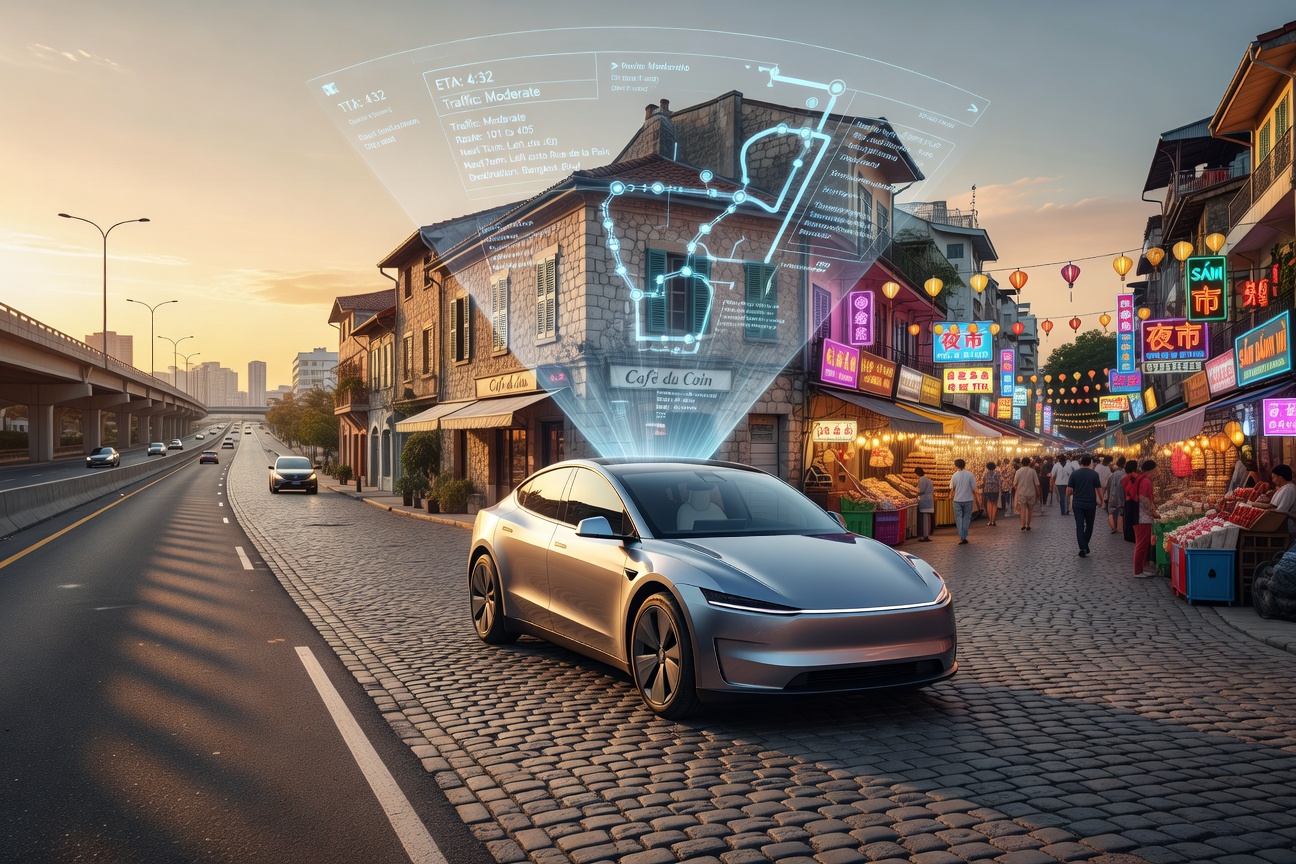
Picture two cities, same autonomous Tesla Cybercab, same underlying Full Self-Driving software stack, same minimalist two-seat cabin humming quietly through the night. In Scottsdale, Arizona, it glides through wide, freshly painted lanes past strip malls and golf courses, summoned via app by a retiree heading to a dinner reservation. In Ho Chi Minh City, that same vehicle concept confronts a river of motorbikes that flows through intersections with the logic of a murmuration, governed less by traffic lights than by collective instinct. Same car. Completely different planet. That tension is the most underappreciated dimension of Tesla's robotaxi ambition, and it will define whether Elon Musk's vision becomes a genuine global utility or a premium product that serves only the world's most infrastructure-lucky populations.
The Sunbelt Advantage: Where the Cybercab Was Born to Thrive
Tesla did not choose Austin and San Francisco by accident when it began its initial Cybercab deployment conversations. The American Sunbelt represents something close to a controlled laboratory for autonomous vehicle technology: wide arterial roads, relatively consistent weather patterns, high smartphone penetration, and a car-centric culture where ride-hailing is already normalized. For Full Self-Driving, these environments are friendly territory. Lane markings are fresh, pedestrian behavior is relatively predictable, and municipal governments are often eager to attract tech investment by fast-tracking autonomous vehicle permits.
In this context, Tesla's network approach is strategically elegant. Unlike competitors who depend on expensive lidar arrays and pre-mapped centimeter-resolution maps of every city block, FSD leans on a vision-based system trained on billions of real-world miles. As the fleet grows, the network learns. Phoenix suburbs feed data back to the mothership, which improves performance in Dallas, which refines edge-case handling in Charlotte. The American Sunbelt, in other words, is not just a launch market. It is the training ground for a global neural network that will eventually need to understand monsoons, cobblestones, and roundabouts with goats crossing them.
Europe: Where Bureaucracy Meets the Bicycle Lane
Cross the Atlantic and the variables multiply fast. European cities represent a paradox for autonomous ride-hailing: the infrastructure is often better maintained than in the U.S., but the regulatory and cultural landscape is dramatically more complex. Germany's federal structure means autonomous vehicle law is simultaneously shaped in Brussels, Berlin, and at the state level. France has a philosophical tradition of protecting labor that makes the displacement of taxi and ride-hailing drivers a politically radioactive conversation. The Netherlands has invested so heavily in cycling infrastructure that any autonomous vehicle network must co-exist with millions of daily cyclists whose road behavior is legally and culturally prioritized over cars.
Then there is the sheer age of European cities. Amsterdam's canal ring streets were designed in the 1600s. Edinburgh's Old Town geometry predates the concept of a lane marker by three centuries. Tesla's FSD, which has been extensively trained on American road geometry, will need substantial local fine-tuning to navigate a Florentine piazza at school pickup time without inducing collective cardiac arrest. The European rollout of Cybercab will likely be slower, more expensive to execute, and deeply dependent on local regulatory partnerships. Cities like Amsterdam, Berlin, and Paris are not going to hand over their streets to a California company without exhaustive safety audits, data sovereignty guarantees, and probably a lengthy period of politically negotiated pilot programs.
What Europe does offer, however, is something invaluable: a dense, transit-integrated urban population that already understands shared mobility. Ride-hailing adoption and multimodal transport behavior in major European cities could make the Cybercab an attractive last-mile solution once regulatory frameworks catch up. The EU's Artificial Intelligence Act, which classifies high-risk AI systems, will govern how FSD's decision-making must be documented and audited. Tesla will need to build compliance infrastructure that does not currently exist in its product philosophy.
Asia's Fractured Frontier: From Tokyo's Precision to Mumbai's Organized Chaos
Asia is not a market. It is a continent of entirely distinct autonomous vehicle realities stacked on top of each other. Japan presents a fascinating case study in cultural readiness versus regulatory caution. Japanese consumers rank among the world's most enthusiastic early adopters of transportation technology, and the country's aging population creates genuine structural demand for autonomous mobility solutions, particularly in rural prefectures where public transit is withering. Yet Japan's road culture is exceptionally rule-governed, and its regulators move with deliberate methodical care. A Cybercab in Osaka would need to master a traffic ecosystem where cyclists, elderly pedestrians, and delivery vehicles share lanes with a degree of spatial negotiation that is different from anything in the FSD training corpus dominated by American driving data.
China represents an entirely different equation. Tesla already manufactures at scale in Shanghai and sells aggressively to Chinese consumers. But operating an autonomous ride-hailing network in China means competing against Baidu's Apollo Go, which has already logged millions of fully driverless ride-hailing trips in cities like Wuhan and Chongqing. It also means operating under data regulations that require all driving data collected in China to remain on Chinese servers, creating a firewall that fundamentally complicates the global fleet learning model that underpins FSD's competitive advantage. Tesla in China is not playing an away game. It is playing in a stadium where the home team has already rewritten the rules of the sport.
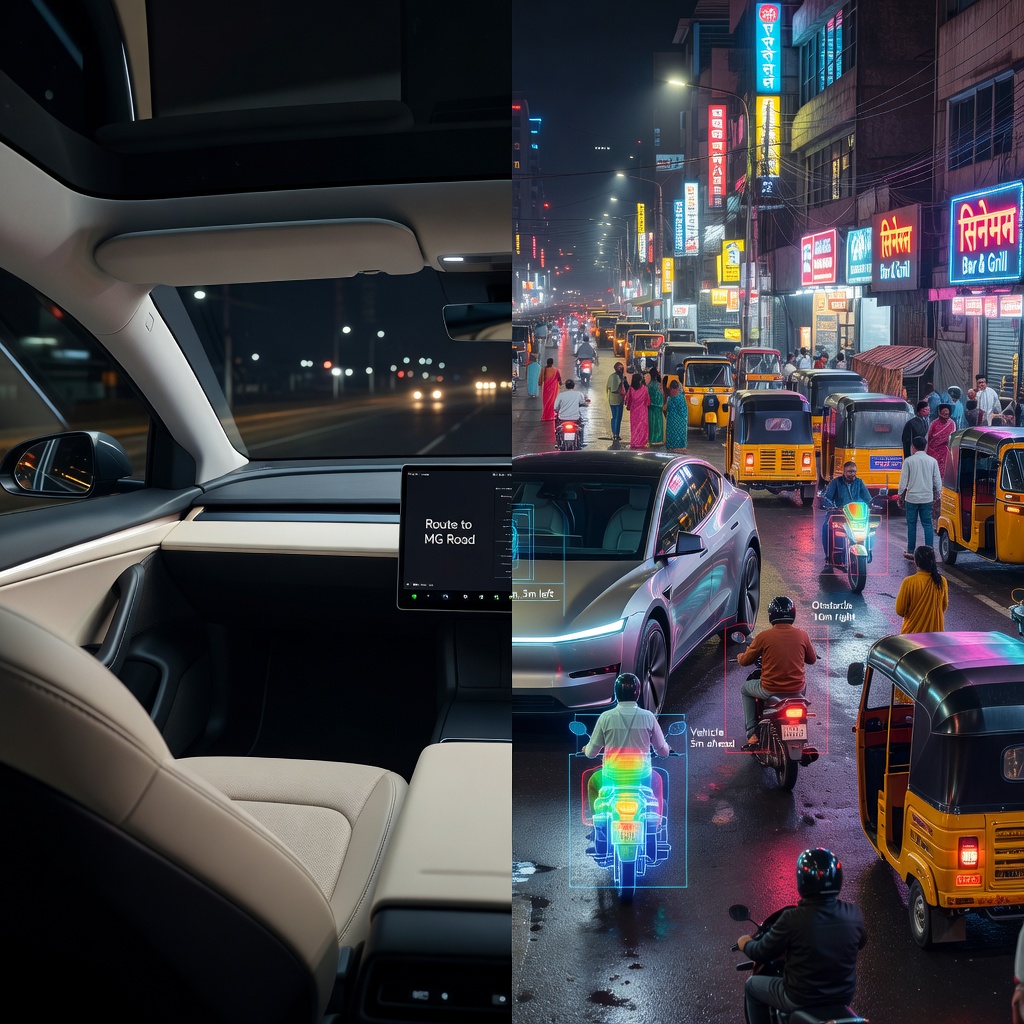
India and Southeast Asia present what may be the longest runway and the highest barrier simultaneously. Ride-hailing demand in cities like Jakarta, Mumbai, and Bangalore is enormous and growing rapidly. But road conditions, mixed traffic including animals and non-motorized vehicles, inconsistent lane discipline, and extremely price-sensitive consumers create a market where the economics of a premium autonomous vehicle network are genuinely unclear. A Cybercab fare that is competitive in Phoenix might represent a day's income for a commuter in Dhaka.
Africa and Latin America: The Infrastructure Wildcard
Nowhere is the gap between Tesla's vision and ground reality wider than in rapidly urbanizing parts of Africa and Latin America. Lagos is now one of the world's largest cities. Nairobi has a thriving tech ecosystem that has produced some of Africa's most innovative fintech and mobility startups. Sao Paulo moves twelve million people daily through a transport system that combines metro, bus rapid transit, and an enormous informal minibus network that operates outside any central planning framework. These cities have mobility needs that are acute and immediate. They also have electricity grids that cannot reliably support mass EV charging, road surfaces that would challenge any autonomous system's sensor interpretation, and regulatory bodies that are stretched thin managing existing transport crises.
The honest assessment is that autonomous ride-hailing in these markets is a 2030s conversation at the earliest, and that timeline assumes significant parallel investment in electrical infrastructure. What these markets may do, however, is accelerate demand for hybrid solutions, human-supervised autonomous corridors, or purpose-built lighter autonomous vehicles designed for different road conditions entirely. Tesla's Cybercab, as currently conceived, is a vehicle built for a world that only a fraction of global cities currently inhabit.
The Data Divide and What It Means for Global Equity
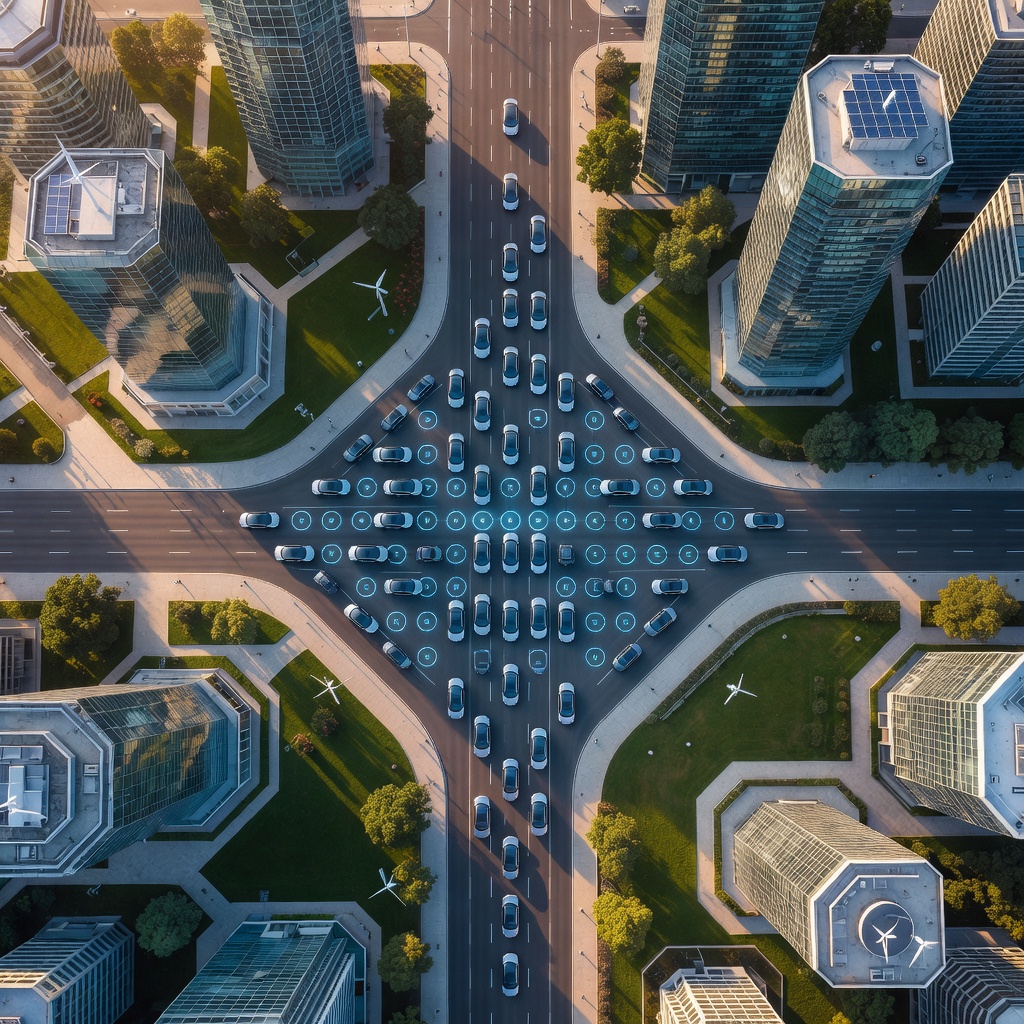
There is a structural irony embedded in the global rollout of any vision-trained autonomous vehicle system. The communities that generate the most training data are the communities that benefit first and most from the resulting technology. American suburbs, with their millions of Tesla vehicles logging FSD miles daily, are effectively subsidizing a system that will serve American suburbs with the greatest precision. Communities in Lagos or Karachi, where Tesla has virtually no fleet presence, contribute nothing to the training corpus and will receive a product that has been fine-tuned for someone else's roads.
This is not a criticism unique to Tesla. It is a structural challenge for the entire autonomous vehicle industry, and it raises genuine questions about whether the robotaxi revolution will deepen existing mobility inequality or alleviate it. Policymakers in developing nations who are watching the Cybercab rollout closely would be wise to begin building data-sharing frameworks now that could eventually allow local driving environments to contribute to global AI training pools, creating a feedback loop that makes autonomous vehicles progressively more competent in their specific contexts.
The Version That Wins Is Not the Version Launched
Tesla's greatest asset in this global patchwork is not the Cybercab hardware. It is the over-the-air update architecture that allows FSD to evolve continuously after deployment. Every Cybercab that navigates a Parisian roundabout, a Nairobi intersection, or a Manila bus corridor without incident becomes a data point that improves the system for every other Cybercab on Earth. The network effect, if Tesla can execute the regulatory and infrastructure groundwork to actually deploy in diverse environments, is genuinely powerful.
But execution is everything. The Cybercab is not a product that drops into global markets like an app update. It is a physical system that requires charging infrastructure, regulatory approval, insurance frameworks, local fleet management, emergency response integration, and cultural acceptance earned over time. Each of those requirements will be negotiated city by city, country by country, often minister by minister. The version of Tesla's robotaxi network that exists in 2027 will be shaped less by Elon Musk's vision and more by the decisions of city planners in Munich, transportation ministers in Nairobi, and insurance regulators in Tokyo.
The robot drives the same. The road, as always, is entirely local.

Alex Rivera
Tech journalist covering Elon Musk’s companies for over 8 years.