
Benchmarking the Vegas Loop: What the Numbers Actually Say About Boring Company's Underground Transit Experiment
Numbers rarely lie, but they frequently mislead when stripped of context. That caveat applies with particular force to the Vegas Loop, The Boring Company's flagship tunnel network threading beneath Las Vegas, which has generated equal measures of breathless enthusiasm and pointed skepticism since its phased opening began in 2021. Strip away the promotional language and the reflexive cynicism alike, and what remains is a genuinely unusual data set: a real-world transit system operating at commercial scale that defies easy classification. Is it a theme park ride dressed as infrastructure, or a legitimate proof-of-concept for a new urban mobility paradigm? The empirical record, examined carefully, tells a more complicated and ultimately more interesting story than either camp acknowledges.
Establishing the Baseline: How the Loop Actually Operates
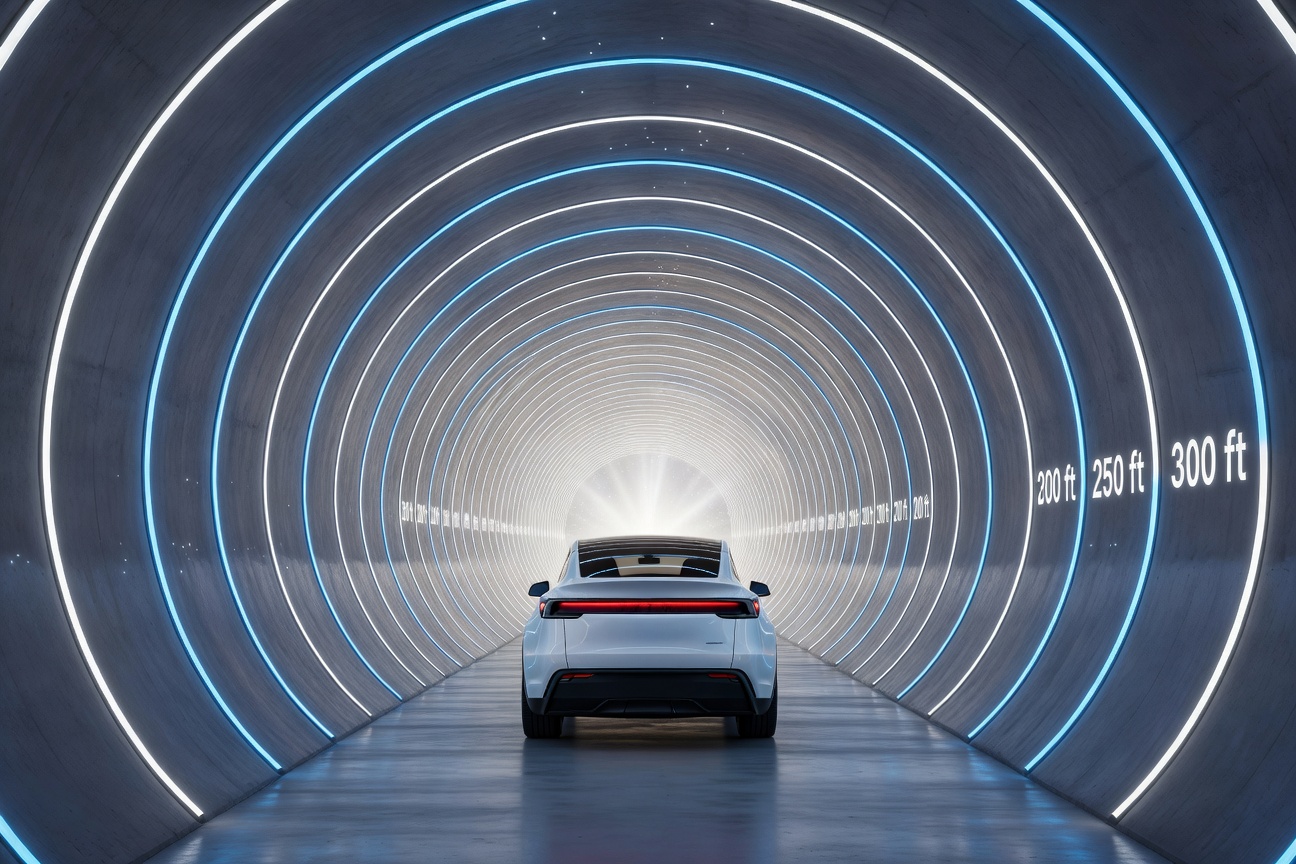
The Vegas Loop currently consists of approximately 2.4 miles of tunnel connecting 11 stations across the Las Vegas Convention Center campus and extending to Resorts World and the Las Vegas Festival Grounds. The system moves passengers in Tesla Model 3 and Model Y vehicles, each carrying between two and five occupants, through single-lane tunnels at speeds the company claims can reach 155 mph in future configurations. Presently, operational speeds are capped significantly lower, typically in the 35 to 55 mph range, constrained by tunnel length and the frequency of station stops.
The critical performance metric for any transit system is throughput: how many people can the system move per hour in a given corridor. The Boring Company has cited a theoretical peak capacity of 57,000 passengers per hour for a mature Loop network. Independent transit analysts have scrutinized that figure extensively. The methodology behind it assumes simultaneous operation of hundreds of vehicles across dozens of parallel tunnel routes, a network topology that does not yet exist in Las Vegas. For the current infrastructure, measured throughput during peak convention periods has been documented at roughly 4,400 passengers per hour across the LVCC segment, a figure that aligns with the physical constraints of single-lane, one-directional tunnel segments.
Comparative Throughput: Placing the Loop on the Transit Spectrum
Context transforms raw numbers. A conventional urban bus rapid transit corridor moves between 2,000 and 4,500 passengers per hour per direction, depending on vehicle size and headway. A light rail system, such as the ones operating in Phoenix or Minneapolis, manages 3,000 to 6,000 passengers per hour per direction under typical conditions. Heavy rail subways in cities like New York or Tokyo regularly achieve 40,000 to 80,000 passengers per hour on peak trunk lines, enabled by high-capacity trains operating at 90-second intervals.
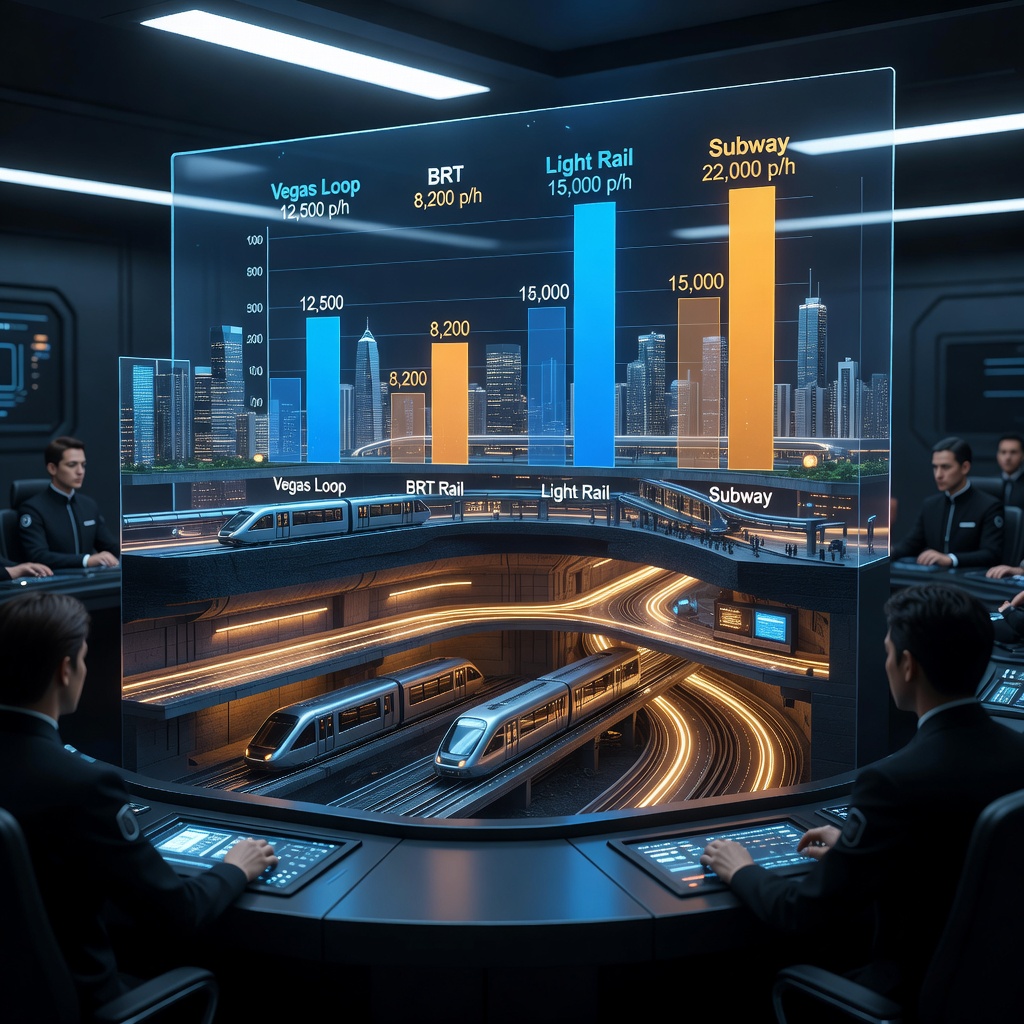
Measured against these benchmarks, the current Vegas Loop sits in a middle tier, competitive with bus rapid transit and touching the lower range of light rail performance. Critics who frame this as a failure misunderstand the system's design philosophy. The Loop is not optimizing for linear corridor throughput; it is optimizing for point-to-point travel time in a specific urban context where traditional surface transit is throttled by congestion and Las Vegas Boulevard's notoriously hostile pedestrian environment. A passenger traveling from the Resorts World station to the Convention Center south hall covers approximately 1.8 miles in under four minutes. The same journey on the surface, accounting for traffic signal cycles, crosswalk intervals, and Strip congestion, averages 18 to 22 minutes during peak hours. That delta, roughly 14 to 18 minutes saved per trip, is the system's core value proposition and it holds up under scrutiny.
Cost Per Tunnel Mile: The Metric That Rewrites the Conversation
If throughput is the operational metric that matters, cost per tunnel mile is the construction metric that determines whether underground transit can scale beyond novelty. Traditional cut-and-cover subway construction in American cities has become staggeringly expensive. The Second Avenue Subway in New York cost approximately $2.5 billion per mile, a figure that reflects a toxic combination of union labor rules, regulatory overhead, utility relocation complexity, and surface disruption costs. The Crossrail project in London averaged roughly $900 million per mile, considered a relative bargain by developed-world standards.
The Boring Company has reported tunnel construction costs for the Vegas Loop in the range of $10 million to $15 million per mile, a figure that, if accurate and replicable, represents a genuine paradigm disruption. The methodology behind that cost advantage merits examination. The company's Prufrock-2 boring machine is designed for continuous mining rather than the stop-start cycle of conventional tunnel boring machines, theoretically improving excavation speed by a factor of five to ten. The tunnel diameter is also substantially smaller than a conventional subway bore, approximately 12 feet compared to the 20 to 24 feet required for a standard subway tube, which reduces material volume and spoil disposal costs in near-linear proportion to the cross-sectional area reduction.
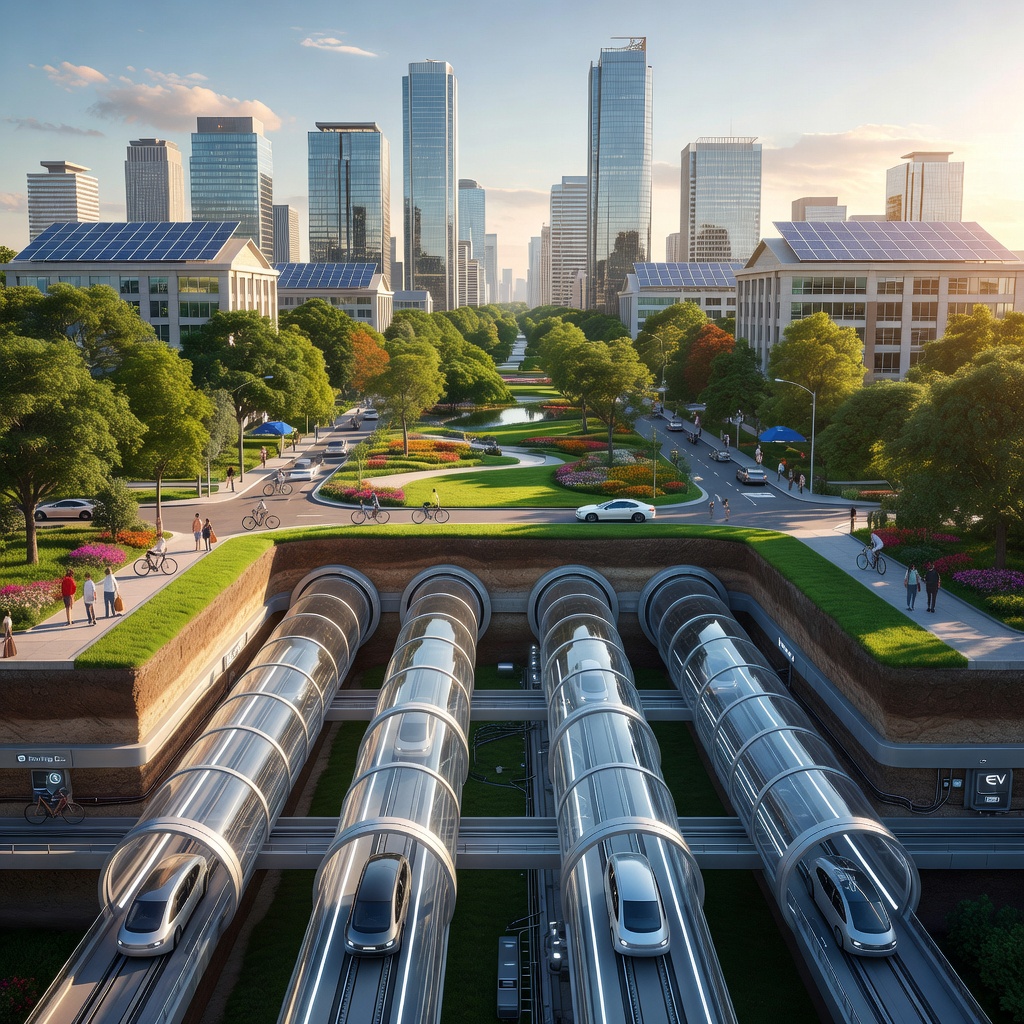
The tradeoff is capacity per tunnel segment: a 12-foot bore accommodates only a single lane of small passenger vehicles, not a rail car carrying 200 people. The economic logic therefore depends on building many parallel tunnels rather than one large one, a strategy that works when land above the tunnel corridor is not prohibitively expensive to acquire for surface entry points. Las Vegas, with its large resort footprints and relatively cooperative property ownership structure, represents something close to an ideal test environment for this approach. Replicating it beneath Manhattan or central London would require solving an entirely different set of institutional and geological variables.
Reliability Metrics and Incident Data
Any honest performance audit must address operational reliability. The Vegas Loop has experienced documented incidents including minor vehicle collisions within tunnel segments, sensor errors causing temporary shutdowns, and ventilation management challenges during high-occupancy events. The LVCC segment logged three publicly reported minor incidents in 2023, against a backdrop of approximately 3.2 million total passenger trips since opening, yielding an incident rate of roughly 0.09 per 100,000 trips. For comparative context, the U.S. highway fatality rate runs at approximately 1.37 deaths per 100 million vehicle miles traveled, and bus transit systems report injury incidents at approximately 2.5 per million passenger trips. The Loop's documented safety record, while operating in a controlled, low-speed environment, is genuinely strong by available measures.
The more pressing reliability concern is operational consistency during peak demand. Reports from convention attendees during CES and other major events describe queuing times of 15 to 25 minutes at peak station access points, partially eroding the travel time advantage the system provides over surface alternatives. The Boring Company's proposed solution is algorithmic ride dispatching and increased vehicle fleet density, but independent analysts note that the single-lane tunnel architecture creates a fundamental bottleneck that software optimization alone cannot fully resolve. This is a structural constraint, not a software problem, and it shapes the honest ceiling of what the current network can deliver without additional tunnel construction.
The Expansion Pipeline: What Approved Projects Reveal About Scalability
The most revealing data about The Boring Company's trajectory is not what Las Vegas currently operates but what municipalities have formally approved or are actively negotiating. Fort Lauderdale's approved Loop project, a roughly 3-mile system connecting the Brightline station to the beach, represents the first deployment outside a resort corridor and will generate the first apples-to-apples comparison with a mixed urban environment. San Bernardino County's transit authority has engaged the company in feasibility discussions for a desert corridor connecting communities separated by freeway-dependent geography. The proposed Miami Loop and a corridor connecting O'Hare Airport to downtown Chicago have both advanced through preliminary environmental review stages.
Each approved project effectively functions as a controlled experiment, varying the urban context while holding the core technology constant. The aggregate data set, once these systems enter operation, will allow transit researchers to disaggregate the Vegas Loop's performance into what belongs to the technology and what belongs to the uniquely forgiving Las Vegas environment. That distinction matters enormously for anyone making infrastructure investment decisions at scale.
A Verdict Written in Metrics, Not Marketing
The empirical portrait that emerges from this analysis is neither the revolution that advocates proclaim nor the expensive toy that skeptics dismiss. The Vegas Loop is a functional, safety-competitive transit system that delivers meaningful travel time savings in its target environment, at a construction cost per mile that, if it generalizes, would unlock underground transit for cities that currently cannot afford it. Its throughput ceiling under current single-lane architecture is real and significant. Its cost advantage over conventional subway construction is also real and significant. Those two facts exist simultaneously and without contradiction.
What the data cannot yet answer is whether the Boring Company's approach scales to the complexity of a genuinely dense urban core, where geological surprise, utility conflicts, and institutional friction multiply costs in ways that a carefully managed desert resort campus does not. The next three to five years of expansion data will begin answering that question with the rigor it demands. Until then, the Vegas Loop is best understood as what it actually is: the most ambitious and carefully instrumented transit experiment currently operating on American soil.