Wired for Tomorrow: How Brain-Computer Interfaces Are Quietly Rebuilding Human Potential
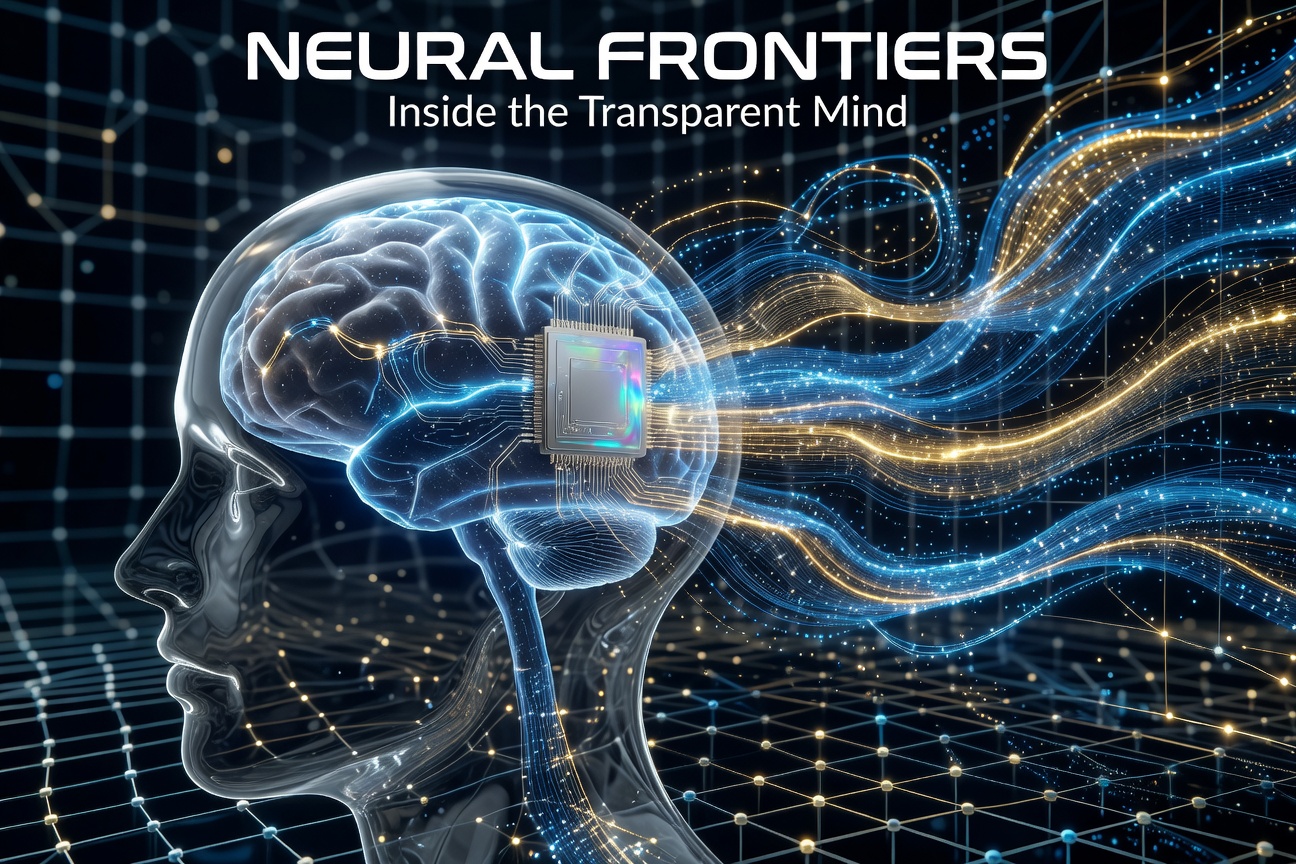
Think about the last time you reached for your phone to send a message. That sequence of gestures, so automatic it barely registers as effort, represents a chain of neural events spanning milliseconds: intention firing in the prefrontal cortex, motor commands cascading down the spinal cord, fingers translating thought into text. Now imagine cutting out every step after the intention itself. No fingers, no screen, no delay. Just thought becoming action. That is not a fantasy anymore. It is Tuesday at a growing number of research hospitals, startup labs, and clinical trial sites across the world.
The Signal Has Arrived
Brain-computer interface technology, long confined to academic papers and futurist keynotes, has entered a phase that engineers call the "deployment window" and clinicians call the most exciting period of their careers. The convergence of miniaturized electrode arrays, edge-computing chips capable of processing terabytes of neural data in real time, and machine learning models trained to decode intention from raw electrical noise has compressed decades of theoretical progress into a handful of breathtaking years.
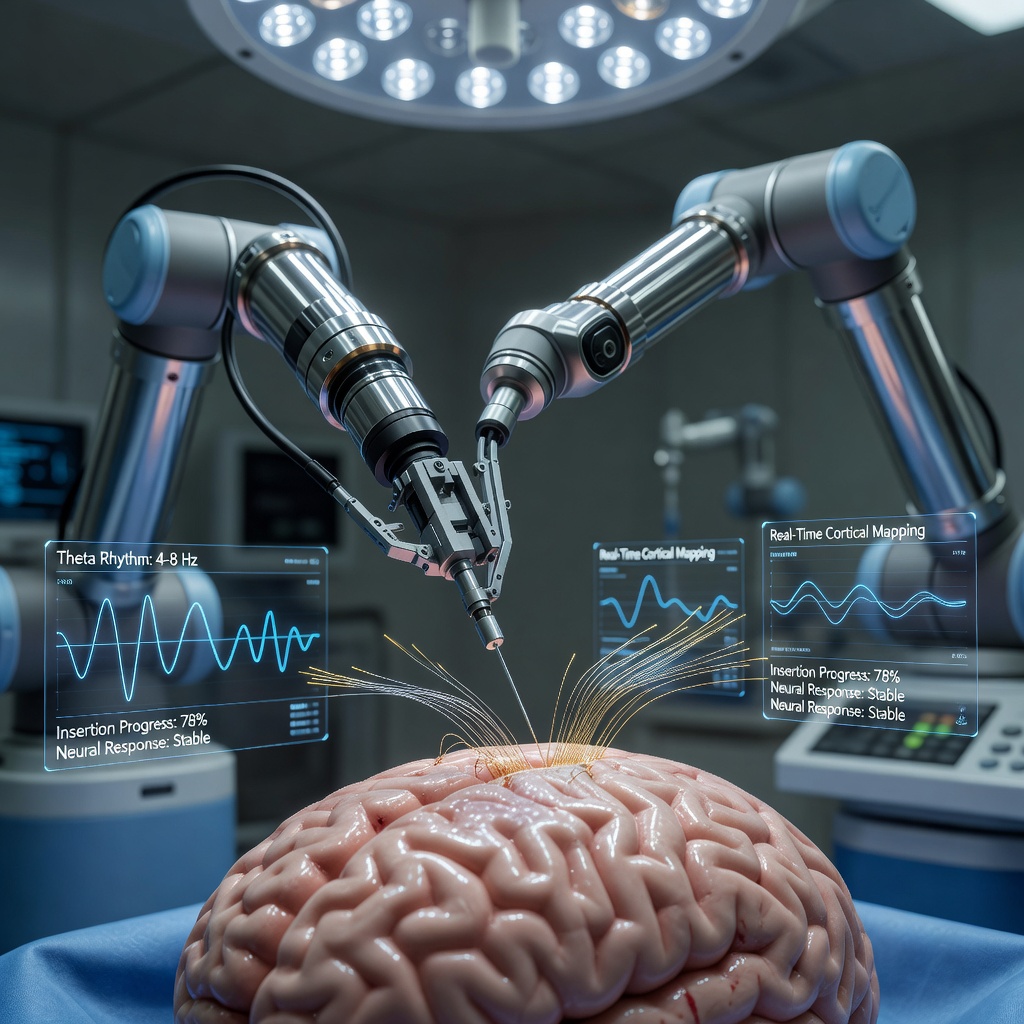
Neuralink, Elon Musk's neurotechnology company, made international headlines in early 2024 when it implanted its N1 chip into a human patient for the first time. The subject, Noland Arbaugh, a 29-year-old quadriplegic, was able to move a computer cursor and play chess using only his thoughts within weeks of the procedure. Arbaugh described the experience as feeling "like using the Force," and while that metaphor carries a whiff of marketing polish, the underlying mechanics are genuinely extraordinary. The N1 device packs 1,024 electrodes onto threads thinner than a human hair, inserted by a surgical robot with sub-millimeter precision to minimize tissue disruption. The signal clarity it achieves far exceeds older electrode arrays that relied on blunt penetration techniques.
Beyond the Flagship: A Startup Ecosystem Blooms
Neuralink absorbs most of the oxygen in the public conversation, but the broader BCI startup landscape is crackling with innovation that deserves equal attention. Synchron, an Australian-American company, has been implanting its Stentrode device through blood vessels rather than open-brain surgery, threading a mesh of electrodes through the jugular vein until it sits snugly against the motor cortex. The approach sidesteps the risks of cutting through skull and dura, making the procedure closer to a cardiac stent operation than traditional neurosurgery. Several ALS patients have already used Stentrode-based systems to independently browse the internet, send messages, and shop online using thought alone.
Blackrock Neurotech, one of the oldest players in the commercial BCI space, has active implants in dozens of patients and is pushing toward fully wireless, battery-free systems that harvest energy from the body's own bioelectrical fields. Meanwhile, Precision Neuroscience, founded by a former Neuralink co-founder, is developing a flexible "neural lace" array that layers on the brain's surface like a temporary tattoo rather than piercing into tissue, offering a reversible option that regulators and patients alike find considerably less daunting.
The diversity of approaches is not accidental. Different clinical populations need different solutions. A stroke survivor regaining motor function has distinct requirements from a military veteran managing phantom limb pain or a researcher seeking to expand working memory capacity. The ecosystem is maturing precisely because no single architecture fits every problem, and smart capital is betting on plurality.
Sensation Running Both Ways
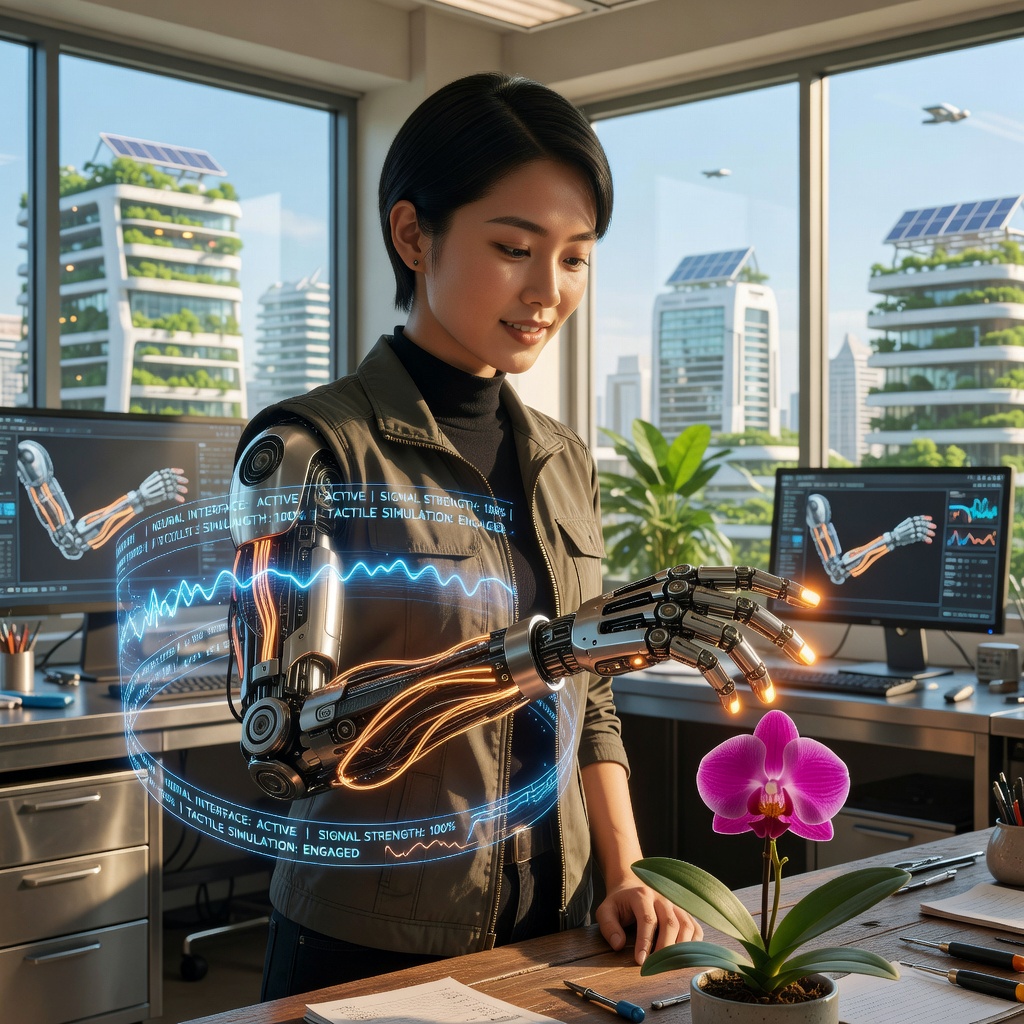
Early BCIs were largely one-directional, reading neural signals and translating them into commands. The next generation closes the loop. DARPA-funded research at the University of Pittsburgh demonstrated a system where a robotic arm not only responded to a paralyzed man's motor intentions but simultaneously sent pressure and texture data back through electrodes stimulating his sensory cortex. He could feel the difference between gripping a soft grape and a firm baseball. That bidirectionality is the technical Rubicon the field is now crossing at speed.
Feeling matters enormously. Prosthetic limbs have long suffered from what occupational therapists call the "tool problem": users can operate them competently but never truly trust them because sensation is absent. Restoring touch transforms a mechanical aid into something approaching a genuine body part. Companies like Össur and Open Bionics are racing to integrate sensory feedback loops into their next-generation prosthetics, partnering with neuroscience labs to marry mechanical dexterity with the rich neural conversation that makes embodiment feel real.
The Non-Invasive Frontier
Not every compelling BCI development requires a surgeon. Non-invasive approaches using EEG headsets, functional near-infrared spectroscopy, and transcranial focused ultrasound are advancing rapidly enough to spawn entirely consumer-facing product categories. Neurosity, Emotiv, and a cluster of quieter hardware startups are shipping EEG headbands capable of detecting focus states, cognitive load, and even early markers of fatigue with accuracy that surprises skeptics.
Kernel, founded by tech entrepreneur Bryan Johnson, took a more ambitious non-invasive path with its Flow device, a helmet using time-domain functional near-infrared spectroscopy to map hemodynamic activity across the whole cortex in real time. The data density it produces rivals older invasive methods, and Kernel has made a deliberate bet that as photonics and signal processing improve, the skull will cease to be the privacy wall it once was for neural monitoring.
The implications stretch well beyond medicine. Athletes are using neurofeedback rigs to optimize reaction time and concentration. Pilots in DARPA trials have demonstrated simultaneous control of multiple drone swarms using BCI-enhanced interfaces. Architects and designers are experimenting with brain-state-responsive environments that subtly adjust lighting and acoustics based on occupant cognitive metrics. The technology is leaking into daily life faster than most regulatory frameworks anticipated.
Musk's Longer Game
Elon Musk has framed Neuralink's ultimate ambition not merely as a medical device company but as a hedge against what he considers the existential risk of artificial general intelligence outpacing human cognition. His thesis is direct: if AI systems continue scaling, biological intelligence will become a passenger rather than a driver unless humans acquire a high-bandwidth channel to merge with computational systems. The N1 chip, with its current throughput of roughly one megabit per second, is by that logic a proof-of-concept crawl toward an envisioned neural bandwidth of terabits per second.
Critics point out that the bandwidth argument conflates speed with wisdom, and that flooding human consciousness with machine-speed data streams could fragment identity as readily as it enhances capability. Musk himself does not dispute the philosophical complexity; he argues the alternative of doing nothing is simply more dangerous. Whatever one thinks of that risk calculus, it has focused an enormous amount of engineering talent and venture capital on a technology that now demonstrably helps real people live richer lives, which remains worthwhile entirely on its own terms.
What the Next Decade Actually Looks Like
Projecting BCI development is tricky because the field benefits from compounding effects across multiple disciplines simultaneously: materials science delivering more biocompatible electrode coatings, AI models becoming dramatically better at decoding ambiguous neural signals, wireless communication shrinking power requirements, and surgical robotics lowering procedural risk. Each discipline improves independently and accelerates the others.
Realistic near-term horizons include FDA-cleared systems restoring speech for locked-in ALS patients by the late 2020s, consumer-grade cognitive enhancement tools that are neurofeedback-based reaching mass market price points, and next-generation prosthetics with full sensory feedback entering standard rehabilitation protocols. The further horizon, which serious researchers no longer dismiss as purely speculative, includes memory augmentation devices assisting patients with Alzheimer's disease and high-bandwidth interfaces enabling new forms of human-AI collaborative cognition.
The story of brain-computer interfaces is ultimately a story about the stubborn refusal of human ingenuity to accept limitation as permanent. Every electrode thread placed by a surgical robot, every quadriplegic who composes an email with thought alone, every amputee who feels rain on a titanium hand, represents a data point in a gathering curve that bends toward an astonishing future. The signal, once lost in noise, is getting clearer by the day.