
Bandwidth at the Edge of Space: A Rigorous Performance Audit of the Global Satellite Internet Race
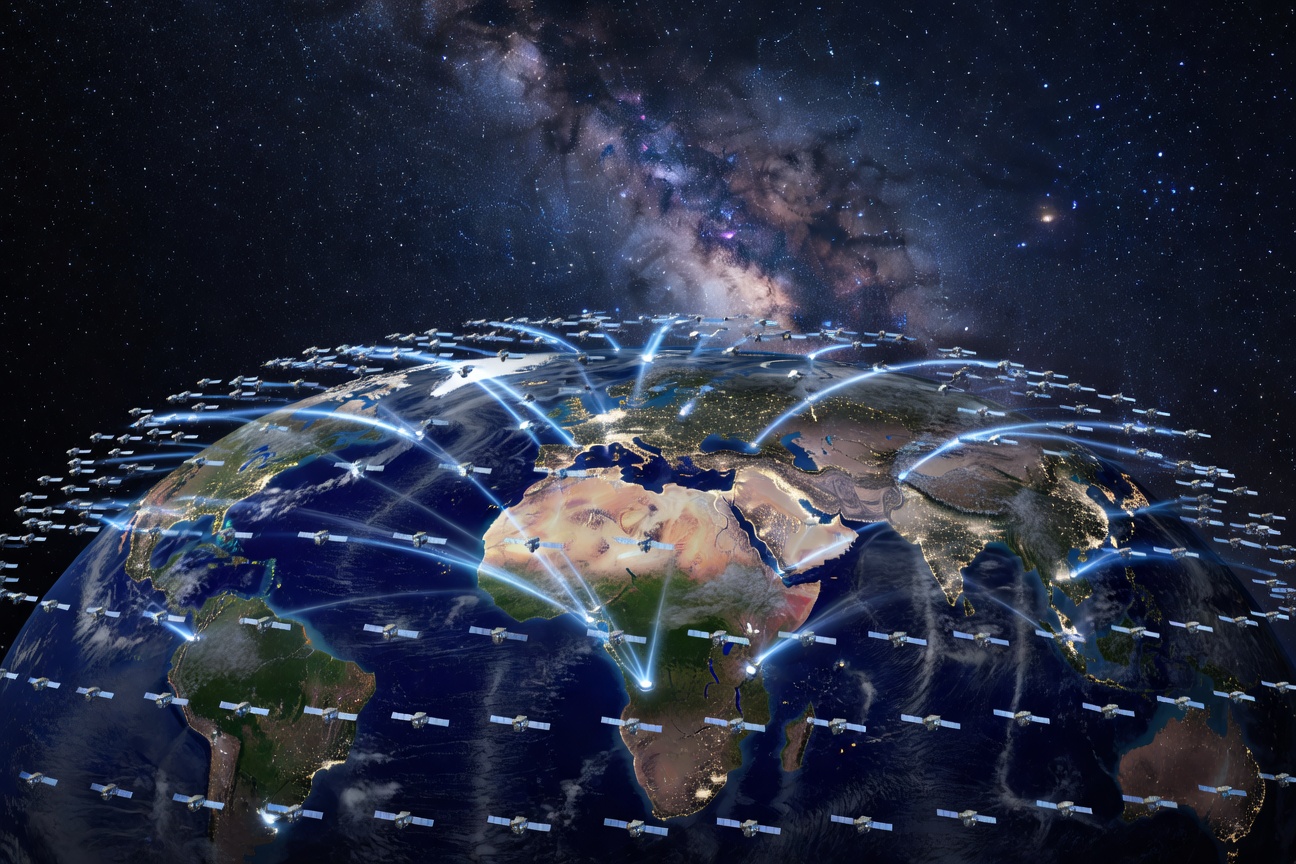
The altitude makes all the difference. Traditional geostationary satellites orbit at roughly 35,786 kilometers above the equator, a distance so vast that the round-trip signal delay alone consumes between 550 and 700 milliseconds. That single physics fact imprisoned satellite internet in a ghetto of poor performance for decades. Then SpaceX began stitching a second sky at 550 kilometers altitude, and every assumption about who can be connected, how fast, and at what cost began to unravel with measurable speed.
Benchmarking the Constellation Leaders
Third-party performance data aggregated across 2023 and into 2024 paints an increasingly granular portrait of the competitive landscape. Ookla's Speedtest Intelligence reports place Starlink's median fixed-broadband download throughput in the United States at approximately 195 Mbps, a figure that has held relatively stable even as the subscriber count surpassed four million globally. Median upload speed sits near 23 Mbps, while the headline latency metric that separates low-earth-orbit (LEO) systems from their geostationary predecessors averages between 20 and 60 milliseconds depending on ground station proximity and atmospheric conditions. For context, that range is competitive with many terrestrial cable providers in semi-rural markets.
Independent researchers running continuous ping tests across 72-hour windows report a more nuanced picture: latency variance, or jitter, remains Starlink's most persistent Achilles heel. Standard deviation figures in the 8 to 15 millisecond range mean that latency-sensitive workloads like real-time gaming or video surgery assistance still encounter measurable instability. The network has improved markedly since 2021, but the physics of inter-satellite handoffs and ground station routing introduce statistical noise that fiber simply does not produce.

The Constellation Census: Who Has What in Orbit
Counting active satellites is a surprisingly contentious exercise. SpaceX's Starlink held approximately 5,500 operational satellites as of mid-2024, making it by far the most populous constellation in human history. The company has received FCC authorization for up to 12,000 satellites in its first shell, with applications pending for a second-generation constellation exceeding 29,988 units. If even half that number reaches orbit, the signal-to-orbit density will fundamentally alter how ground receivers lock acquisition.
Eutelsat OneWeb, following a financially turbulent merger, operates roughly 634 satellites in a 1,200-kilometer polar orbit shell. Its architecture prioritizes high-latitude coverage, making it the default choice for Arctic logistics operators, Norwegian offshore oil platforms, and Canadian rural municipalities that Starlink's initial shell addressed imperfectly. Measured throughput from OneWeb enterprise terminals averages between 50 and 100 Mbps download in enterprise configurations, with latency hovering near 50 milliseconds. The system is not chasing the consumer market with the same aggression as Starlink; instead it is selling wholesale bandwidth to mobile network operators and governments, a fundamentally different business geometry.
Amazon's Project Kuiper remains the most consequential variable yet to be fully injected into the dataset. The company launched its first two prototype satellites in October 2023, reporting internally that the hardware achieved gigabit-class inter-satellite link speeds during trials. Amazon has committed to launching 3,236 satellites under FCC license conditions that require 1,618 in orbit by mid-2026. The manufacturing infrastructure being built in Kirkland, Washington, is designed for a production cadence that rivals SpaceX's Hawthorne factory. No independent benchmark data exists for Kuiper at scale, but the engineering pedigree and capital depth of its parent company make dismissal statistically unwise.
Geographic Penetration: Where the Numbers Land
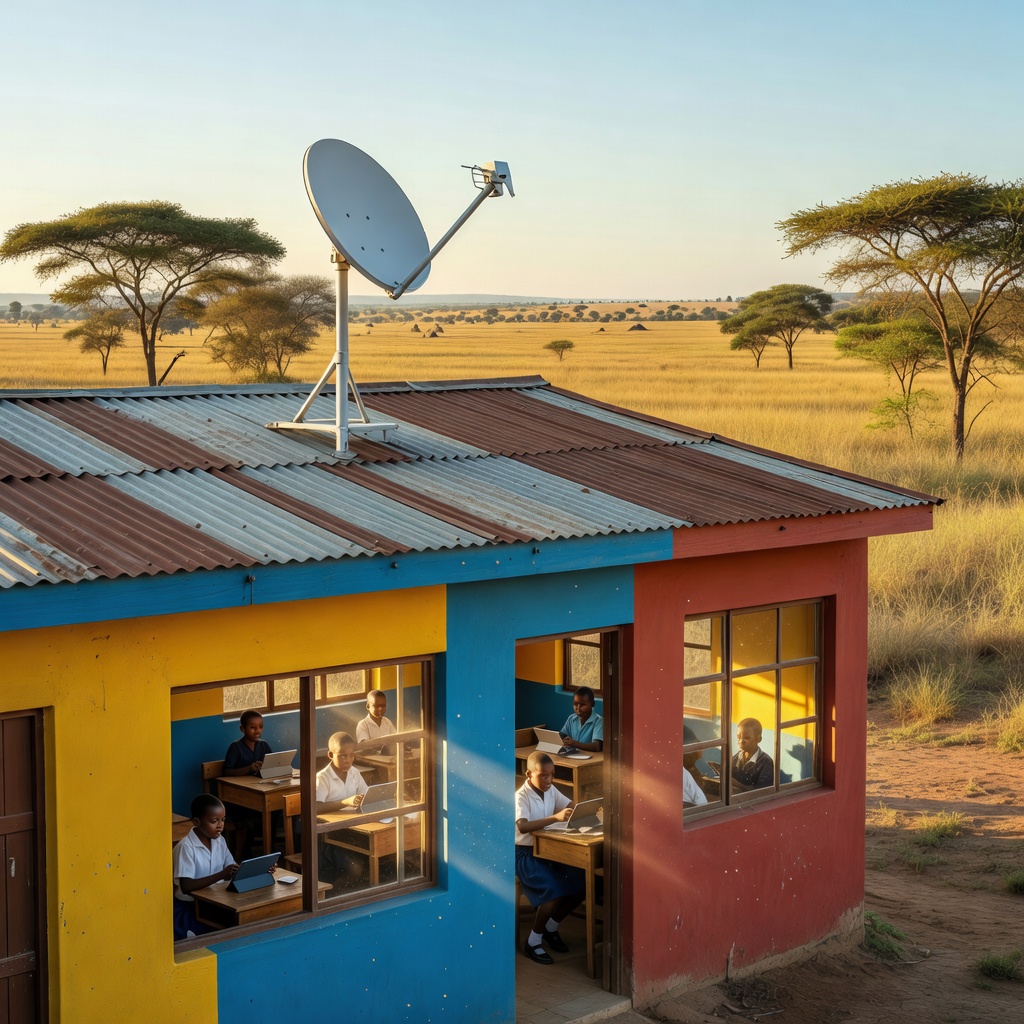
Raw throughput benchmarks become morally interesting when mapped against population geography. The International Telecommunication Union's 2023 connectivity report estimates that approximately 2.6 billion people remain entirely offline, with the largest concentrations in Sub-Saharan Africa, South and Southeast Asia, and the Pacific island chains. Traditional infrastructure economics explain the gap: laying fiber to a village of 300 people separated from the nearest city by 400 kilometers of jungle produces a negative return on investment under every conventional financial model.
LEO satellite economics invert that calculation, imperfectly but consequentially. The marginal cost of serving an additional user within an existing coverage footprint is near zero once the constellation is deployed. The terminal hardware cost remains the principal barrier. Starlink's standard residential dish retailed at $599 in 2022, dropped to $499, and has been subsidized to near $200 in select developing-market deployments under government partnerships. SpaceX's Starlink for Boats and Aviation products command premium pricing that subsidizes the consumer tier, a cross-subsidy structure that mirrors how mobile carriers price business data versus consumer voice.
Field trials in rural Rwanda conducted by a European development consortium measured median download speeds of 87 Mbps using Starlink terminals, with upload averages of 14 Mbps. Crucially, the test network sustained these speeds during a six-hour rainstorm with only a 12 percent throughput reduction, a result that surprised researchers accustomed to the severe rain-fade penalties of Ku-band geostationary systems. Ka-band and V-band frequencies suffer more from precipitation, but Starlink's frequency management algorithms have demonstrably improved atmospheric resilience.
Direct-to-Device: The Next Measurement Frontier
The benchmark category about to explode into relevance is direct-to-cell connectivity, where LEO satellites communicate directly with unmodified smartphones without any ground hardware intermediary. SpaceX partnered with T-Mobile to deploy this capability beginning in late 2023 in a limited text-messaging beta. The physics here are formidable: a standard smartphone antenna is optimized for terrestrial towers a few kilometers distant, not a satellite moving at 27,000 kilometers per hour at 550 kilometers altitude. Achieving even a few kilobits per second under those conditions requires aggressive beamforming from a satellite with an antenna array measured in square meters.
Measured performance from the T-Mobile beta reported text message delivery rates exceeding 90 percent in areas previously showing no service on coverage maps, a statistic that understates the humanitarian significance. Emergency SOS functionality alone can justify the infrastructure investment in wildfire, hurricane, and earthquake response scenarios. Voice and data throughput via direct-to-cell are expected to scale through 2025 as more capable second-generation Starlink satellites, equipped with larger phased-array antennas, populate the constellation at higher density.
AST SpaceMobile is pursuing the same direct-to-cell market with a dramatically different satellite architecture: larger platforms with antenna apertures exceeding 64 square meters. Its BlueBird satellites, with several now in orbit, have demonstrated 14 Mbps downlink speeds to an unmodified Samsung smartphone in preliminary tests. If those numbers replicate at commercial scale, the implications for mobile operators in developing markets without terrestrial tower infrastructure are transformative in a way that renders legacy network economics genuinely obsolete.
Spectrum Wars and the Regulatory Constraint Layer
Performance data never exists in a policy vacuum. The orbital spectrum and frequency coordination battles unfolding at the International Telecommunication Union represent a second competition layer that shapes what future benchmarks are even physically possible. SpaceX and Viasat have engaged in multi-year regulatory disputes over spectrum interference between LEO and geostationary operators. The FCC's ongoing proceedings on non-geostationary satellite orbit coordination will determine how tightly packed future constellations can be, which directly caps maximum system capacity and therefore throughput per user as subscriber counts grow.
Researchers at the MIT Media Lab have modeled constellation capacity limits under various spectrum-sharing regimes and concluded that without coordinated frequency reuse frameworks, aggregate user throughput in dense-demand urban corridors could degrade by 30 to 45 percent as constellations reach full population. The math is not a death sentence for LEO internet, but it is a sharp reminder that orbital infrastructure is not infinitely scalable. The spectrum is a shared resource with the unforgiving properties of a finite commons.
What the Data Ultimately Argues
Synthesizing the available empirical record produces a conclusion that is neither uncritical enthusiasm nor reflexive skepticism. LEO satellite internet has achieved real-world performance metrics that were theoretical projections just five years ago. Median latencies below 40 milliseconds, sustained throughputs above 150 Mbps for residential users, and terminal costs trending toward the price of a mid-range smartphone collectively represent a genuine engineering discontinuity. The remaining challenges, namely jitter variance, terminal cost in the lowest-income markets, spectrum coordination, and the sheer scale of manufacturing required for billions of potential users, are substantial but not categorically unsolvable.
The two billion people still offline are not waiting for a perfect system. They are waiting for a sufficiently good one, delivered at a price they can access. The benchmarks suggest that threshold is closer than it has ever been, and the constellation deployment schedules make it a question of years, not decades. For the first time in the history of telecommunications, the physics of access are bending toward the disconnected majority rather than away from them. That is not a narrative. That is what the numbers say.