
From Assembly Line to Algorithm: How Tesla's EV Revolution Echoes the Birth of the Automobile Age
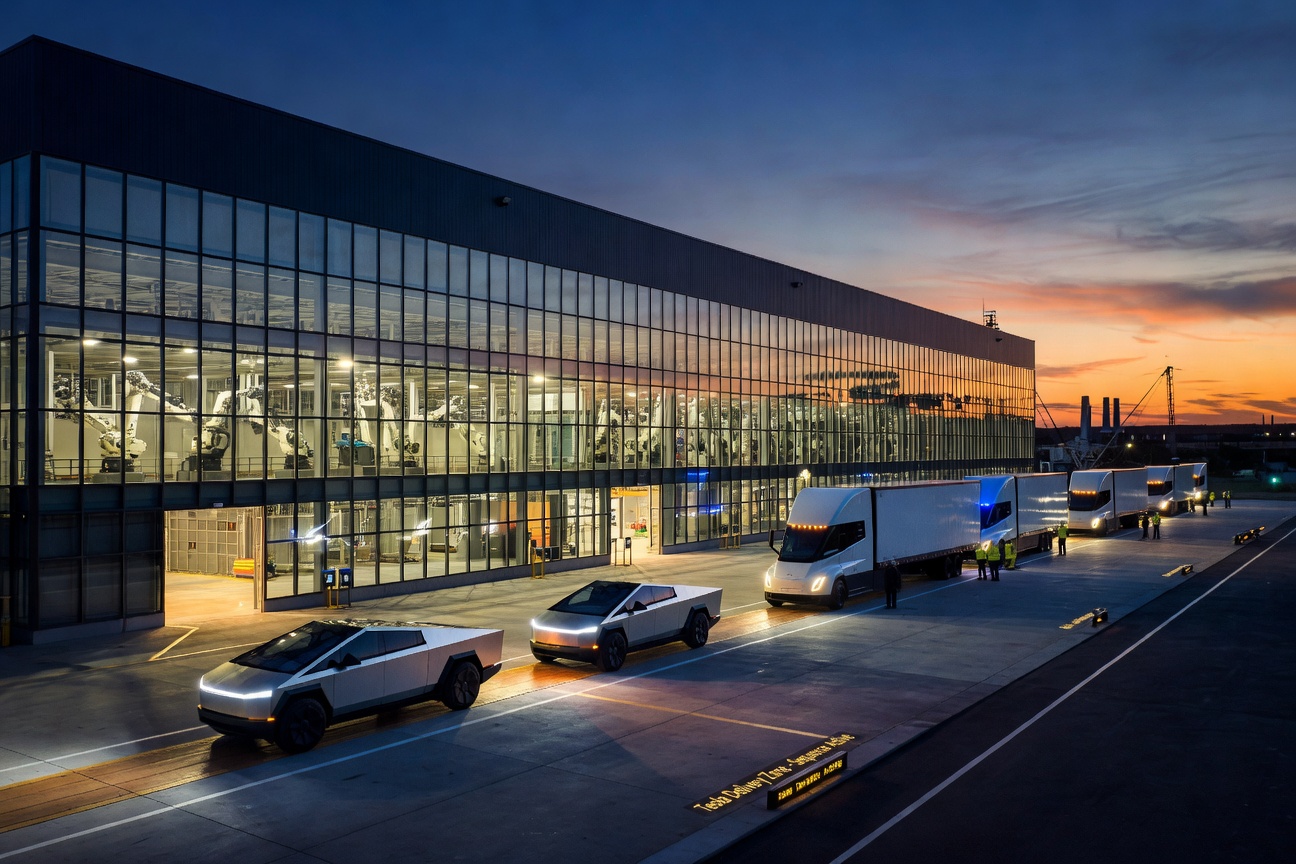
When Henry Ford introduced the moving assembly line at Highland Park in 1913, critics called it dehumanizing, impractical, and grotesquely over-engineered for a product most Americans couldn't yet afford. Within a decade, the Model T had reshaped continents. Roads multiplied. Cities sprawled. An entire civilization reorganized itself around a machine. Tesla, circa 2025, is staging a replay of that seismic disruption — but the screenplay has been rewritten by algorithms, battery chemistry, and an manufacturing philosophy that treats software as the ultimate production tool. The Cybertruck, the Semi, and Full Self-Driving aren't just products. They are the opening chapters of a second great automobile revolution, and the parallels to Ford's era are as instructive as the differences are breathtaking.
The Assembly Line Reborn in Stainless Steel
Ford's genius wasn't the car itself — it was the process. By decomposing a complex machine into repeatable, interchangeable steps, he slashed the time to build a Model T from over 12 hours to roughly 93 minutes. Tesla's Gigafactories pursue an analogous obsession, but the lever isn't human labor moving along a line — it's the factory itself becoming a programmable machine. The Gigapress, Tesla's enormous aluminum die-casting system, compresses what used to be 70 separate stamped and welded body parts into a single structural component. At Gigafactory Texas, where the Cybertruck rolls off the line, this philosophy reaches its stainless-steel apex.
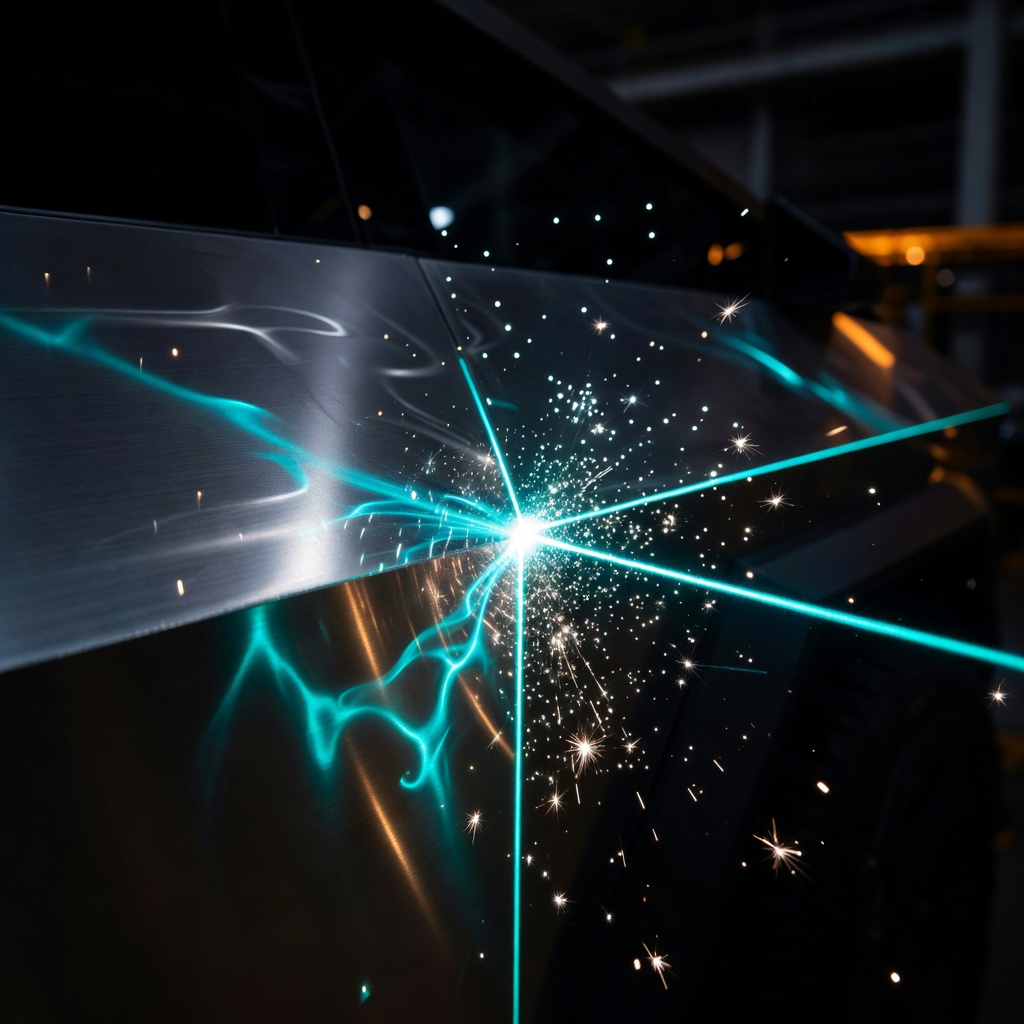
Cybertruck production, which began in late 2023 after years of dramatic delays, has been climbing steadily through 2024 and into 2025. Tesla has pushed through early bottlenecks related to the vehicle's unconventional cold-rolled stainless steel exoskeleton — a material notoriously difficult to stamp and finish at automotive scale. The workarounds required innovative laser-cutting techniques and entirely new quality-control tooling. Ford faced his own metallurgical crises scaling vanadium steel production for the Model T chassis. The material science challenges of any generation-defining vehicle are, it turns out, remarkably consistent across a century.
The Semi: Infrastructure Bet of a Generation
If the Cybertruck is Tesla's cultural statement, the Semi is its economic argument. The Class 8 trucking sector moves roughly 70 percent of all freight in the United States, burning staggering volumes of diesel and producing proportional mountains of carbon. Tesla's Semi promises a 500-mile range on a single charge, a drag coefficient lower than most sports cars, and operating costs that, over time, undercut diesel rigs substantially on a per-mile basis — particularly as Megacharger infrastructure expands along major freight corridors.
Deliveries of the Semi have remained limited, but Tesla has signaled aggressive scaling ambitions, with a dedicated Semi manufacturing facility under development at Gigafactory Nevada. Pepsi, which received the first commercial units in 2022, has publicly reported energy consumption figures that validated Tesla's efficiency claims. The comparison to early railroad electrification is unavoidable: in the 1890s, electric traction motors replaced steam on urban rail lines not because they were romantic or novel, but because they were simply cheaper to run and easier to maintain once the infrastructure existed. The Semi is wagering that charging infrastructure will reach the same tipping point for long-haul trucking within this decade.
Ford's Model T democratized personal transport. The Tesla Semi is attempting something arguably more structurally significant: decarbonizing the supply chain that feeds modern civilization. One moved families. The other moves everything else.
Software as the New Spark Plug
Here is where the analogy stretches and ultimately snaps — in the most fascinating way possible. Ford's vehicles were purely mechanical artifacts. Once off the line, they were fixed objects. A 1923 Model T could not become more capable through a wireless update pushed while its owner slept. Tesla's entire fleet, including every Cybertruck and Semi, is a node in a continuously learning network. Full Self-Driving, now rebranded and evolving under Tesla's vision-only neural network approach, improves incrementally across millions of vehicles simultaneously.
The FSD system has advanced considerably through iterative software releases, with Tesla pushing toward a genuine unsupervised autonomy product — what Musk has called "Robotaxi" capability — using the camera-only sensor suite that Tesla has championed against the lidar-heavy approaches favored by competitors. The debate over sensor modalities is genuinely unresolved in the engineering community, but Tesla's accumulated fleet data represents a training corpus that rivals cannot easily replicate. As of 2025, FSD has logged hundreds of millions of miles, and Tesla continues to refine the neural network planner that replaced its earlier rule-based system.
What Ford Got Wrong That Tesla Must Not
Ford's story is also a cautionary tale. His production genius was eventually outmaneuvered by General Motors' Alfred Sloan, who understood something Ford didn't: consumers want variety, aspiration, and annual novelty. The Model T's stubborn sameness became a liability. Tesla faces its own version of this trap. The Cybertruck is audaciously singular in design — there is nothing on any road that resembles it — and that distinctiveness is both a marketing asset and a potential constraint. Market segmentation requires breadth.
Tesla's response is the upcoming more affordable mass-market vehicle, internally iterated toward a price point that could genuinely challenge the internal combustion car on sticker price alone, not just total cost of ownership. Musk has emphasized that volume, not margin, defines the next phase of the mission. Ford understood this intuitively in 1908. Tesla is rediscovering it in 2025 from the opposite direction — having started with premium vehicles and working downmarket rather than upmarket.
Manufacturing Intelligence as Competitive Moat
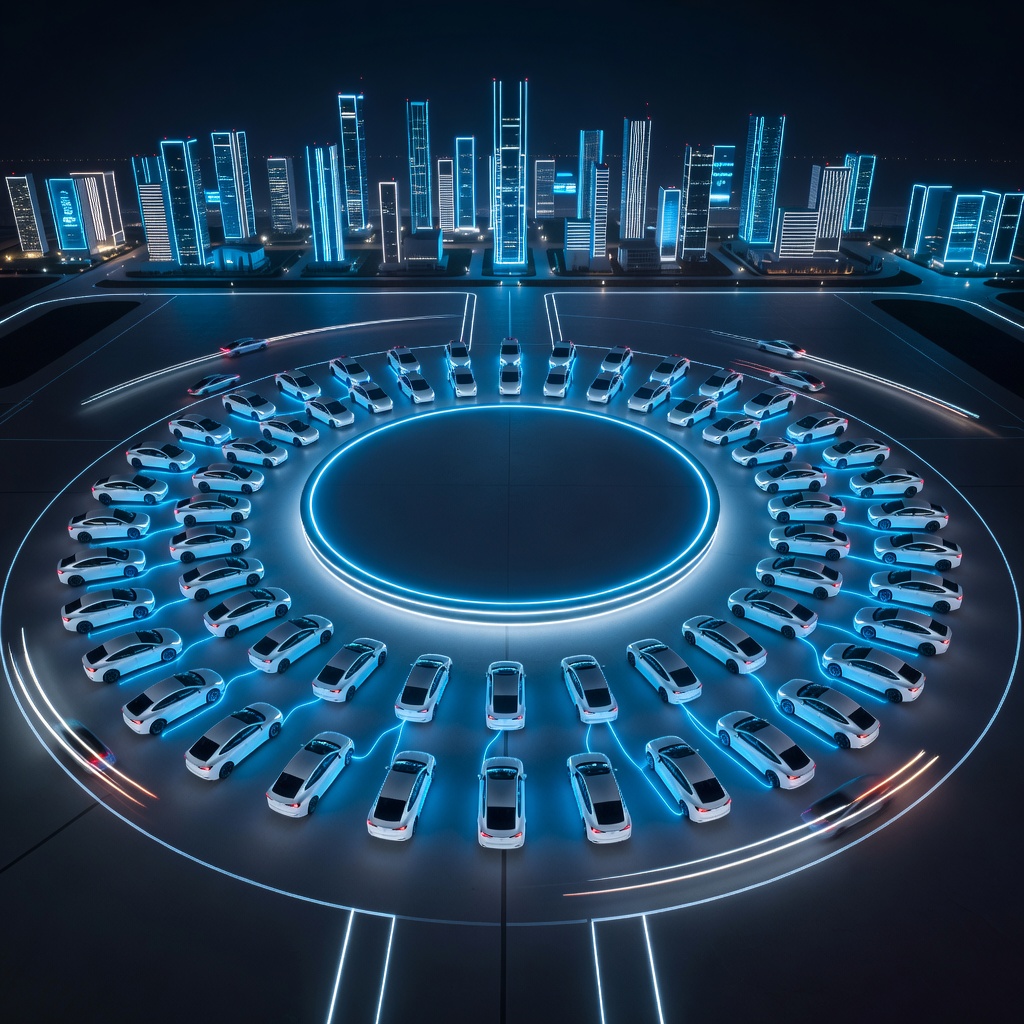
Perhaps the deepest structural difference between Ford's revolution and Tesla's is the nature of the competitive advantage being built. Ford's moat was physical: his River Rouge complex was a vertically integrated fortress of steel, glass, and rubber production. Competitors could, given enough capital and time, replicate it. Tesla's moat is increasingly cognitive. The intersection of its manufacturing data, its vehicle sensor data, and its Dojo supercomputer training infrastructure creates a feedback loop that tightens with scale.
Every Cybertruck that navigates a construction site, every Semi that runs an Interstate freight corridor, feeds training data back into the system. The product improves post-sale in ways that have no mechanical analogue. This is not Ford's world. It is closer to the early days of the commercial internet, when network effects compounded advantages so rapidly that latecomers found the terrain had shifted beneath them before they could establish footholds.
The Horizon Is Still Wide Open
A century from now, historians examining this period will likely note the same thing we observe about 1913: that the truly profound consequences were invisible to nearly everyone watching in real time. Ford's contemporaries debated horsepower and road conditions. They did not foresee suburbanization, the collapse of rail passenger travel, the geopolitics of oil, or the redesign of American cities around the automobile's spatial requirements.
Tesla's Cybertruck, Semi, and autonomy stack are similarly legible as products but murky as civilizational forces. What happens to freight labor markets when autonomous electric Semis achieve consistent long-haul viability? What does urban real estate look like when personally owned robotaxis reduce the need for parking infrastructure that currently consumes enormous portions of city land? What energy grid architectures emerge when millions of vehicle batteries become bidirectional storage nodes?
Ford gave the world the car. He did not predict the freeway, the suburb, or the oil embargo. Elon Musk is giving the world the networked electric vehicle. The downstream consequences — social, economic, and infrastructural — remain as gloriously, terrifyingly unwritten as the open road itself.
George Russell
Tech journalist covering Elon Musk’s companies for over 10 years.